
Advocates Dismiss Atiku’s Criticism of Tinubu’s Economy as ‘Cheap Politics’
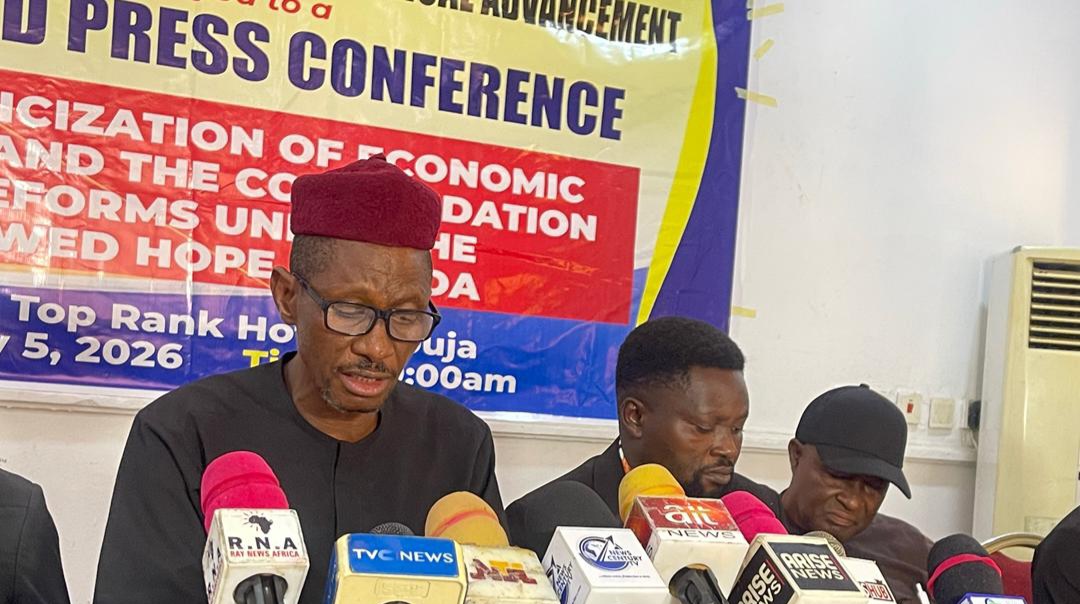
The Advocates for Economic and Political Advancement on Tuesday dismissed recent criticisms of Nigeria’s economy by former Vice President Atiku Abubakar, describing them as “cheap politics dressed up as concern” and mere propaganda.
Speaking at a press conference, the group said Atiku’s comments were not grounded in genuine economic analysis but were driven by political bitterness following several unsuccessful attempts to lead the country.
Addressing journalists, Dr. Opialu Fabian rejected Atiku’s reference to Nigeria’s external reserves of about $48.45 billion as evidence of economic failure. He noted that current projections indicate the reserves could rise above $51 billion within the year, describing the present situation as a managed adjustment within an ongoing reform cycle rather than a decline.
According to the group, external reserves are shaped by several factors, including exchange-rate management, capital flows and liquidity interventions by the Central Bank of Nigeria, and should not be isolated or deployed for political effect.
“Select a number, strip it of context and amplify it for political effect. That is not economic analysis. That is political theatre,” the group said.
The Advocates also highlighted what they described as notable macroeconomic gains under President Bola Ahmed Tinubu’s Renewed Hope Agenda. They cited projected economic growth of 4.49 per cent, a decline in inflation from above 34 per cent to about 14.5 per cent, with expectations that it could ease further to 12.94 per cent, alongside a balance-of-payments surplus and gradual return of investor confidence.
The group further commended the administration’s economic management team, saying recent policy direction reflects greater coherence in tax reforms, revenue mobilisation and efforts to improve the utilisation of public assets and idle funds.
It noted that more than $20 billion remains tied up in the banking system under reserve requirements, while public assets worth trillions of naira remain underutilised. Addressing those inefficiencies, it said, is central to the ongoing reform agenda.
While acknowledging that the country remains in a difficult transition phase, the group maintained that key policy decisions taken by the Tinubu administration — particularly the removal of fuel subsidies and the unification of the foreign exchange market — were necessary and are beginning to yield positive outcomes, including increased allocations to states for development projects.
The Advocates urged Nigerians to focus on the broader direction of structural reforms rather than short-term fluctuations, and called on political actors, especially Atiku Abubakar, to engage honestly with facts rather than recycle narratives that ignore emerging signs of progress.
“The economy is stabilising. The reforms are taking hold. The direction is clear. No amount of political noise can change that reality,” the group said.