Deprecated: Function WP_Dependencies->add_data() was called with an argument that is deprecated since version 6.9.0! IE conditional comments are ignored by all supported browsers. in /home/corerepo/public_html/wp-includes/functions.php on line 6260 APC Defends Tinubu’s Reforms, Cites Northern Projects, Rules Out Fuel Subsidy Return - Core Reporters
…Party Says Reversing Policy Would Undermine Public Finances, Development Spending
ABUJA (Core Reporters) — The All Progressives Congress (APC) has defended President Bola Ahmed Tinubu’s economic reforms and infrastructure agenda, insisting that his administration has not neglected Northern Nigeria and warning that a return to fuel subsidy payments would undermine efforts to stabilise public finances.
The ruling party cited ongoing road, railway and gas infrastructure projects across Northern Nigeria, alongside measures to address inherited financial obligations, as evidence of the administration’s commitment to national development.
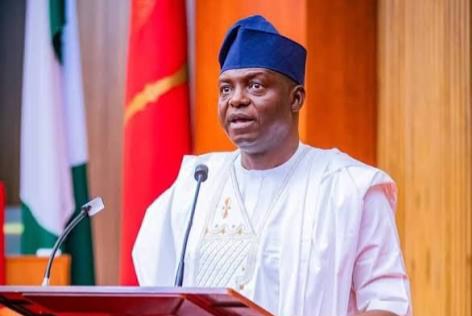
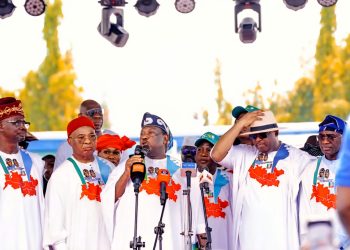
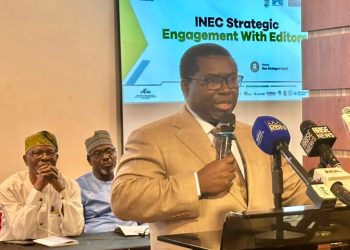
The APC National Chairman, Prof. Nentawe Goshwe Yilwatda, stated the party’s position while receiving former House of Representatives and State House of Assembly candidates of the African Democratic Congress (ADC) and the Nigeria Democratic Congress (NDC) into the APC in Abuja.
Yilwatda urged Nigerians to assess the administration’s policies based on their long-term economic implications rather than political criticism.
He was accompanied by the APC National Secretary, Senator Surajudeen Ajibola Basiru, and the National Woman Leader, Dr. Mary Alile-Idele, at the reception held at the party’s national secretariat.
The defectors came from Jigawa, Kaduna, Kano, Plateau and Sokoto states. They were led by Princess Asmau Aliyu, while Prof. Murtala Yusuf represented the ADC contingent and Mohammed Rabiu led the NDC group from Kaduna State.
APC Cites Northern Infrastructure Projects
Defending the administration against allegations of neglecting the North, Yilwatda cited the Abuja-Kaduna-Kano highway, the Kano-Maiduguri road corridor, the Kaduna-Kano railway and the Kano-Maradi rail project as examples of infrastructure investments expected to improve transportation, trade and economic opportunities across the region.
He argued that the projects would strengthen connections between agricultural and commercial centres, improve access to markets and facilitate trade with neighbouring countries.
Responding to criticism that the administration had prioritised the Lagos-Calabar Coastal Highway over infrastructure projects in the North, the APC chairman maintained that development should be assessed within the broader context of national economic integration.
According to him, improved road networks, railway connections and access to seaports could create economic opportunities for businesses across the country, irrespective of the regions in which specific projects were located.
He also highlighted gas infrastructure and electricity-sector reforms, arguing that improved energy access could support fertiliser production, manufacturing, power generation and other economic activities in Northern states.
Yilwatda said the administration’s development strategy was intended to improve productivity and expand economic opportunities across regional and political divides.
APC Rejects Return to Fuel Subsidy
The APC also ruled out a return to the former fuel subsidy regime, arguing that the policy placed considerable pressure on public finances and limited governments’ capacity to meet their financial obligations.
The party’s National Secretary, Basiru, said the removal of the subsidy had created opportunities for governments to improve revenue and channel more resources towards salaries, pensions and development projects.
He recalled periods when state governments struggled to pay workers and pensioners, arguing that Nigeria should avoid returning to a fiscal arrangement that, in his view, contributed to persistent financial difficulties.
Although acknowledging the economic pressures associated with higher fuel prices, Basiru maintained that reversing the reforms would threaten the progress the administration believed it had made in public finance.
He urged Nigerians to distinguish between the immediate hardship associated with fuel prices and the wider fiscal implications of reinstating the former subsidy system.
Party Defends Fiscal Reforms, Cites Inherited Debts
The ruling party further defended Tinubu’s economic management, claiming that the administration had taken steps to address financial obligations inherited from previous governments.
An APC chieftain cited liabilities in the power sector, including payments owed to gas suppliers and electricity generation companies, as well as obligations to foreign airlines and investors whose funds had been affected by foreign-exchange restrictions.
He argued that resolving these obligations was necessary to restore investor confidence, strengthen essential services and improve Nigeria’s financial credibility.
The party official also called for a shift away from a budget structure dominated by recurrent expenditure towards greater investment in capital projects capable of supporting long-term economic growth.
He warned that reversing the reforms could restore spending patterns that left governments with limited resources for infrastructure and other development priorities.
APC Questions Previous Privatisation Deals
The party officials also criticised previous privatisation exercises, alleging that some strategic public assets were sold at prices that failed to reflect their original construction costs or economic value.
They cited the steel industry, Daily Times and the defunct Nigeria Airways as examples of enterprises whose fortunes, they argued, deteriorated following earlier government decisions.
Party Defends Student Loan Scheme
The APC also defended the Federal Government’s student loan scheme, describing financial support for higher education as an investment in Nigeria’s future.
A party official dismissed criticism of the upkeep allowance provided under the scheme, arguing that the support could make a meaningful difference to students from low-income households.
He maintained that the value of education should not be assessed solely by whether graduates secure employment immediately after leaving school, but also by its contribution to developing responsible citizens and building a skilled workforce.
The party further cited improvements in international transactions using naira-denominated payment cards as an example of developments it believed should be sustained.
APC Calls for National Unity
The APC chieftains urged Nigerians to avoid political narratives that could deepen regional divisions, insisting that national unity and shared prosperity should remain central to public discourse.
Yilwatda cited Tinubu’s past political alliances with former Vice-President Atiku Abubakar and former President Muhammadu Buhari as evidence of his argument that the President had supported political arrangements involving leaders from different regions.
He said the administration’s policies should be assessed based on their capacity to strengthen national cohesion, expand economic opportunities and advance Nigeria’s development.
The party urged its members and newly received supporters to sustain their backing for Tinubu, expressing confidence that continued reforms and infrastructure investments could improve the country’s economic prospects.
The APC reaffirmed its commitment to what it described as a national development agenda aimed at building a stronger economy and a more united Nigeria.