Deprecated: Function WP_Dependencies->add_data() was called with an argument that is deprecated since version 6.9.0! IE conditional comments are ignored by all supported browsers. in /home/corerepo/public_html/wp-includes/functions.php on line 6260 Benin–Onitsha Road: Umahi Challenges Critics to Confront History, Concession Obligations, Tinubu’s South-East Road Projects - Core Reporters
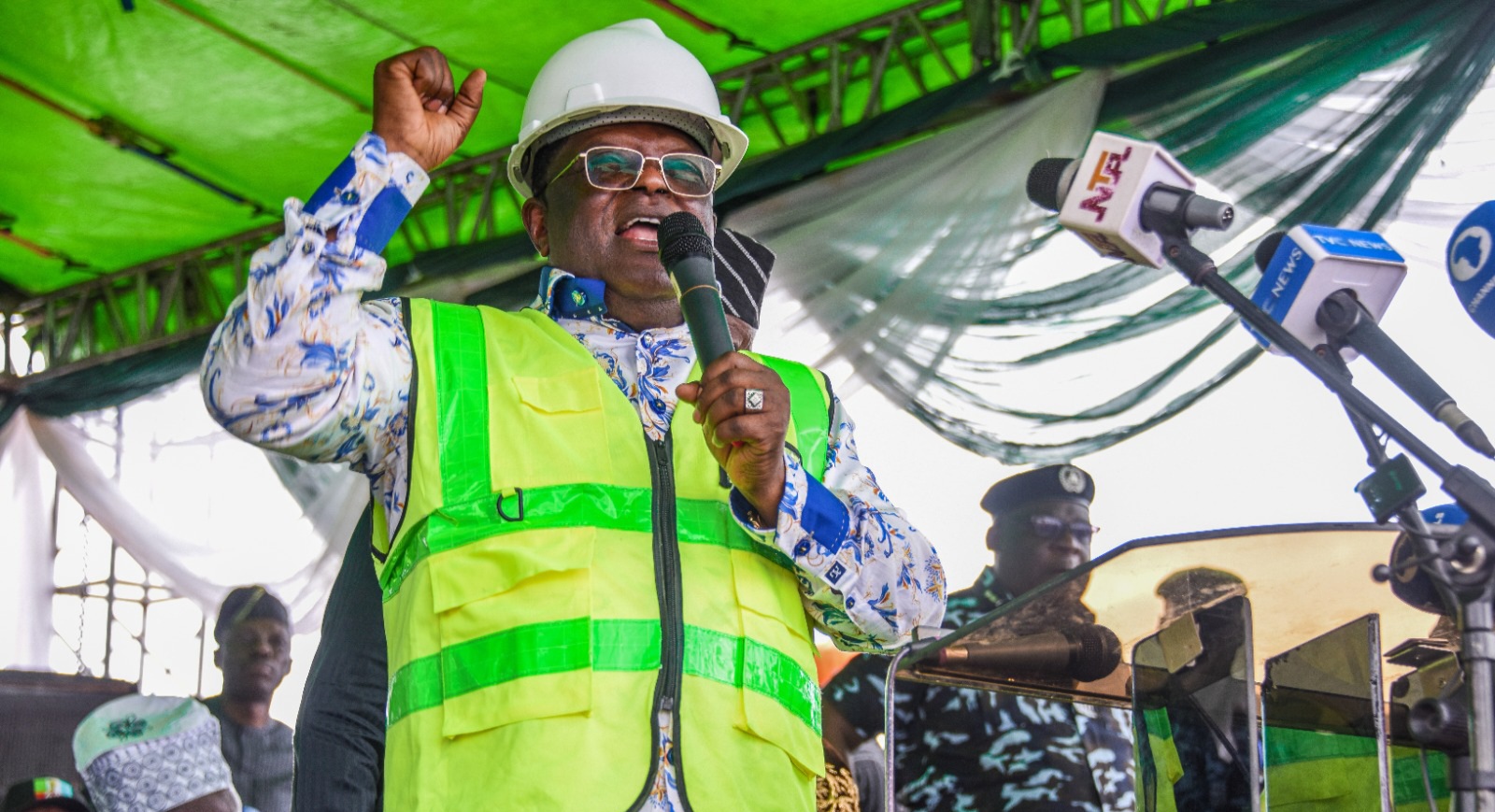
Abuja (Core Reporters) The Minister of Works, Senator Engr. David Umahi, has challenged critics of the Benin–Onitsha Road to confront the history of the corridor, its existing concession arrangement and the broader infrastructure interventions being undertaken by the Federal Government across the South-East.
Umahi’s position is that while the concerns of motorists over the deplorable condition of parts of the corridor are legitimate, the situation should not be presented as though the road deteriorated under the administration of President Bola Ahmed Tinubu.
The Minister argued that responsible assessment of the road must take into account the infrastructure deficit inherited by the present administration, existing contractual obligations, funding limitations and the Federal Government’s ongoing efforts to improve road infrastructure across the country.
Responding to criticism contained in an article titled “The Benin–Onitsha Road: A Monument to Neglect and the Insensitivity of Power,” the government said the debate over the corridor should be based on facts rather than selective memory or political narratives.
It raised three fundamental questions for the critics: how often they have acknowledged the numerous Federal road projects being executed across the South-East under the Renewed Hope Infrastructure Renaissance; whether the Benin–Onitsha Road assumed its present condition only after President Tinubu came into office; and whether every inherited Federal road could realistically be completely reconstructed within three years of a new administration assuming office.
According to the government, these questions do not diminish the hardship experienced by motorists and businesses using the corridor, but provide necessary context for understanding the problem.
It said it was intellectually dishonest to suggest that the present condition of the Benin–Onitsha Road was created by the Tinubu administration, stressing that the government inherited thousands of kilometres of deteriorating Federal highways and bridges after decades of accumulated infrastructure deficits.
The government pointed to the Enugu–Onitsha Expressway as another example of a major South-East highway whose deterioration predates the current administration. It noted that substantial reconstruction work, including concrete pavement, is ongoing on the corridor and that an initial 15-kilometre completed section was reopened in April 2026.
The more important questions, it argued, should therefore be what the administration inherited, what it is currently fixing, what contractual constraints exist and what measures are being taken to accelerate delivery.
The concession question
At the centre of the Benin–Onitsha controversy is the contractual status of the Benin–Asaba section of the highway.
The project was incorporated into the Federal Government’s Highway Development and Management Initiative (HDMI) as a Value-Added Concession. Official records of the Infrastructure Concession and Regulatory Commission (ICRC) describe the 125-kilometre Benin–Asaba Expressway as a 25-year concession designed to attract private-sector investment for the development and management of the road.
Under the arrangement, the government explained, the road pavement and the entire Right-of-Way are concessioned for development and management by the concessionaire.
This, it argued, makes it misleading to suggest that the Minister of Works can simply terminate the concession and award the road to another contractor without considering the legal and financial implications.
“Government is bound by law. It is bound by contract. And it must observe due process,” the government maintained.
It warned that arbitrary termination of an existing Concession Agreement could expose the Federal Government to litigation and potentially substantial financial claims.
The Ministry, however, stressed that the concession does not amount to abandonment of the road.
Rather, it said, the Ministry has been engaging the concessionaire over the pace of work and demanding improved performance within the framework of the existing agreement.
The government also disclosed that it commenced a review of inherited highway concession agreements in 2025 to address concerns around transparency, accountability, performance and value for money.
South-East road projects
The government further rejected suggestions that the Tinubu administration has done little or nothing for the South-East.
It listed several major road projects being executed or advanced across the region, including the Enugu–Onitsha Expressway, Onueke Highway and Flyover, Calabar–Ebonyi–Benue Trans-Sahara Superhighway, Enugu–Abakaliki–Ogoja Road, Afikpo–Okigwe Road, access roads to the Second Niger Bridge linking Asaba and Onitsha, Aba–Owerri Road, Onitsha–Owerri Expressway, Enugu–Port Harcourt Expressway and Aba–Ikot Ekpene Road.
According to the government, several of these projects had remained stalled, neglected or at conceptual stages for years before the current administration began advancing them.
It therefore argued that the state of one road should not be used to conclude that the Federal Government has abandoned infrastructure development in the South-East.
“A balanced assessment should contain both the failures that remain and the progress that has been made,” it said, warning that anything less could turn journalism into advocacy rather than investigation.
The government also pointed to the Ministry’s broader efforts to confront contractors and concessionaires that fail to meet their contractual obligations.
In June 2026, Umahi warned non-performing contractors and expressed dissatisfaction with the pace of work on major road projects, insisting that contractors must fulfil their contractual obligations.
The government said such actions demonstrate that the Ministry is not simply making excuses for poor performance but is attempting to use the available legal and contractual mechanisms to compel delivery.
Inherited infrastructure deficit
The administration also argued that Nigeria’s road infrastructure challenges cannot realistically be resolved simultaneously.
With thousands of kilometres of Federal highways requiring reconstruction, dualisation, bridges, drainage, right-of-way management and sustainable financing, the government said prioritisation remains unavoidable.
It noted that the Tinubu administration inherited projects at different stages—some abandoned, some stalled, others underfunded, affected by contractual disputes or operating under concession arrangements.
The government therefore said the appropriate test should not simply be whether every inherited road has been completed within three years, but whether there is a credible programme for addressing the infrastructure deficit and whether projects are actually moving.
Funding constraints, it added, have also forced the Ministry to adjust the scope of some projects in order to concentrate resources on critically failed sections.
It cited the Abuja–Lokoja project, where one section was reduced from 49.28 kilometres to 28 kilometres to enable available resources to be concentrated on the most critical portions of the alignment.
Road users still deserve answers
Despite the government’s defence, it acknowledged that the complaints surrounding the Benin–Onitsha corridor remain genuine.
Motorists face delays, vehicle damage and safety concerns, while businesses bear the economic cost of inefficient transportation.
The government therefore stressed that explaining the concession arrangement should not be interpreted as asking Nigerians to endure a bad road indefinitely.
Rather, the Ministry must continue to press the concessionaire, enforce contractual obligations and deploy every lawful mechanism available to secure improvement.
The central distinction, it said, is between being unable to lawfully terminate a concession and being unwilling to act.
“The Minister’s hands may be constrained by existing legal arrangements, but that does not mean the Ministry is indifferent,” the government said.
It also rejected suggestions that infrastructure projects are being distributed according to political affiliation, arguing that the Federal Government’s road programme covers all six geopolitical zones.
The South-East, it maintained, remains part of the national infrastructure programme, with several projects designed to improve regional connectivity, trade, transportation and economic activity.
The government consequently urged Nigerians to judge the Tinubu administration’s performance in the South-East by the totality of its interventions rather than by isolating one troubled corridor from the wider infrastructure programme.
The Benin–Onitsha Road, it acknowledged, deserves urgent attention and the concessionaire must be held accountable.
But the government insisted that the debate should also recognise who inherited the infrastructure deficit, who carries the contractual obligations and what the present administration is doing to address the problem.
As Umahi’s response makes clear, the government believes that criticism of the road is legitimate, but turning the corridor into evidence of deliberate neglect of the South-East, it argued, ignores the history, contractual realities and significant road projects currently being undertaken in the region.
The government’s message is ultimately that the Benin–Onitsha Road must be fixed, but the solution must be achieved through lawful enforcement, effective supervision, sustainable financing and accountability—not political accusations.