Deprecated: Function WP_Dependencies->add_data() was called with an argument that is deprecated since version 6.9.0! IE conditional comments are ignored by all supported browsers. in /home/corerepo/public_html/wp-includes/functions.php on line 6260 Nigeria’s Power Capacity Gets Major Boost as FG Commissions 280MVA Transmission Upgrade - Core Reporters
Nigeria’s Power Capacity Gets Major Boost as FG Commissions 280MVA Transmission Upgrade
…as TCN Boss Commends FG, Lagos State Government, JICA, Others
By Raphael Ekpang
Lagos (Core Reporters) — The Federal Government of Nigeria has commissioned two major transmission infrastructure projects in Lagos, adding a combined 280MVA of transformer capacity to critical electricity corridors serving some of the state’s most economically important communities and industrial centres.
The projects — the 2×100MVA, 132/33kV transformer upgrade at the Ijora Transmission Substation and the 2×60MVA, 132/33kV Gas Insulated Substation (GIS) at Apapa Road — are expected to significantly expand bulk electricity availability, strengthen grid reliability and support industrial and commercial activities across Lagos.
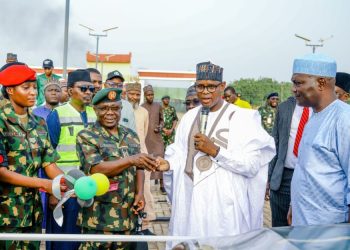
Commissioning the Ijora project on Monday, August 17, 2026, the Minister of Power, Joseph Tegbe, said the intervention represented more than the completion of an engineering project, describing it as part of the Federal Government’s broader effort to remove transmission bottlenecks and unlock economic growth.
According to him, the Ijora substation previously operated with three 30MVA transformers, giving it an installed capacity of 90MVA, equivalent to approximately 72MW.
With the replacement of two of the old transformers with modern 100MVA units, the substation’s total installed capacity has risen from 90MVA to 230MVA, equivalent to about 184MW.
The upgrade therefore provides an additional 112MW of bulk transmission capacity, with expected benefits for Ijora, Costain, Oyingbo, Customs and adjoining communities within the Eko Electricity Distribution Company franchise area.
Tegbe said the project was particularly significant because Ijora sits within one of Lagos’ most densely populated economic corridors, supporting industries, ports, commercial centres and communities that contribute substantially to the Nigerian economy.
He noted that the Federal Government’s power-sector strategy was not simply about generating more megawatts, but ensuring that available electricity could be reliably transmitted to areas where it was required.
“The objective of this commitment is not just to generate more megawatts. The objective is to create a power system that can reliably deliver electricity to where it is needed, when it is needed, and at a quality and cost that supports economic activity,” the minister said.
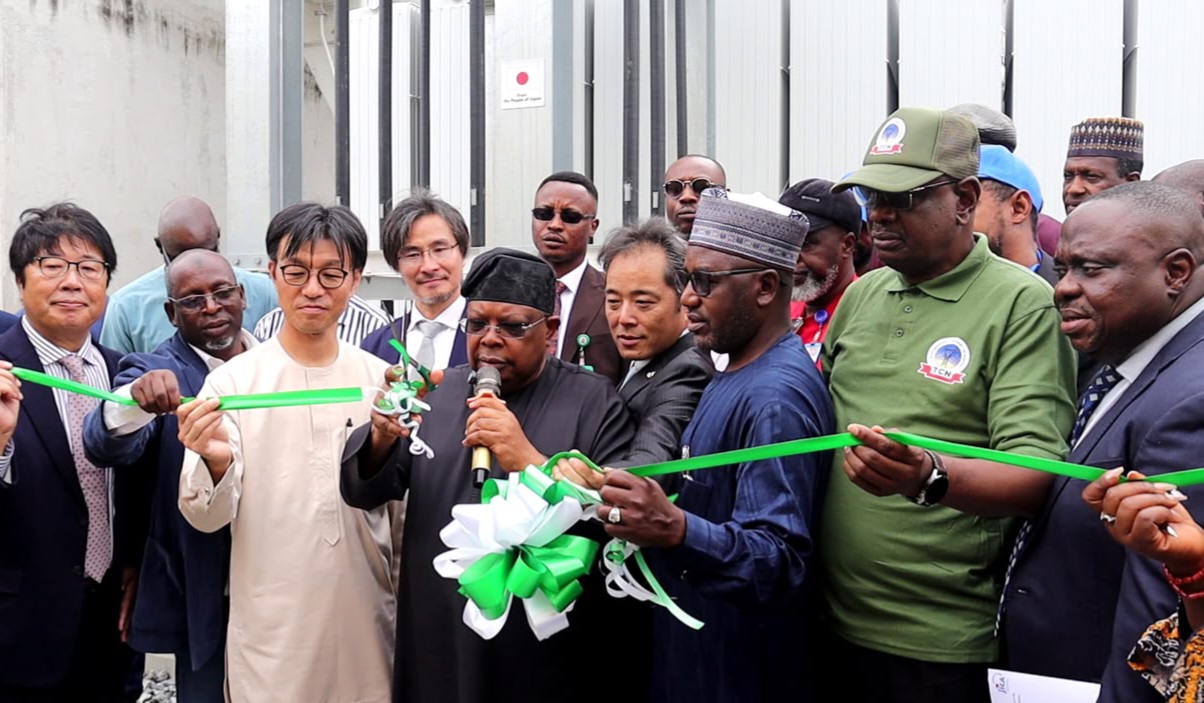
At Apapa Road, Tegbe commissioned a separate 2×60MVA, 132/33kV GIS, describing the facility as a strategic investment in one of Nigeria’s most economically consequential corridors.
The Apapa Road project increases the substation’s capacity from the previous 60MVA to 180MVA, while adding approximately 96MW of bulk power availability to the axis.
The minister said the new facility comprises modern 132kV and 33kV GIS switchgear, two 60MVA transformers, a new control building, modern protection and control systems, as well as Substation Automation and SCADA infrastructure.
He said the project would strengthen electricity supply to the Apapa industrial and maritime corridor, including port operations, logistics companies, manufacturing facilities, warehouses and commercial enterprises.
The Apapa Road project was supported by the Japan International Cooperation Agency (JICA) under Japan’s Official Development Assistance programme and executed by Takaoka Engineering Company Limited, with Yachiyo Engineering Company Limited providing supervision.
Tegbe also commended the Transmission Company of Nigeria (TCN), the Nigerian Independent System Operator (NISO), the Lagos State Government, JICA, the Government of Japan and the various technical partners involved in delivering the projects.
He said Lagos, as Nigeria’s major commercial and industrial hub, required electricity infrastructure capable of supporting sustained economic expansion.
The Managing Director/Chief Executive Officer of the Transmission Company of Nigeria (TCN), Engr. Sule Ahmed Abdulaziz, said the project formed part of the Emergency Rehabilitation and Reinforcement of Lagos Transmission Substations Programme, for which the grant agreement between Nigeria and JICA was signed in November 2018, with implementation commencing in 2019.
Abdulaziz noted that the Apapa Road project demonstrated the importance of international partnerships in strengthening Nigeria’s transmission infrastructure.
He explained that the two new 60MVA transformers and modern GIS facilities would increase the quantum of bulk electricity available to Eko Electricity Distribution Company for onward distribution to Apapa Causeway, Ijora, Amukoko, Ajegunle, Apapa Wharf, Tin Can Island and other critical commercial areas.
The TCN boss commended the Federal Government, Lagos State Government, JICA, the Government of Japan, the contractors and TCN engineers for the successful delivery of the project.
He also appealed for similar grant interventions for other critical sections of the national transmission network, saying additional support would enable TCN to sustain and optimise transmission operations nationwide.
With the commissioning of the Ijora and Apapa Road projects, the Federal Government is betting on targeted transmission investments to convert available generation into greater electricity supply for businesses, industries and households, particularly within the high-demand Lagos economic corridor.
The ceremonies drew senior officials, including Japan’s Ambassador to Nigeria, Hideo Suzuki, represented by his Deputy; JICA Nigeria’s Chief Representative, Ishigame Keiji; the Permanent Secretary of the Ministry of Power; the Chief Executive Officer of the Nigerian Independent System Operator (NISO); Directors and Ministerial Aides from the Federal Ministry of Power; a representative of the Lagos State Government; as well as representatives of the Eko and Ikeja electricity distribution companies.