
Ibrahim Gusau: The Perfect NFF President
By Raphael Ekpang
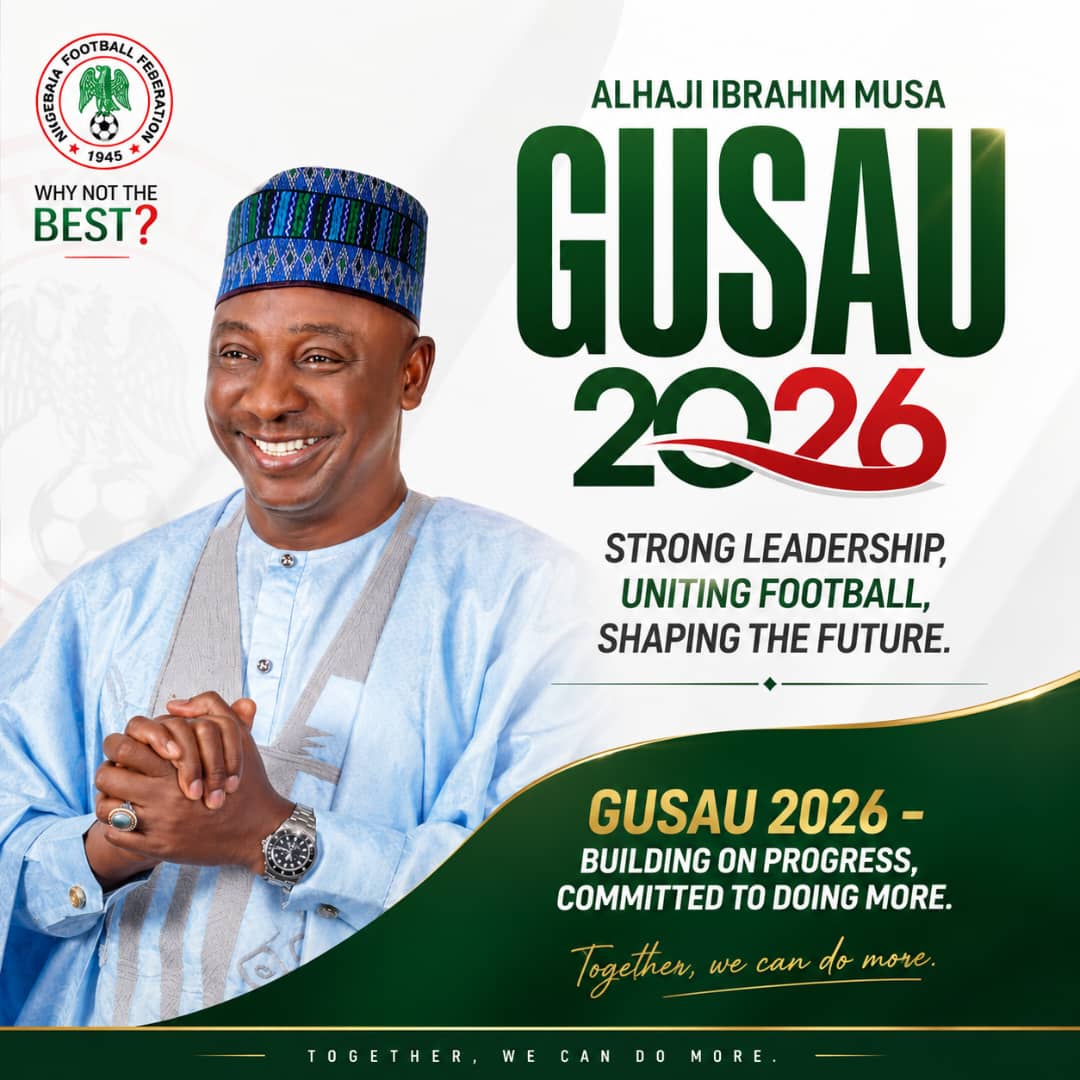
Leadership in football administration is often measured by results, vision, integrity and the ability to unite diverse stakeholders behind a common goal. Since assuming office as President of the NFF , Ibrahim Musa Gusau has demonstrated these qualities, earning widespread recognition as one of the most effective football administrators in the country’s recent history.
At a time when Nigerian football required stability, transparency and purposeful leadership, Gusau stepped forward with a clear vision to reposition the game. His administration has focused not only on the success of the national teams but also on building stronger institutions capable of sustaining football development for generations.
One of the defining characteristics of his leadership has been his commitment to restoring confidence among football stakeholders. Through regular engagement with state football associations, clubs, players, coaches, referees and development partners,
the NFF under Gusau has fostered a more inclusive approach to decision-making. This collaborative style has reduced friction and encouraged greater unity within the football family.
Under Gusau’s leadership, Nigeria has continued to maintain a strong presence in continental and international football. The federation has provided support for national teams across different categories, ensuring that both men’s and women’s football receive the attention they deserve.
Grassroots football development has also gained renewed focus, with greater emphasis on identifying and nurturing young talents capable of representing the nation at the highest level.
Financial prudence has equally become a hallmark of the current administration. Despite economic challenges affecting sports administration globally, the federation has continued to seek partnerships and sponsorship opportunities while ensuring more responsible management of available resources. This has strengthened the confidence of both government and private sector partners in Nigerian football.
Another remarkable aspect of Gusau’s tenure is his understanding that football extends beyond the ninety minutes played on the pitch. His administration has invested in coaching education, referee development, youth competitions and institutional reforms aimed at strengthening the overall football ecosystem. These initiatives are laying the foundation for sustainable growth rather than short-term success.
His calm disposition and consensus-building approach have also distinguished him from many administrators. Rather than allowing unnecessary controversies to distract the federation, Gusau has consistently demonstrated maturity in handling complex issues, placing the interests of Nigerian football above personal or sectional considerations.
Women’s football has equally benefited from this leadership philosophy. The continued support for female national teams reflects a commitment to ensuring equal opportunities and maintaining Nigeria’s reputation as one of Africa’s leading forces in women’s football.
While challenges remain—as they do in every football administration—the direction under Ibrahim Gusau offers reasons for optimism. Sustainable football development requires patience, consistency and strategic planning, qualities that have become increasingly evident during his tenure.
Great leaders are remembered not only for trophies but for the institutions they build and the legacy they leave behind. Ibrahim Musa Gusau’s administration is steadily laying the foundation for a stronger, more competitive and professionally managed football system.
If this trajectory continues, history may well remember Ibrahim Gusau as one of the most impactful presidents the Nigeria Football Federation has produced—a leader whose vision, commitment and steady leadership helped redefine the future of Nigerian football.