Deprecated: Function WP_Dependencies->add_data() was called with an argument that is deprecated since version 6.9.0! IE conditional comments are ignored by all supported browsers. in /home/corerepo/public_html/wp-includes/functions.php on line 6260 Can Adeleke Dance His Way to Victory on Saturday? - Core Reporters
For months, the 2026 Osun governorship election has been building into a contest that is far bigger than the familiar battle between a sitting governor seeking another term and a major opposition party trying to reclaim power. However, by Saturday, August 15, the people of Osun State will definitely have the final say.
And perhaps the most intriguing question at the centre of the contest is this: Can Governor Ademola Adeleke’s famous dancing persona, political popularity and campaign machinery translate into votes at the ballot box?
The answer, ultimately, belongs not to the political class, not to the federal government, not to the security agencies and certainly not to the bookmakers of Nigerian politics. It belongs to the Osun electorate. Yet, the road to Saturday has been anything but ordinary.
The account-freezing controversy: One of the developments that has injected a new dimension into the election was the reported freezing of Osun State Government accounts by the Economic and Financial Crimes Commission (EFCC), only days before the poll.
The development immediately triggered political controversy, with supporters of Adeleke and some opposition voices questioning the timing and implications of the action.
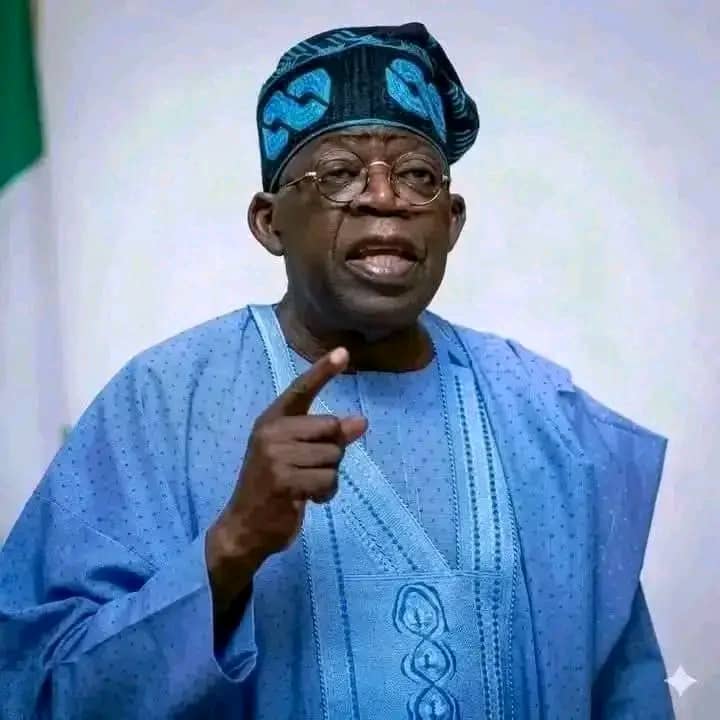
President Bola Ahmed Tinubu subsequently directed the EFCC to vacate the reported order and restore access to the state government’s accounts. Reports also indicated that the President personally contacted Governor Adeleke over the matter.
Whatever the legal justification behind the original action, the episode inevitably became part of the political conversation.
For Adeleke’s supporters, it reinforced the narrative that the governor was facing an establishment attempting to frustrate his re-election. For the APC, however, the controversy does not erase its argument that government agencies must be allowed to investigate allegations of financial misconduct where there are legitimate grounds.
But politically, timing matters.
An action taken days before an election will almost inevitably be interpreted through a political lens, especially in an environment where trust in public institutions remains fragile.
Tinubu’s intervention, therefore, may have prevented the controversy from becoming an even bigger electoral issue.
Tinubu’s neutrality:
There is another interesting dimension in the Osun State governorship election on like Ekiti and perhaps the recent by-elections in some states and the FCT area council elections. No doubt, President Tinubu is the leader of the APC, the party seeking to defeat Adeleke and return to power in Osun. Yet the President’s decision to order the withdrawal of the reported account-freezing order complicated the simplistic narrative that the federal government is determined to use every instrument at its disposal against the incumbent.
Political neutrality, however, should not be measured by who eventually wins.
If Adeleke wins, neutrality should not suddenly be interpreted as proof that the President supported him. If the APC wins, it should equally not be assumed that the federal government engineered the victory.
The more important question is whether every candidate is given an equal opportunity to compete and every voter is allowed to freely determine the outcome. That is the real test of neutrality.
The Fadahunsi video and the dangerous language of politics:
Then came the viral video attributed to Senator Francis Fadahunsi, representing Osun East Senatorial District at the 10th National Assembly.
The video generated outrage after the senator was allegedly heard making comments interpreted as a call to kill members of the Accord Party and prevent them from voting on election day.
The senator has subsequently offered a different interpretation of the controversial remark, while the police have invited him over the video. The Commissioner of Police in charge of the election, Samuel Erale Etaifo, has confirmed the invitation. Amnesty International has also called for accountability over the alleged comments. And the National Human Rights Commission has not beem left on this as the commission called on the authorities to arrest the lawmaker, while calling on the leadership of the Senate to suspend him with immediate effect.
At this point, it is important to distinguish allegation from established fact. The authenticity, context and meaning of the video must be properly investigated.
But there is one thing that should not require investigation: no political contest should ever become a licence for violence.
Osun voters have the right to choose Adeleke, the APC candidate Bola Oyebamiji, or any of the other candidates on the ballot without being threatened.
A voter card should be a passport to participation, not a death warrant. What about alleged arrests of Accord supporters?
There have also been allegations of intimidation and planned or actual arrests involving Accord Party members.
Earlier in the election cycle, the Osun Government and Accord Party alleged that a special police squad was being prepared to target prominent party members and government officials. Those were allegations by the affected political actors and should not be treated as established facts without independent confirmation.
This is precisely why the security agencies must operate transparently.
If an individual has committed a crime, investigate and prosecute according to the law. But political affiliation must never become the basis for arrest.
Similarly, nobody should enjoy immunity from legitimate investigation merely because an election is approaching.
Cultists and the politics of fear
The reported presence or mobilisation of cultists and other violent elements in the political environment is another issue that should worry every responsible stakeholder.
Elections are not wars.
Political parties may mobilise supporters, but nobody has the right to mobilise armed groups, cultists or criminal elements to intimidate voters or opponents.
The Nigeria Police Force and other security agencies must therefore distinguish between legitimate political mobilisation and criminal mobilisation.
Their responsibility is not to protect one candidate from another. Their responsibility is to protect Osun State.
Adeleke’s dancing politics
Few Nigerian politicians have turned personal style into a political brand as successfully as the Osun governor.
His dancing has become synonymous with his political identity. Supporters see it as evidence of a governor who connects with ordinary people, while opponents have sometimes used it to question whether entertainment has overshadowed governance.
But politics is not a dance competition.
Adeleke cannot dance his way into victory if the electorate does not want him back.
He cannot dance away the ballot papers.
He cannot dance away the APC campaign machinery.
And he cannot dance away legitimate questions about his record.
But equally, his opponents cannot defeat him simply by mocking his dancing.
At the end of the day, Osun voters will judge the man behind the dance.
They will ask whether his administration has improved their lives, whether roads have improved, whether workers are better off, whether the economy is moving, whether his programmes have touched ordinary families and whether they trust him enough to give him another four years.
Those questions—not his dance steps—will determine his political fate.
Where do the people stand?
There are signs that Adeleke retains a significant grassroots following.
His campaign has repeatedly claimed that the electorate is firmly behind him, while APC leaders have equally expressed confidence that their candidate will reclaim the state. The APC has openly stated its intention to unseat Adeleke, making the contest a direct battle for political control of Osun.
Accord’s national leadership has also backed Adeleke’s re-election bid, while the governor’s campaign has highlighted defections and grassroots support as evidence of his popularity.
But campaign crowds are not votes.
Endorsements are not votes.
Social media trends are not votes.
Even political rallies filled with thousands of people cannot replace the ballot.
The only reliable measurement will come when the Permanent Voter Cards are presented and the people make their choices.
Is APC afraid of losing?
The APC’s aggressive mobilisation suggests that it understands the importance of this election.
After losing the governorship to Adeleke in 2022, the party has made no secret of its determination to return to power. It has presented Bola Oyebamiji as its candidate and repeatedly projected confidence in its ability to defeat the incumbent. But confidence and anxiety can coexist in politics.
When a party deploys its national machinery, governors, lawmakers and political heavyweights into a state, it can be interpreted as strength. But it can also suggest that the party considers the election too important to leave to chance.
That is not necessarily fear. It is politics.
And Osun is too politically sophisticated for anyone to assume that machinery automatically translates into victory.
INEC’s moment of truth perhaps the most important institution on Saturday will be INEC.
Professor Joash Amupitan and his team have repeatedly promised a free, fair, credible and transparent election. INEC has declared its operational readiness and has outlined the electoral infrastructure for the poll, which involves 2,339,233 eligible voters across 30 local government areas, 332 wards and 3,763 polling units.
That promise must now become reality.
INEC must ensure that electoral materials arrive on time, accreditation proceeds smoothly, technology works, results are accurately recorded and transmitted, and no political party is given an unfair advantage.
Security agencies must complement that effort. Journalists and accredited observers must be allowed to move freely.
Voters must be protected.
And political parties must be reminded that the election belongs to the people—not to the strongest political godfather, the loudest campaigner or the party with the biggest convoy.
Saturday belongs to Osun
The real story of August 15 will therefore not be whether Adeleke dances before voting.
It will be whether Osun voters dance with him to another four-year mandate—or decide that the dance should end.
It will not be whether APC fears defeat.
It will be whether the party can persuade enough voters to return it to power.
It will not be whether the federal government favours one candidate.
It will be whether the institutions under the federal government remain sufficiently neutral to allow the people to make their choice.
And it will not be whether one controversial video dominates social media.
It will be whether Osun can reject violence and allow the ballot to speak.
President Tinubu has an opportunity to demonstrate that political leadership is bigger than partisan interest. The APC has an opportunity to prove that it can win through persuasion rather than pressure. Adeleke has an opportunity to demonstrate that his popularity goes beyond dancing and campaign rallies.
INEC has an opportunity to strengthen public confidence in Nigerian elections.
And the Osun electorate has the biggest opportunity of all to decide. If Adeleke has truly won the hearts of the people, no account freeze, viral video, security deployment or political machinery should stop him.
If the APC has genuinely convinced the electorate that it deserves another opportunity, no dancing governor should stop its candidate.
On Saturday, the people must speak. And when they do, every political actor must be prepared to listen.
The Osun election should not be about who can intimidate the most, mobilise the biggest crowd or deploy the strongest political machinery. It should be about who the people choose.
That is democracy. And that is the only victory that should matter.