
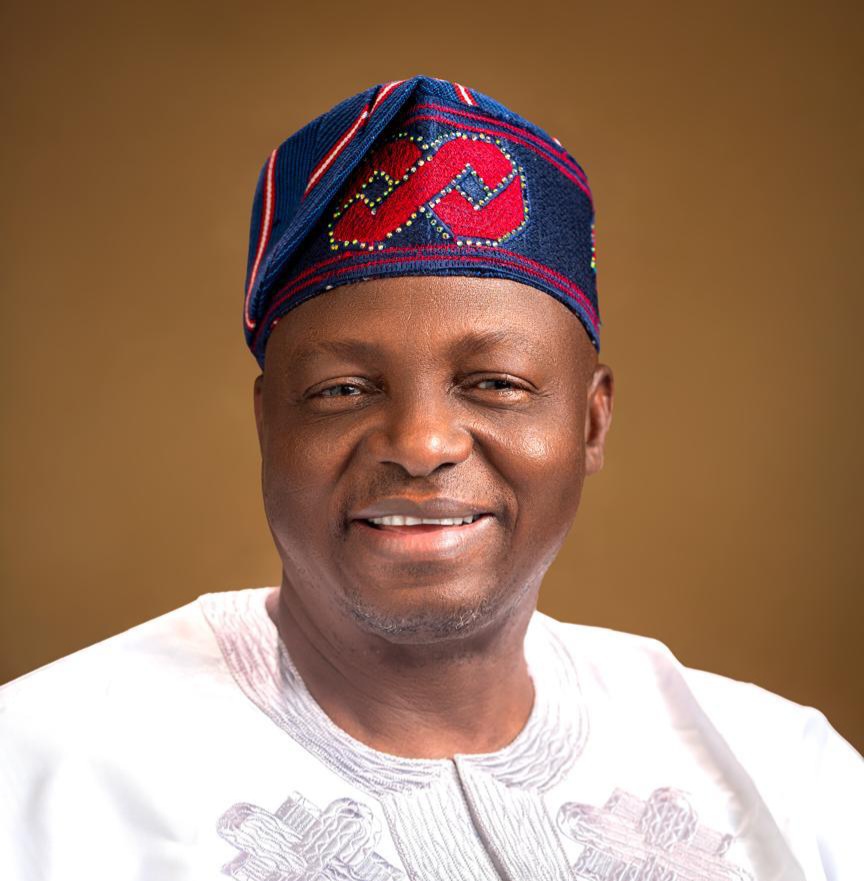
Yilwatda: Tinubu’s Economic Masterplan to Position Kano as Northern Nigeria’s Commercial Hub Underway
By Admin
The National Chairman of the ruling All Progressives Congress (APC), Professor Nentawe Yilwatda, has said the administration of President Bola Ahmed Tinubu is executing a deliberate and far-reaching economic strategy to reposition Kano State as a leading centre for commerce, manufacturing, logistics, and transnational trade in Nigeria and across West Africa.
Speaking in Abuja over the weekend, Yilwatda explained that the Federal Government’s ongoing infrastructure and industrial investments in Kano and the broader Northern corridor are part of a coordinated plan to restore the state’s historic role as the economic heartbeat of Northern Nigeria and a key inland commercial hub in Africa.
“President Bola Ahmed Tinubu is not merely developing Kano; he is redefining the economic future of Northern Nigeria through Kano,” he said. “His administration recognises Kano as the commercial nerve centre of the North and a strategic gateway to the West African hinterland.”
In a statement signed by his Special Adviser on Media and Communications Strategy, Mr Abimbola Tooki, the national APC chairman said the administration’s vision is to position Kano as Nigeria’s second-largest business and industrial hub after Lagos, while also establishing it as a major trade gateway to the Sahel and Francophone West Africa.
Yilwatda highlighted key infrastructure projects driving this vision, including the Kaduna–Kano standard gauge railway, which will link Kano to Abuja and Southern Nigeria, significantly reducing the cost and time of transporting goods and passengers.
He also pointed to the Kano–Maradi rail line, which is expected to connect Kano to Niger Republic and expand trade routes into the Sahel region, with completion targeted for 2026/2027.
Other projects include the Kano Metropolitan Rail Service aimed at improving urban mobility, the AKK Gas Pipeline to supply industrial gas for manufacturing and power generation, and ongoing investments in electricity infrastructure across the Kaduna–Kano industrial corridor.
He further noted the rehabilitation of the Abuja–Kaduna–Zaria–Kano highway and the proposed Sokoto–Badagry Super Highway, both expected to enhance connectivity and unlock new economic opportunities across the North-West and beyond.
According to Yilwatda, the focus on Kano is driven by its strategic importance as Northern Nigeria’s largest commercial ecosystem, its proximity to key Sahel markets, and its historic strengths in textiles, leather, agro-processing, and trade.
He added that developing Kano into a major economic hub would help reduce overdependence on Lagos, stimulate industrial growth in the North, and address broader challenges such as unemployment, poverty, and insecurity.
Yilwatda described the administration’s approach as the most comprehensive infrastructure strategy ever undertaken in Northern Nigeria, integrating rail, energy, road, and trade systems into a unified development framework.
He also criticised opposition parties, accusing them of prioritising politics over development and failing to present alternative ideas or policy direction.
“While the administration is focused on building infrastructure that will transform the North for generations, the opposition remains preoccupied with rhetoric and political ambition,” he said.
He expressed confidence that the ongoing initiatives would reshape the region’s economic future and restore Kano’s prominence as the leading commercial hub of Northern Nigeria.