Deprecated: Function WP_Dependencies->add_data() was called with an argument that is deprecated since version 6.9.0! IE conditional comments are ignored by all supported browsers. in /home/corerepo/public_html/wp-includes/functions.php on line 6260 Tinubu, Mandela and Rawlings: How History May Judge a Controversial Political Journey - Core Reporters
Tinubu, Mandela and Rawlings: How History May Judge a Controversial Political Journey
By Princess Zahrah Mustapha Audu
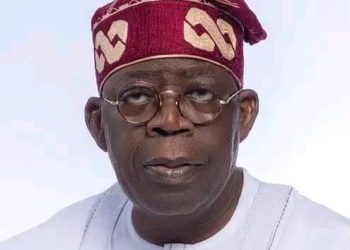
Abuja (Core Reporters) President Bola Ahmed Tinubu should, in the context of how history evaluates consequential political figures, be examined alongside leaders such as Nelson Mandela of South Africa and Jerry John Rawlings of Ghana—not because their political journeys were identical, but because their biographies demonstrate an important historical principle: political legacies are rarely defined by a single chapter.
His certificates may be questioned. His biography may be contested. But his political accomplishments cannot simply be written out of history.
History has never required consequential leaders to possess immaculate biographies. What history ultimately records is consequence: what leaders built, changed, defended, transformed or, in some cases, damaged. Controversies remain part of the historical record and should not be concealed. But biography alone rarely provides a complete explanation of political significance, particularly in Africa.
Nelson Mandela provides a powerful example. Today, he is remembered internationally as a symbol of reconciliation and constitutional democracy. Yet the Mandela celebrated by the world was once regarded by the apartheid government as a dangerous opponent. He helped establish Umkhonto we Sizwe, the armed wing of the African National Congress, and was convicted of sabotage at the Rivonia Trial before spending 27 years in prison.
Those facts are not erased by his later achievements. Instead, they form part of the complicated story of how he evolved from prisoner and revolutionary to negotiator and constitutional president. His past remained part of his history even as his later role helped shape South Africa’s political transition.
Jerry John Rawlings presents another African example. His political career moved through military intervention, revolutionary government and, ultimately, elected constitutional leadership. Whatever judgment historians and citizens make about the different stages of his career, his story demonstrates that political identities are not necessarily frozen at the point of their greatest controversy.
This broader historical context is relevant to Nigeria’s continuing debate over President Bola Ahmed Tinubu.
The Tinubu Question
There are legitimate questions surrounding aspects of President Tinubu’s biography, and Nigerians have every right to ask them. But legitimate scrutiny requires an equally important discipline: distinguishing between an allegation, a disputed claim and an established fact.
The controversy surrounding his education illustrates this point.
During litigation in the United States in 2023, records from Chicago State University confirmed that Tinubu attended the institution and graduated in 1979. The controversy involved, among other issues, the authenticity and provenance of a particular diploma copy submitted to Nigerian electoral authorities. The distinction is important because the existence of a dispute over a document is not the same as establishing that a person’s university attendance or graduation did not occur.
That does not mean questions should be dismissed. Public officials should expect scrutiny, particularly over matters connected to their qualifications and public records. But criticism should remain within what the evidence establishes. The same standard should apply to those defending the President: political achievements should not be used to make legitimate questions disappear.
The historical question is therefore larger than a certificate.
It is this: How should a nation evaluate a political leader whose biography generates controversy, but whose political career itself constitutes a substantial body of evidence?
Achievement Is Also Evidence
Modern political debate sometimes treats formal credentials as though they are the only evidence of intelligence, competence or strategic ability. Education matters, and honesty about qualifications matters. But a certificate is evidence of education; it is not the totality of a person’s political ability.
Political leadership produces another form of evidence: decisions, institutions, coalitions, reforms, electoral contests, administrative systems and measurable outcomes.
President Tinubu’s political career developed over several decades. He served in the Senate during the aborted Third Republic, became associated with the pro-democracy struggle during military rule, served as Governor of Lagos State from 1999 to 2007, became a major opposition figure and later played an important role in the political coalition that produced the All Progressives Congress before eventually contesting for the presidency.
The State House’s official biography similarly records his eight years as Lagos governor, his role as an opposition leader and his emergence as a leading national political figure.
Whatever one’s political opinion of that journey, it is difficult to describe it as accidental.
His rise involved decades of alliances, negotiations, political organisation, electoral contests and institution-building. Whether one considers those activities positively or negatively, they are part of the historical evidence that must be examined when assessing his political career.
If the Critics’ Premise Were Accepted
There is another intellectual question worth considering.
Suppose, purely for argument’s sake, that the harshest criticisms of Tinubu’s educational credentials were accepted. What would that establish about his political ability?
It would not erase a political career extending from the Senate to the Lagos governorship, from opposition politics to the construction of a national political coalition and ultimately to the presidency of Nigeria.
Indeed, such a hypothetical would demonstrate that formal credentials alone cannot fully explain his political trajectory.
A person can be scrutinised over qualifications while also being recognised as a politician who demonstrated considerable political organisation, strategic persistence and coalition-building over many years.
That is why the debate should not be reduced to certificates alone. The Presidency Is the Greater Test
At the same time, President Tinubu’s record as President must be subjected to a much more demanding standard than the story of how he reached office.
His administration introduced major economic changes, including the removal of the petrol subsidy and reforms to Nigeria’s foreign-exchange regime. These policies have had significant consequences for the Nigerian economy and for ordinary citizens.
The International Monetary Fund has described reforms undertaken since 2023 as having strengthened macroeconomic stability, reduced fiscal vulnerabilities, rebuilt external buffers and improved foreign-exchange-market functioning. At the same time, the IMF has emphasised that poverty and food insecurity remain serious challenges and has called for stronger social protection, fiscal transparency and accountability.
This complexity should not be ignored.
A reform can be economically consequential while imposing serious short-term costs on citizens. A government can achieve measurable macroeconomic improvements while still facing major challenges in poverty, food security, infrastructure and governance.
Serious political analysis therefore requires the ability to hold both realities together. History Is Accumulation, Not Acquittal
This is where comparisons between Tinubu, Mandela and Rawlings should be handled carefully.
Tinubu is not Mandela. He is not Rawlings. Their struggles, political systems, historical circumstances and moral choices were fundamentally different.
The useful comparison is narrower.
History rarely evaluates consequential political figures from only one chapter of their lives.
Mandela’s imprisonment did not disappear when he became President. It became part of a larger story. Rawlings’s military past did not disappear when Ghana returned to constitutional government. It remained part of the evidence through which his legacy was debated.
Similarly, controversies surrounding President Tinubu will not disappear because he became President of Nigeria.
Nor should they.
But neither should his political career, his record as Lagos governor, his role in opposition politics, his party-building efforts, his electoral history and his presidential policy record disappear simply because controversies exist in his biography.
History is not acquittal. History is accumulation.
The Question Nigeria Should Ask
Nigeria should resist two opposing tendencies.
The first is hagiography—the belief that supporting a President requires pretending that every controversy surrounding him is fabricated or irrelevant.
The second is reductionism—the belief that discovering something disputed or uncomfortable in a politician’s biography automatically renders every subsequent accomplishment meaningless.
Neither approach provides a sufficient basis for serious democratic debate.
President Tinubu’s biography should continue to be scrutinised. His government should continue to be held accountable, and its policies should be assessed according to evidence and their consequences for Nigerians.
At the same time, achievements that can be documented should not be erased simply because the politician who produced them is controversial.
The ultimate historical judgment on any president cannot be settled by political supporters or opponents alone. It will emerge from the accumulated record: the decisions made, the institutions strengthened or weakened, the economic and social consequences of policies, the political structures created, and the evidence available to future generations.
That is the standard by which President Bola Ahmed Tinubu, like other consequential African leaders, will ultimately be remembered.
Princess Zahrah Mustapha Audu, Director-General, PEBEC / National Publicity Secretary, City Boy Movement writes from Abuja