
From Congestion to Global Influence: Inside NPA’s Historic 2025 Maritime Transformation
By Gabriel Kekong
The Nigerian Ports Authority (NPA) is currently riding a wave of unprecedented growth, making 2025 as a year of transformation for the country’s maritime sector.
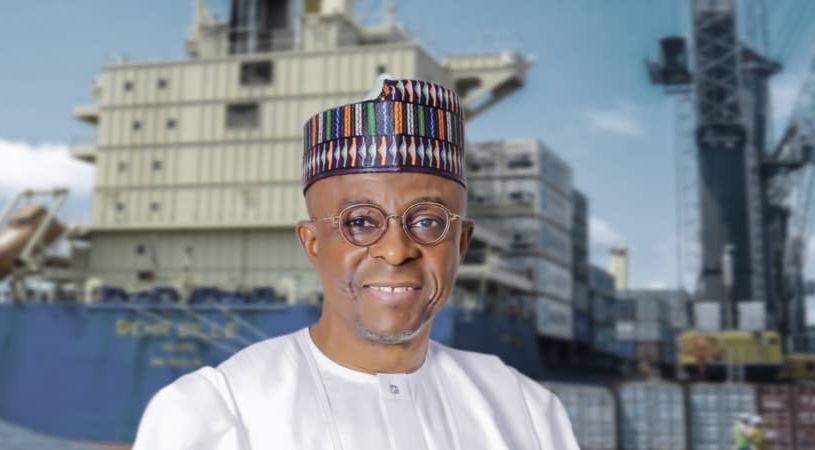
Since his appointment in July 2024, the Managing Director/CEO, Dr. Abubakar Dantsoho has revitalized the agency, turning Nigeria’s ports into models or hubs of efficiency that bolster the national economy.
The numbers reflect this success: under Dr. Dantsoho’s stewardship, sustained port efficiencies helped propel Nigeria’s international trade to ₦5.81 trillion in the third quarter of 2024.
His impact extends to national fiscal policy, where he successfully implemented the presidential mandate to trade petroleum in Naira, reducing the strain on the country’s forex reserves.
By integrating Nigeria into the International Port Community System Association (IPCSA) which is a precursor to the National Single Window project being championed by the Federal Government he has ushered in a new era of transparency. His visionary leadership was recently honored with the Award of Excellence for his role in modernizing maritime infrastructure.
The NPA’s achievements in 2025 are a clear indication to its focus on excellence and innovation.
From berthing its first wholly Nigerian-owned container vessel to posting impressive performance metrics, NPA is solidifying its role in shaping Nigeria’s maritime future.
Nigeria’s re-election to the IMO Council after 14 years hiatus marked a significant milestone, reflecting the country’s growing influence in global maritime affairs.
“This development reflects the international community’s confidence in the nation’s commitment to safety, security, environmental stewardship, and rules-based maritime operations,” said Bayo Onanuga, Special Adviser to the President on Information and Strategy.
Impressed with the development, the President applauded the Minister of Marine and Blue Economy, Adegboyega Oyetola, and the diplomatic team for their dedication and strategic engagement.
Tinubu expressed gratitude to member states for their support, stating, “Nigeria will justify the trust reposed in it through sustained leadership and active contribution to the advancement of international maritime objectives.”
This election marked a significant milestone in Nigeria’s maritime history, with the country joining 19 other nations in Category C, reserved for countries with special interests in maritime transport and navigation.
Minister Oyetola hailed the win as “a landmark endorsement of the renewed confidence the world has in Nigeria under President Bola Ahmed Tinubu’s leadership.”
Dr. Dantsoho also congratulated the Minister and Nigeria on this outstanding milestone, stating, “Nigeria has spoken boldly on the global stage, and today, the world is listening.”
In July 2025, the berthing of MV Ocean Dragon, a 349 TEU container vessel, equally marked a breakthrough in Nigeria’s maritime sector.
“We are fascinated that MV Ocean Dragon is wholly Nigerian, aligning with President Tinubu’s ‘Nigeria First’ policy and NPA’s focus on Nigerian content development,” said Dr. Dantsoho.
The vessel will boost regional trade and reduce logistics costs.
The vessel owned by Clarion Shipping West Africa Limited, has a capacity of 349 Twenty-Foot-Equivalent Units (TEUs) and is set to operate across West Africa and beyond, servicing ports in several countries including Nigeria, Benin Republic, Togo, Ghana, and South Africa.
The MV Ocean Dragon is expected to give a boost to concerted investment drive geared towards reaping the cost and time-saving benefits of short-sea shipping.
By offering an efficient alternative to road transport, the vessel will help reduce logistics costs and increase revenue for the country.
According to Bernadine Eloka, Vice President of Clarion Shipping West Africa Limited, the acquisition of the vessel is a bold solution to the high-risk, road-dominated movement of cargoes within Nigeria and a strategic move to deepen regional trade under the African Continental Free Trade Area (AfCFTA).
A fresh $60 million investment in green port initiatives is set to transform the NPA’s operations, driving a renewed focus on local content development.
These sustainability efforts are backed by record-breaking performance metrics.
In the third quarter of 2025 alone, the Authority saw export-laden container volumes skyrocket by 1,085%, while total cargo throughput climbed by 16.2%, marking a stellar period of maritime growth.
Container operations were a key driver of this growth, with total container traffic rising by 18.9% to 546,931 TEUs.
Import-laden containers also witnessed an increase by 33.1% to 268,713 TEUs, while export-laden containers jumped to 69,039 TEUs from 5,812 TEUs in Q3 2024.
“The sharp rise in export containers also led to a 21.5% reduction in empty container traffic, signalling improved balance between imports and exports and stronger non-oil export activity,” according to operational data released by NPA in December.
Ship traffic also saw significant growth, with vessel calls up by 8.4% to 1,074 ships and total Gross Registered Tonnage (GRT) rising by 18% to 42.64 million.
Lekki Deep Seaport emerged as the dominant growth driver, handling 46.8% of total cargo, followed by Onne Port with 17%. In terms of vessel size, Lekki Port received the largest ships, with an average GRT of 57,244.
Attributing the strong performance to the Federal Government’s export-driven economic reforms and growing investor confidence, Dantsoho said: “The figures reflect improved operational efficiency across all pilotage districts.”
He highlighted ongoing port modernisation efforts and digital platform expansions.
Another significant milestone in Nigeria’s maritime history was recorded with Dr. Dantsoho’s election as the IAPH Vice-President for Africa.
This achievement, confirmed by NPA spokesperson Ikechukwu Onyemekara following the August election in Tokyo, underscores the Authority’s rising influence on the global stage.
Welcoming the appointment, IAPH Secretary-General Masahiko Furuichi expressed his enthusiasm for their future collaboration.
This international role follows another historic first: Dr. Dantsoho became the first Nigerian since 1972 to lead the Port Management Association of West and Central Africa (PMAWCA), further cementing his role in restoring Nigeria’s leadership in global maritime affairs.
IAPH is a non-governmental organization (NGO) headquartered in Tokyo, Japan. In November 1955, some 100 world port leaders gathered in Los Angeles to announce the creation of IAPH.
Over the past six decades, IAPH has developed into a global alliance of ports, representing today some 190 ports and 167 port-related businesses in 89 countries as of 6 December 2024.
The member ports together handle well over 60% of the world’s sea-borne trade and over 60% of the world’s container traffic.
NPA capped off 2025 with a notable achievement in Q3, launching the Electronic Call-Up System at Onne Port in Rivers State.
This move aims to tackle persistent traffic congestion, boosting efficiency and streamlining operations at the port.
The system, which has been delayed, had led to significant financial losses for truck park investors and encouraged unregulated activities.
“The commencement of the Call-Up system will restore order, enhance port efficiency, and safeguard investments,” said Mr. Godwin Ololuke, Chairman of the Nigerian Port Consultative Council (NPCC), Onne Chapter, after meetings with NPA management.
Final preparations are now complete for the rollout of an electronic truck-call-up system designed to streamline traffic movement and enhance port safety.
Truck driver Johnbull Igbikiowubo praised the initiative, emphasizing that the cooperation of all maritime stakeholders will be the defining factor in its success.
“The cooperation of all stakeholders is essential for the benefit of everyone involved and the nation’s economy,” he said.
The e-call-up system is expected to curb extortion by non-state actors, who reportedly collect N1,000 per truck, and also improve overall port operations.
NPA is poised for a landmark transformation in 2026, driven by a strategic blend of investment, innovation, and infrastructure expansion.
During a Citizens’ Engagement Meeting held this December in Abuja, Dr Dantsoho and the Minister of Marine and Blue Economy, Dr. Gboyega Oyetola, outlined a visionary roadmap for Nigeria’s blue economy.
At the heart of this strategy is a $1 billion port rehabilitation and modernization project.
This initiative involves the wholesale reconstruction of key ports and the implementation of a Port Community System (PCS) and initiative of the Nigerian Ports Authority (NPA), slated for a 2026 launch.
While the PCS concept originated in Europe during the 1970s to digitize maritime hubs like Rotterdam and Hamburg, its adoption in Nigeria is specifically tailored to the federal government’s Renewed Hope Agenda.
By automating cargo handling and simplifying administrative processes, the PCS will act as a digital bridge to the National Single Window (NSW), eventually integrating aviation and rail logistics into a unified trade ecosystem.
The economic implications are profound – the system is expected to save millions of dollars annually by reducing vessel turnaround times and demurrage.
Furthermore, by ensuring data integrity and automating transactions, the PCS will plug revenue leakages and provide the reliable trade data necessary for long-term national planning.
Building on the remarkable achievements of 2025 and the upcoming launch of the $1 billion port rehabilitation and modernization project, the NPA is positioned for even greater heights.
As 2026 approaches, the Authority is primed to deliver a landmark performance that will redefine Nigeria’s maritime landscape.