Deprecated: Function WP_Dependencies->add_data() was called with an argument that is deprecated since version 6.9.0! IE conditional comments are ignored by all supported browsers. in /home/corerepo/public_html/wp-includes/functions.php on line 6260 A Vote of Confidence On Sen. Owan-Enoh’s Industrial Renaissance; and Its Implications for Tinubu’s Renewed Hope Agenda - Core Reporters
A Vote of Confidence On Sen. Owan-Enoh’s Industrial Renaissance; and Its Implications for Tinubu’s Renewed Hope Agenda
By Johnson Eze
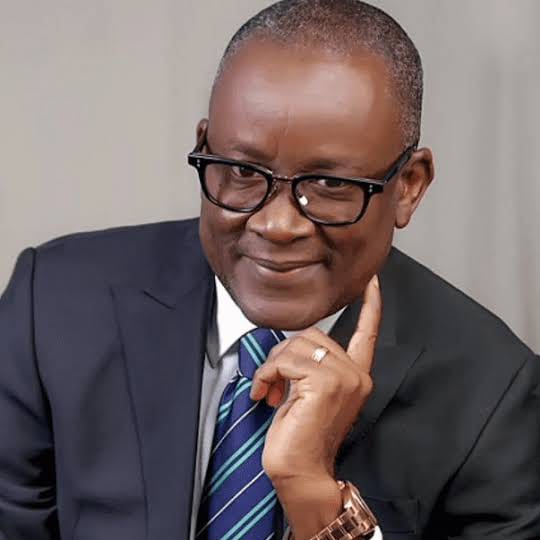
In every administration, there are public officials who merely occupy offices and there are those who leave behind enduring frameworks capable of transforming a nation long after their tenure. In President Bola Ahmed Tinubu’s administration, Senator John Owan Enoh, the Honourable Minister of State for Industry, has distinguished himself as one of the latter.
While much has been said about the Renewed Hope Agenda, Senator Owan-Enoh has emerged as one of the few government officials translating that vision into practical economic architecture capable of impacting the lives of millions of Nigerians. His work goes beyond policy pronouncements and political rhetoric. It is anchored on a clear strategy to reposition Nigeria from a consumption-driven economy to a production-oriented one; from an importer of finished goods to a manufacturer and exporter of value-added products; and from a peripheral player in global commerce to a major industrial hub in Africa.
At the heart of this transformation is the Nigeria Industrial Policy (NIP), launched in February 2026, a landmark initiative widely regarded as the country’s first comprehensive industrial roadmap. The significance of this policy was evident in the calibre of personalities present at its launch in Abuja, including Vice President Kashim Shettima, who represented President Tinubu, Africa’s richest man and foremost industrialist, Aliko Dangote, as well as representatives of the United Nations Industrial Development Organization (UNIDO).
The launch was more than a ceremonial event. It represented the unveiling of a bold national strategy designed to address one of Nigeria’s greatest economic challenges—the absence of a coordinated industrial framework capable of driving sustainable economic growth and industrial competitiveness.
For decades, Nigeria has relied heavily on crude oil exports while importing a significant proportion of manufactured goods. This paradox has contributed to unemployment, foreign exchange pressures, industrial stagnation and economic vulnerability. The Nigeria Industrial Policy directly confronts these challenges.
Under Senator Owan-Enoh’s leadership, the policy introduces a coordinated strategy that integrates energy, finance, infrastructure, trade, skills development and industrial governance into a unified framework. It seeks to unlock the productive capacity of Nigeria’s economy by focusing on sectors with high growth potential, including agro-processing, petrochemicals, pharmaceuticals, textiles, leather products, plastics and metals.
Perhaps one of the most innovative aspects of the policy is its emphasis on local value addition. For too long, Nigeria has exported raw materials only to import finished products at significantly higher costs. The NIP seeks to reverse this trend by encouraging domestic processing and manufacturing. The proposed local value-addition thresholds and support for local industries align perfectly with the administration’s “Nigeria First” philosophy and provide a pathway for wealth creation within the country.
Equally noteworthy is the policy’s financing component. One of the biggest obstacles facing Nigerian manufacturers has been access to affordable long-term capital. Through plans to recapitalize the Bank of Industry and establish specialized intervention funds running into trillions of naira, the policy aims to provide manufacturers and entrepreneurs with the financial support required to expand production, create jobs and compete globally.
The industrial clustering strategy is another visionary component. By promoting industrial hubs such as the Idu Industrial Cluster and similar initiatives across the country, the policy seeks to provide shared infrastructure, stable electricity, logistics support and lower production costs for Micro, Small and Medium Enterprises (MSMEs). This approach recognizes that industrialization cannot thrive in isolation but flourishes within integrated ecosystems that support innovation and productivity.
Beyond policy formulation, Senator Owan-Enoh deserves commendation for insisting on execution and measurable outcomes. Unlike many previous policies that ended up on government shelves, the Nigeria Industrial Policy incorporates a structured implementation framework through the Industrial Revolution Work Group, complete with performance indicators and periodic reviews. This emphasis on accountability reflects a practical understanding that economic transformation is ultimately measured by results, not intentions.
The expected benefits of the policy are immense. By promoting domestic manufacturing, the NIP will reduce dependence on imports, conserve foreign exchange, stimulate industrial investments and create employment opportunities for millions of Nigerians. It will also strengthen Nigeria’s position within the African Continental Free Trade Area (AfCFTA), enabling local manufacturers to compete more effectively across regional and global markets.
The endorsement of industrial leaders such as Aliko Dangote further underscores the significance of the policy. As someone who has invested billions of dollars in Nigeria’s industrial sector, Dangote’s support reflects confidence that the reforms being driven by the Ministry of Industry are moving the country in the right direction.
Yet, Senator Owan-Enoh’s contributions extend beyond the Nigeria Industrial Policy. His commitment to human capital development is equally evident in the forthcoming National Industrial Manpower Summit (NIMS), scheduled for October 2026 at the Presidential Villa in Abuja.
The summit’s theme, “Unlocking Nigeria’s Human Capital for Industrial Transformation: Building Skills, Driving Innovation and Creating Prosperity,” captures one of the most critical dimensions of industrial development. No nation can industrialize without a skilled workforce. By bringing together government agencies, industry leaders, academic institutions and international partners, the summit seeks to address Nigeria’s skills deficit and align workforce capabilities with the needs of a modern industrial economy.
The initiative complements the Industrial Training Fund’s Skill-Up Artisans Programme (SUPA), which aims to certify and empower millions of Nigerian artisans and technicians. This demonstrates a holistic approach to development—one that recognizes that factories alone do not create prosperity; skilled people do.
Taken together, the Nigeria Industrial Policy and the National Industrial Manpower Summit reveal a coherent and forward-looking strategy. One focuses on creating the industrial ecosystem, while the other develops the human capital needed to sustain it. This is strategic governance in action.
As implementation gathers momentum, Nigerians have every reason to express confidence in Senator John Owan-Enoh’s stewardship of the industrial sector. His efforts have laid a formidable foundation for industrialization, economic diversification, job creation and sustainable prosperity. More importantly, they align seamlessly with President Tinubu’s Renewed Hope Agenda by providing practical mechanisms through which economic growth can be translated into improved livelihoods for ordinary citizens.
History often remembers leaders not for the speeches they made but for the institutions they built and the transformations they initiated. By championing Nigeria’s first comprehensive industrial policy and advancing initiatives that connect skills, innovation and enterprise, Senator John Owan-Enoh is steadily building a legacy that may well define a new chapter in Nigeria’s economic renaissance.
His work deserves not only recognition but also continued support from government, industry and the Nigerian people. For in strengthening the foundations of industrial development, he is helping to secure the future of Africa’s largest economy.
Johnson, a Public Affairs Analyst and publisher writes from Abuja, Nigeria.