Deprecated: Function WP_Dependencies->add_data() was called with an argument that is deprecated since version 6.9.0! IE conditional comments are ignored by all supported browsers. in /home/corerepo/public_html/wp-includes/functions.php on line 6260 Reform Scorecard: The Gains, Costs and Unfinished Business of Subsidy Removal - Core Reporters
Reform Scorecard: The Gains, Costs and Unfinished Business of Subsidy Removal
By Raphael Ekpang
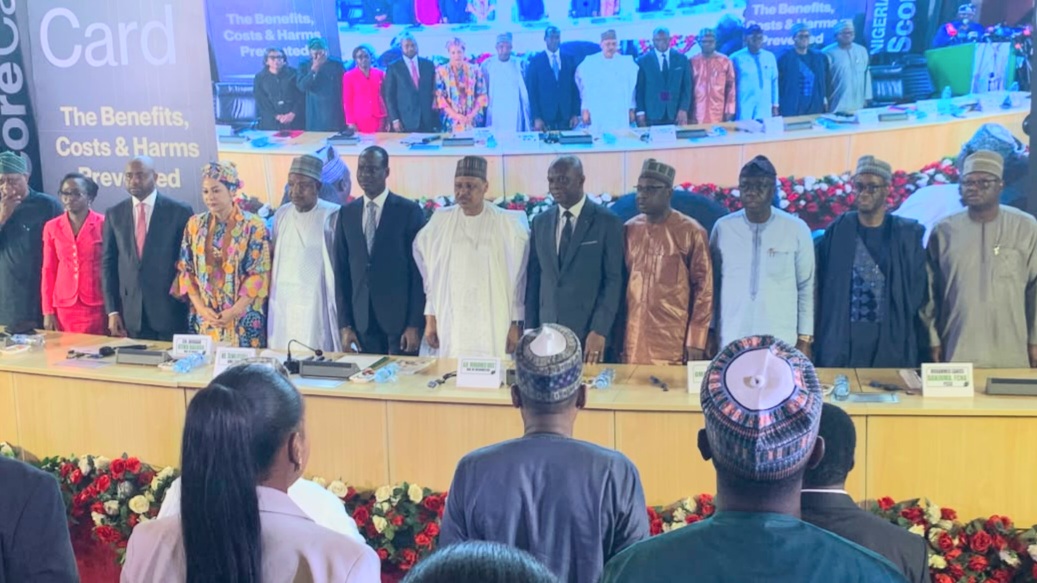
The Federal Government’s latest reform scorecard offers one of the most detailed defences yet of President Bola Ahmed Tinubu’s decision to remove the petrol subsidy and unify Nigeria’s foreign exchange market.
Presented by the Minister of Finance and Coordinating Minister of the Economy, Taiwo Oyedele, the scorecard attempts to move the subsidy debate beyond the immediate pain of higher petrol prices, transport costs and inflation by examining what the government says the reforms generated, what they cost, and what they potentially prevented.
At the centre of the presentation is a striking figure: ₦15.8 trillion in additional resources generated for the Federation between June 2023 and December 2025.
Of that amount, the Federal Government received about ₦5.4 trillion, while ₦10.4 trillion accrued to states and local governments through the Federation Account.
Yet the numbers also expose an important reality. The resources generated by the reforms were nowhere near sufficient to finance the Federal Government’s additional expenditure during the period. Incremental expenditure reached ₦30.64 trillion, against about ₦20.4 trillion in incremental resources.
This distinction is important because it challenges the popular assumption that subsidy removal simply handed the Federal Government a huge pool of cash.
The minister explained that the government’s additional resources came from three major sources: subsidy-related savings and increased Federation revenues, independent revenue and borrowing. The Federal Government recorded about ₦3.1 trillion in additional independent revenue, while incremental borrowing stood at ₦11.9 trillion.
In other words, borrowing accounted for the largest component of the additional resources.
That is perhaps one of the most revealing aspects of the scorecard. The reform story is not simply one of government saving money. It is a story of the government restructuring its finances in the face of enormous expenditure pressures.
The Federal Government reported that its incremental expenditure between June 2023 and December 2025 amounted to ₦30.64 trillion.
Three areas consumed the largest portions.
About ₦9.39 trillion went into wage adjustments, minimum wage increases, wage awards, allowances and related personnel costs.
Another ₦9.37 trillion was used to service external debt.
A further ₦6.5 trillion was committed to strategic infrastructure.
The wage figure is particularly significant.
Oyedele noted that the ₦9.39 trillion spent on higher wages and related personnel costs was substantially greater than the Federal Government’s entire ₦5.4 trillion share of subsidy savings.
That comparison weakens the argument that subsidy removal was undertaken simply to create additional money for the Federal Government.
Instead, the government’s argument is that the reform created fiscal space at a time when expenditure obligations were simultaneously increasing.
The removal of the subsidy therefore provided part of the resources required to manage rising wages, infrastructure needs and other obligations, while reducing the government’s dependence on unsustainable deficit financing.
The Real Argument Is About What Would Have Happened Without Reform
Perhaps the most important component of the scorecard is not the comparison between Nigeria before and after the reforms.
It is the counterfactual.
The government argues that simply comparing petrol at ₦185 per litre before subsidy removal with prices above ₦1,000 today does not provide the complete picture.
The relevant question, according to Oyedele, is what would have happened if the old system had continued.
He argued that petrol might have remained officially priced around ₦185 per litre, but shortages could have become so severe that consumers would have been forced into the black market, potentially paying as much as ₦3,000 per litre.
The same argument applies to foreign exchange.
Before the reforms, Nigeria operated a highly distorted exchange-rate system, with a substantial gap between official and parallel-market rates.
Oyedele said the premium, which had previously exceeded 60 per cent, had fallen to below five per cent. Without reform, the government estimates that the gap could have exceeded 150 per cent.
Whether every element of the counterfactual ultimately materialises is open to economic debate. But the logic behind it is important: the cost of a policy cannot be measured only by what citizens paid after it was removed; it must also consider the cost of maintaining an unsustainable system.
The Gains Are Real, But So Is the Pain
The government’s scorecard points to several improvements.
Headline inflation was reported at 15.91 per cent in June 2026, compared with 22.41 per cent at the May 2023 baseline.
Gross external reserves reportedly increased to about $52.5 billion, from approximately $35 billion, while net reserves rose from around $3 billion to $34.8 billion.
Real GDP growth increased to 3.89 per cent, compared with 2.31 per cent at the baseline.
The capitalisation of the Nigerian stock market also rose sharply, from approximately ₦31 trillion to ₦150 trillion.
The government further highlighted the increase in the minimum wage from ₦30,000 to ₦70,000, student loans benefiting more than 1.5 million students, expanded cash transfers, agricultural support and affordable mortgage initiatives.
These are important gains.
But they do not automatically translate into improved living standards for every household.
And this is where the government’s own admission becomes particularly significant.
Oyedele described household welfare and poverty reduction as “unfinished business.”
That admission should not be treated as a footnote.
For the ordinary Nigerian, macroeconomic stability is meaningful only when it eventually translates into cheaper food, lower transportation costs, employment opportunities, affordable housing and improved purchasing power.
A country can have stronger reserves, better fiscal indicators and improved GDP growth while millions of households continue to struggle.
The Unfinished Business
The reform scorecard therefore presents a mixed but potentially important picture.
Nigeria’s fiscal position appears to have gained some stability. The government has gained more predictable revenue flows. States and local governments have received larger allocations. Foreign reserves have improved. The exchange-rate distortion has narrowed. Economic growth has strengthened.
Notwithstanding, Petrol prices rose from roughly ₦185 per litre before the reforms to levels between ₦1,100 and ₦1,400. Interest rates increased sharply, with the Monetary Policy Rate moving from 18.5 per cent to 26.5 per cent. Businesses faced higher operating costs, while households experienced a severe erosion of purchasing power.
The central question, therefore, is no longer simply whether subsidy removal was necessary.
It is whether the government can convert the macroeconomic gains into household-level gains.
That is the next test of the reform programme.
The first phase of the reforms was largely about stabilisation: stopping the fiscal hemorrhage, correcting distortions, rebuilding reserves and restoring confidence in Nigeria’s economic management.
That means reducing inflation sustainably, increasing food production, lowering logistics and transportation costs, strengthening social protection and ensuring that public resources produce measurable improvements in citizens’ lives.
It also means greater transparency.
The government has made a strong case for the reforms, but the scorecard should not be regarded as the final word. Its methodology, particularly the counterfactual assumptions, deserves independent scrutiny by economists, researchers, journalists and civil society organisations.
The real measure of success will ultimately be whether Nigerians begin to feel the benefits in their homes, businesses and communities.
As Oyedele himself acknowledged, the government cannot pretend the reforms were painless.
The more important question now is whether the pain will produce lasting economic transformation.
The subsidy has been removed. The real work is ensuring that Nigerians eventually receive the gains.