
Regina Daniel’s Domestic Violence Claim Tops NHRC October Dashboard
…as Commission Receives 371, 622 Complaints in September
By Raphael Ekpang
Abuja (Core Reporters) The National Human Rights Commission (NHRC) said it received 371,622 human rights violation complaints across the country, according to its September dashboard report. Among the complaints, domestic violence recorded about 3,152 cases out of the total complaints received by the commission in the month of September.
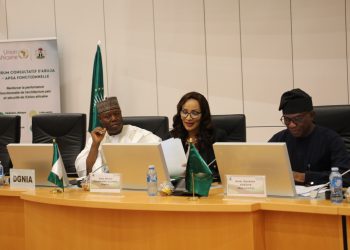
This was disclosed on Monday, October 27, 2025, at the commission’s headquarters in Abuja during the presentation of the September human rights situation dashboard.
Delivering his openig speech, the Executive Secretary of the commission, Dr. Tony Ojukwu (SAN), said the Human Rights Observatory has continued to provide a broader view of emerging patterns of abuse nationwide. The September observatory reveals persistent and evolving threats to human rights across all six geopolitical zones. The North Central recorded the highest number of incidents, mainly linked to banditry, kidnapping, and road accidents, while the North West and North East followed closely with cases of terror attacks, abductions, and sexual violence. The southern regions experienced a mix of domestic violence, police abuses, mob actions, and fatal road accidents. Overall, violations of the right to life accounted for the majority of incidents, reflecting the toll of insecurity and preventable violence in our country.
He noted that in the month of September, Nigeria was confronted with one of the highest numbers of sexual violence, including the defilement of minors and rape of young persons. This has become a worrisome trend, even seen in families and in close relationships. Rape is a grievous offence and a gross human rights violation. It debases the humanity of the victim and is a direct affront to the conscience of society.
“Distinguished colleagues, the findings from our September dashboard reaffirm that Nigeria’s human rights challenges remain deeply intertwined with insecurity, weak accountability systems, and social inequalities. Yet, these data points also serve a vital purpose: they should guide our interventions and direct resources where they are most needed — to communities under siege, to survivors in need of redress, and to institutions that must be strengthened to protect the rule of law. As we move forward, our collective commitment must remain firm: to protect life and dignity, to hold violators accountable, and to build a Nigeria where human rights are not an aspiration.”
“Let me take this opportunity to thank our state offices, partners, civil society allies, the media, and all whose contributions continue to make this work possible. They also extended appreciation to the United Nations Development Programme and the Office of the High Commissioner for Human Rights for their support through the Tripartite Partnership Programme (TPP). We also appreciated the Royal Norwegian Government for its support to the TPP programme.”
While fielding questions from journalists about whether the case of Regina Daniel, Senator Ned Nwoko’s “wife,” was among the 3,152 cases of domestic violence recorded in the month of September, Ojukwu said, “That was October’s report, and it will come when we are presenting the October human rights situation dashboard sometime in November.”
Meanwhile, while presenting the September human rights situation dashboard, the Senior Human Rights Adviser to the commission, Hilary Ogbonna, said the North Central topped other regions with 153,967 complaints, followed by the North West with 73,167, and the North East with 69,973, among others.
According to him, the human rights observatory showed that there were 336 killings, 361 kidnappings, and 144 deaths by road accidents. Adding that the 144 deaths by road accidents could invariably be linked to human rights because either the government did not fix the roads or the companies whose vehicles were involved in the accidents that claimed lives did not keep them in good condition. However, Borno State topped the states with the highest deaths, followed by Niger, then Zamfara, Kwara, and Plateau.