
NHRC Expresses Concern Over AI-Driven Hate Speech
…Unveils Strategic Documents on Media and Human Rights
By Raphael Ekpang
Abuja (Core Reporters) “The National Human Rights Commission remains deeply concerned about the rising spread of hate speech, particularly as it takes new and more dangerous forms through digital technologies powered by artificial intelligence. Hate speech is not just a threat to individual dignity, it is a direct attack on democratic value and social cohesion. It violates the right to dignity of the human person, the right to be free from discrimination, and the right to participate in public life without fear of suppression or violence.” The Executive Secretary, National Human Rights Commission, Dr Tony Ojukwu raises the alarm on AI-driven hate speech,
Ojukwu, who raised concerns over the increasing use of Artificial Intelligence (AI) to amplify hate speech, warned that the unchecked abuse of digital tools posed grave threats to human and national unity, as well as democracy.
He gave the warning on Wednesday, June 18, 2025 at a Roundtable in Abuja commemorating the 2025 International Day for Countering Hate Speech, themed “Hate Speech and Artificial Intelligence.”
While delivering his keynote address, the one human rights advocate in Nigeria underscored the dual nature of AI as a force for both development and destruction. He noted that while AI-driven platforms offered vast opportunities for communication and innovation, they are increasingly being exploited to spread hate speech and misinformation at an alarming scale.
According to him, “Hate speech is not just a threat to individual dignity; it is a direct attack on democratic values and social cohesion, “We must not allow algorithms to erode our humanity. We must remain vigilant and act both online and offline in defence of dignity, truth, and justice.”
He reaffirmed NHRC’s commitment to curbing hate speech through multiple strategies, including the establishment of the National Hate Speech Register, the MOVE Project during the 2023 elections, and advisory statements that reinforce freedom of expression while discouraging incitement.
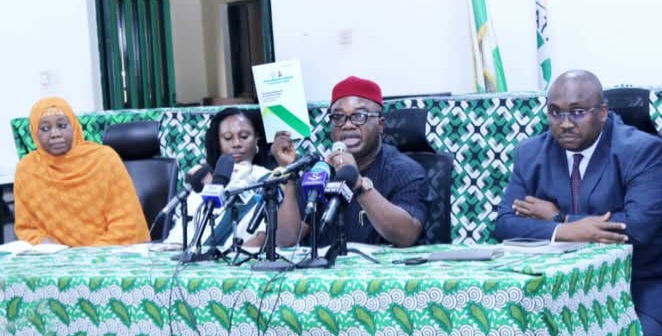
A major highlight of the Roundtable was the unveiling of three important documents aimed at strengthening national response to hate speech, particularly through responsible media practices:
1. Advisory Opinion on “The Role of Media in Countering and Reporting Hate Speech” – This document provides ethical guidance and practical tools for journalists and media outlets in identifying, avoiding, and reporting hate speech while upholding press freedom.
2. “Hate Speech Pandemic and Our Vulnerable Societies: Exploring the Local and Global Dimensions” – A thought-provoking analysis on how hate speech affects fragile communities, with insights into international trends and Nigeria’s local realities.
3. “Human Rights, Hate Speech and the Media in Nigeria” – This research-based report offered an in-depth review of the intersection between media narratives, human rights, and rising hate speech in the country.
The three documents were formally presented to participants by Dr. Ojukwu, who emphasized their role in shaping a coordinated, human rights-based approach to both traditional and online media engagement.
In her remarks, Ms. Adwoa Kufuor, Senior Human Rights Adviser to the UN Resident and Humanitarian Coordinator in Nigeria , Office of UN High Commissioner for Human Rights, called for a multi-stakeholder, rights-based strategy in tackling hate speech, especially within the digital space.
“AI must not be allowed to deepen existing inequalities or marginalize already vulnerable groups,We must build ethical safeguards and ensure transparency in the use of digital tools.”she said.
She commended NHRC’s proactive efforts and reaffirmed the United Nations’ commitment to supporting Nigeria in balancing free expression with the need to prevent incitement and discrimination.
In his presentation titled: “A Human Rights-Based Approach to Countering Hate Speech, Mr. Hillary Ogbonna, Special Adviser on Human Rights to the NHRC Executive Secretary, stressed that solutions hate speech lie in education, inclusion, civic literacy, and ethical technology, not just in punitive laws.
“The human rights approach focuses on prevention, empowerment, and accountability. Criminalizing speech without investing in civic responsibility will not solve the problem,” he noted.
In her vote of thanks, Hajiya Fatima Agwai Mohammed, NHRC’s Director of Corporate Affairs and External Linkages, praised the leadership of Dr.Tony Ojukwu and the collaboration with the United Nations and media partners.
She expressed hope that the discussions and newly unveiled documents will lead to concrete action, urged all stakeholders particularly the media, civil society, and digital platforms to actively champion responsible discourse.
Core Reporters report that the NHRC’s efforts to combat hate speech are crucial in promoting a culture of respect, empathy, and inclusivity in Nigeria.
The Roundtable brought together government officials, journalists, civil society leaders, international partners, and youth representatives, all united in the fight against hate speech in Nigeria.