
Safe Motherhood Day: No Woman Should Die While Giving Life-Minister of Health Declares
…Launches New Maternal Health Policies
Abuja (Core Reporters) In line with the Renewed Hope Agenda of President Bola Ahmed Tinubu, the Federal Ministry of Health and Social Welfare, in order to curb maternal and newborn deaths in Nigeria launched a suite of national policies and guidelines aimed at transforming maternal health outcomes across the country.
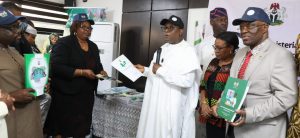
Speaking at a ministerial press briefing to commemorate the 2025 Safe Motherhood Day in Abuja on Tuesday, April 16, 2027, the Coordinating Minister of Health and Social Welfare, Prof Mohammed Ali Pate declared that no woman should die while giving life and that safe childbirth must become a national guarantee not a gamble.
According to the minister, “Our theme this year, ‘Innovating for Safer Birth: A Collective Responsibility to Crash Maternal Mortality’, is a call to action for every stakeholder.
” No woman should die giving life, and no child should be born into preventable suffering,” the minister said. “Safe Motherhood is not merely a health agenda, it is a moral imperative and a critical measure of our national progress.
“We have expanded health insurance coverage in an unprecedented manner Strengthening of National Emergency Medical Services and Ambulance System and about 23 states have been empanelled. We are scaling up free CEmONC services for indigent and the vulnerable population Free Fistula Program: Free fistula repair, care and transportation currently being implemented in 15 facilities. Deepened partnerships with development agencies, state governments, and communities to ensure a holistic and inclusive response to maternal and newborn health challenges.”

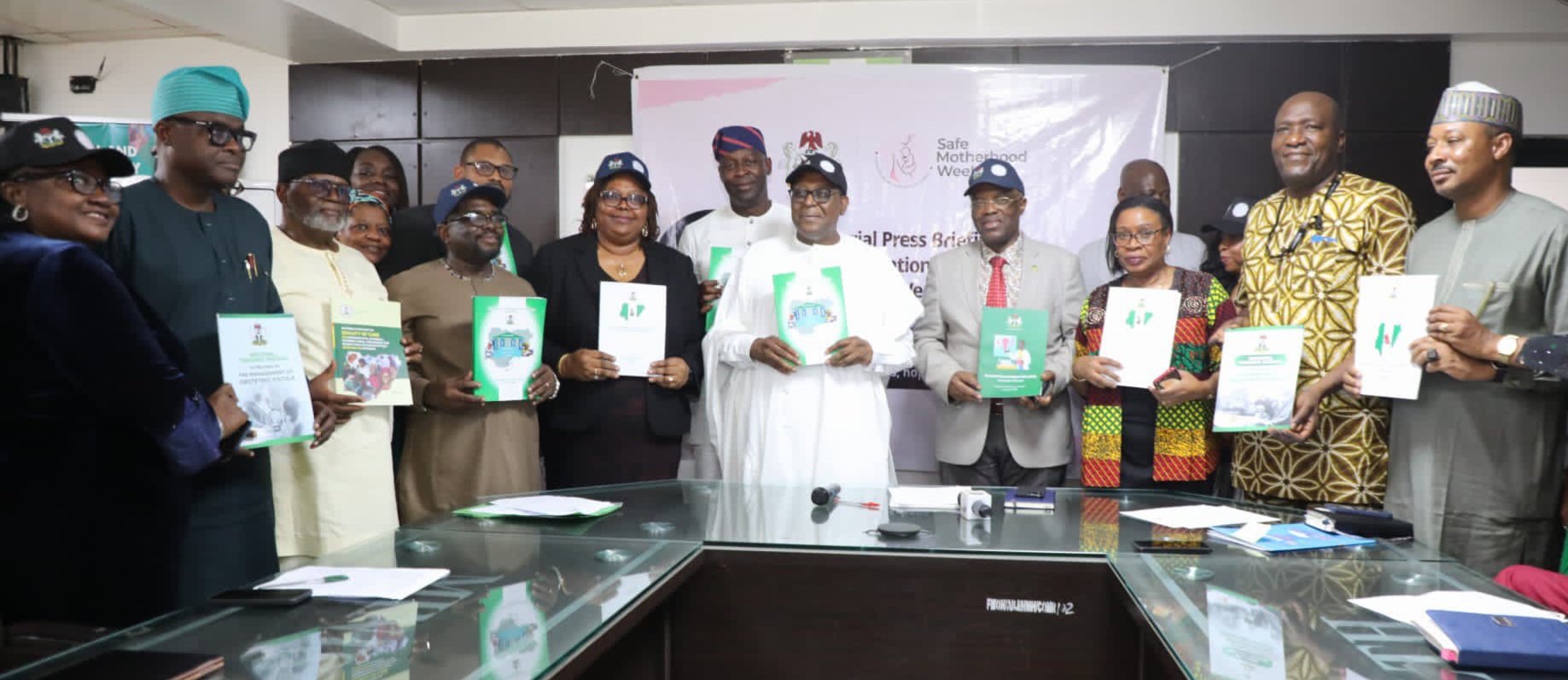
In the high point of the event, Professor Pate launched six new national policy and training documents designed to standardize care and improve maternal health services nationwide. These include:
Safe Motherhood Strategy (2024–2028): A national roadmap for reducing maternal deaths; Guidelines for the Management of Postpartum Hemorrhage (PPH); Preeclampsia and Eclampsia Guidelines; Essential Gynaecological Skills Manuals; RMNCAEH+N Quality of Care Strategy; and National Training Manual on Obstetric Fistula Management.
The Minister said, “These documents reflect our government’s commitment to building a resilient, people-centered health system that anticipates and prevents maternal and newborn emergencies.”
He also highlighted major strides under the Health Sector Renewal Investment Initiative, including: Strengthened primary healthcare delivery; Expanded access to skilled birth attendants; Free fistula care in 15 centers; Scale-up of free emergency obstetric care (CEmONC); Broader health insurance coverage; and Operationalization of emergency medical services across 23 states.
“These reforms are already yielding improved health indicators in several states,” she noted, adding that the government remains resolute in ensuring maternal care reaches the poorest and most vulnerable populations.
However, the Permanent Secretary of the Ministry of Health Daju Kachollom who was heavily represented at the event by one of the directors in the ministry emphasized that the Safe Motherhood Day was not only a day of reflection but a moment for action and renewed partnerships.
She said, “Maternal mortality is not just a statistic, it’s a personal tragedy and a call to strengthen our systems,” he said. “Our slogan, ‘Care for Moms, Hope for the Babies’, reminds us that the health of mothers is the foundation of healthier generations.”
She reaffirmed the Ministry’s commitment to respectful, inclusive, and accessible maternal health care, especially in underserved rural communities.
Calling on stakeholders from governors and traditional rulers to community leaders and private sector partners the Coordinating Minister urged collective ownership of the national maternal health agenda.
“Let us ensure that no woman dies while giving life. Let every child born in Nigeria take their first breath in safety and hope,” she said.