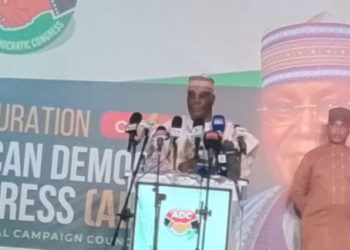


Show of Readiness: INEC Boosts Osun Poll with 5,130 BVAS, Doubles Backup Devices After Parties’ Concerns
By Our Correspondent
Osogbo (Core Reporters) The Independent National Electoral Commission (INEC) has increased the number of Bimodal Voter Accreditation System (BVAS) devices for the August 15 Osun State Governorship Election from 4,427 to 5,130, while also doubling the number of backup units to 1,328 to ensure seamless voter accreditation across the state.
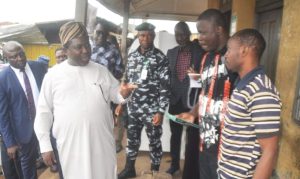
The INEC Chairman, Prof. Joash Amupitan (SAN), disclosed this on Saturday in Osogbo during an interactive session with media executives, 15 days before the election.
He said the adjustment followed concerns raised by some political parties and formed part of the lessons from the mock accreditation exercise conducted hours earlier across polling units in Osogbo, Oriade and other local government areas.
Prof. Amupitan said the Commission conducted the mock accreditation as a “quality assurance protocol” to stress-test its technological infrastructure under real field conditions.
“The Bimodal Voter Accreditation System (BVAS) demonstrated optimal field resilience. On average, it took between 30 seconds and two minutes to successfully verify a voter using either fingerprints or facial recognition,” he said.
Explaining the decision to deploy more machines, the Chairman said:
“Based on concerns expressed by some political parties about the number of BVAS devices deployed to the state, we have increased the total number of BVAS for the election from 4,427 to 5,130 to service split polling units in large polling units in Ife East, Irewole, Egbedore, Ede North and Osogbo. In the process, we increased the number of backup devices from 664 to 1,328 for quick intervention in case of any malfunction.”
He added that dedicated technical support engineers had been assigned backup BVAS devices in every Registration Area (Ward) “to ensure that any sudden field failure is instantly neutralised.”
“What we saw today confirms that our technological defence against identity theft and result manipulation is robust and fully operational,” Prof. Amupitan stated.
The Chairman said the administrative blueprint for the August 15 election was ready, with 2,339,233 registered voters expected to vote at 3,763 polling units across 320 wards in 30 local government areas.
He disclosed that 14 political parties would contest the election and that training for ad hoc staff was nearing completion. According to him, INEC will deploy 32,000 NYSC members recruited through the sanitised INECPRES portal.
“We did not want to speak to you from an air-conditioned boardroom in Abuja or rely solely on paperwork. We went to the theatres of operation to see for ourselves how our systems are holding up,” he said.
Prof. Amupitan also addressed security concerns, saying INEC had recalibrated its strategy “from reactive monitoring to proactive prevention” through the Inter-Agency Consultative Committee on Election Security (ICCES).
“We are working closely with the Police and the Armed Forces to ensure that our staff, our materials and, most importantly, every single voter are shielded from harm. We will meet any attempt to disrupt this election with the full, unyielding weight of the law,” he warned.
He confirmed recent attacks on INEC offices in Okuku, Odo-Otin Local Government Area, and Ife Central, where Permanent Voter Cards (PVCs) were stolen.
“I wish to reassure the electorate and issue a stern warning to perpetrators that stolen PVCs are functionally inert under our system architecture. Without the live biometric verification of the legitimate cardholder on the BVAS, a stolen card cannot accredit anyone to vote,” he said.
“I have directed the ICT Director to ensure the reprinting of the stolen PVCs and/or ensure that the affected voters are allowed to use downloadable PVCs, which will be available for this election.”
On inclusivity, the Chairman said, “Democracy is incomplete if it excludes vulnerable populations. The Commission has integrated practical assistive devices across polling locations based on our disability mapping in Osun State. We have provided Braille ballot guides for visually impaired voters, magnifying glasses for voters with albinism and low vision, EC40H poster manifests for hearing-impaired citizens, and priority voting queues for persons with disabilities (PWDs), pregnant women, nursing mothers and the elderly.”
Prof. Amupitan urged the media to help curb misinformation ahead of the poll.
“The greatest threat we face is not technical failure but the pathology of misinformation and disinformation. Fake news, manufactured election-day panics and the unauthorised declaration of parallel results are direct assaults on public peace and democratic stability,” he said.
“Verify your facts before you broadcast. When a glitch occurs in a single polling unit, do not report it as a systemic failure across the entire state.
“INEC is an independent, neutral and dispassionate umpire. We do not care who wins the election; we only care how they win. Our sole job is to ensure that the process is clean, that every valid vote counts and that the declaration reflects nothing but the true sovereign will of the Osun electorate.” He concluded.
The interactive session was attended by INEC National Commissioners, the Osun Resident Electoral Commissioner, Barrister Oluwatoyin Babalola, the leadership of the Nigeria Union of Journalists (NUJ) and the Broadcasting Organisations of Nigeria (BON), as well as other senior officials of the Commission.