
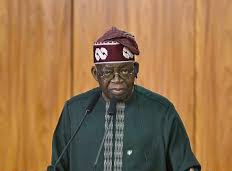
President Tinubu Presents ₦58.18 trillion 2026 Budget to NASS
…Targets Consolidation,Resilience & Shared Prosperity
Nigerian President, Bola Ahmed Tinubu, GCFR, on Friday presented the 2026 Appropriation Bill to a Joint Session of the National Assembly, outlining a ₦58.18 trillion budget designed to consolidate recent economic reforms, strengthen national resilience, and deliver shared prosperity for Nigerians.
Tagged the “Budget of Consolidation, Renewed Resilience and Shared Prosperity,” the 2026 fiscal plan builds on reforms implemented over the past two and a half years to stabilise the economy, restore investor confidence, and lay the foundation for inclusive and sustainable growth.
Presenting the budget, President Tinubu acknowledged the hardships experienced by Nigerians during the reform period but assured citizens that the sacrifices are yielding tangible results.
“The path of reform is seldom smooth, but it is the surest route to lasting stability and shared prosperity,” the President said.
The President highlighted key macroeconomic improvements recorded in 2025, including:
GDP growth of 3.98% in Q3 2025, up from 3.86% in Q3 2024;
Eight consecutive months of declining inflation, with headline inflation falling to 14.45% in November 2025;
Improved oil production supported by enhanced security and sector reforms;
Significant growth in non-oil revenues through improved tax administration;
Rising investor confidence and capital inflows; and External reserves reaching a seven-year high of about US$47 billion, providing over ten months of import cover.
BUDGET FRAMEWORK AND KEY AGGREGATES
The 2026 Budget projects:
Total revenue: ₦34.33 trillion
Total expenditure: ₦58.18 trillion
Debt servicing: ₦15.52 trillion
Recurrent (non-debt) expenditure: ₦15.25 trillion
Capital expenditure: ₦26.08 trillion
Fiscal deficit: ₦23.85 trillion (4.28% of GDP)
The budget is anchored on the 2026–2028 Medium-Term Expenditure Framework, based on a crude oil benchmark of US$64.85 per barrel, oil production of 1.84 million barrels per day, and an exchange rate of ₦1,400 to the US dollar.
President Tinubu reaffirmed his administration’s commitment to fiscal sustainability, debt transparency, and value-for-money spending, stressing that 2026 will mark a year of stricter discipline in budget execution.
PRIORITY SECTORS
Key sectoral allocations include:
Defence and Security: ₦5.41 trillion
Infrastructure: ₦3.56 trillion
Education: ₦3.52 trillion
Health: ₦2.48 trillion
According to the President, the interlinked priorities of security, human capital development, and infrastructure are essential to unlocking productivity, attracting investment, and creating jobs.
SECURITY, HUMAN CAPITAL AND ECONOMIC PRODUCTIVITY
The budget strengthens funding for modernising the Armed Forces, intelligence-led policing, border security, and community-based peacebuilding. The President also announced a reset of Nigeria’s national security architecture, including a new counterterrorism doctrine targeting all armed non-state actors.
In education, the government is expanding access through the Nigerian Education Loan Fund, which has supported over 788,000 students across 229 tertiary institutions. Healthcare investment stands at 6% of the total budget size, complemented by over US$500 million in new health partnerships with the United States.
The 2026 Budget also prioritises agriculture and food security through mechanisation, irrigation, storage, agro-processing, and value-chain development. The Bank of Agriculture is expected to support cultivation of one million hectares, create hundreds of thousands of jobs, and boost export value.
However, he announced continued procurement reforms and enforcement of the Nigeria First Policy, which prioritises locally made goods and Nigerian companies in government procurement to stimulate domestic industry, job creation, and innovation.
“The most significant budget is not the one we announce; it is the one we deliver,” the President said.
Tinubu, urged the National Assembly to partner with the Executive in delivering the 2026 Budget, stressing that it is not a budget of promises but one of consolidation and measurable outcomes.
“With unity of purpose between the Executive and the Legislature, and the resilience of the Nigerian people, we will deliver the full promise of the Renewed Hope Agenda,” he said.