Deprecated: Function WP_Dependencies->add_data() was called with an argument that is deprecated since version 6.9.0! IE conditional comments are ignored by all supported browsers. in /home/corerepo/public_html/wp-includes/functions.php on line 6260 Nigeria Moves to Strengthen Macroeconomic Forecasting, Data Coordination Ahead of 2027 Budget - Core Reporters
Nigeria Moves to Strengthen Macroeconomic Forecasting, Data Coordination Ahead of 2027 Budget
By Core Reporters
Abuja (Core Reporters)-Nigeria’s Government has moved to strengthen macroeconomic forecasting, improve data coordination and ensure that future budgets are based on credible data, realistic assumptions and transparent methodologies.
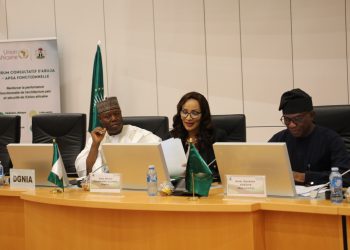
The move followed a Macroeconomic Data and Assumptions Validation Workshop convened by the Federal Ministry of Finance and the Federal Ministry of Budget and Economic Planning on August 29, 2026, with key fiscal and monetary data institutions across government in attendance.
The workshop reviewed previous budget cycles and identified significant gaps between some macroeconomic assumptions and actual outcomes, particularly in oil production and revenue projections.
Participants consequently agreed on measures aimed at strengthening forecasting, improving inter-agency coordination and reducing optimism bias in future budget preparations.
Among the key resolutions was the establishment of a Standing Committee on Macroeconomic Data and Assumptions to provide continuous validation and review of economic data and assumptions, with regular reports to the Economic Management Team.
The workshop also resolved to establish a central data repository to ensure that government institutions work from a single and consistent set of economic data and assumptions.
It further agreed on the development of a unified national data reporting framework, incorporating standard definitions for revenue, expenditure and borrowing.
Other measures include strengthening fiscal and monetary policy coordination and improving the timeliness and quality of key national statistics, particularly data on employment, productivity and producer prices.
The assumptions underpinning the Medium-Term Expenditure Framework (MTEF), Fiscal Strategy Paper (FSP) and annual Budget will also be subjected to stronger methodologies, sensitivity analysis and scenario testing before finalisation.
The Federal Government said the measures form part of its broader commitment to improving fiscal transparency, accountability and evidence-based economic management.
It stressed that better data would lead to more realistic assumptions, improved planning and, ultimately, better economic outcomes for Nigerians.