
Bteaking: How Election Results Are Manipulated During Manual Collation –Senator Umeh Backs 2026 Electoral Act
By Raphael Ekpang
Senator Victor Umeh, (APGA) representing Anambra Central at the 10th Assembly has detailed how election results are allegedly manipulated during manual collation, warning that failure to strictly enforce electronic transmission requirements as signed to law by President Bola Ahmed Tinubu undermines the integrity of Nigeria’s electoral process.
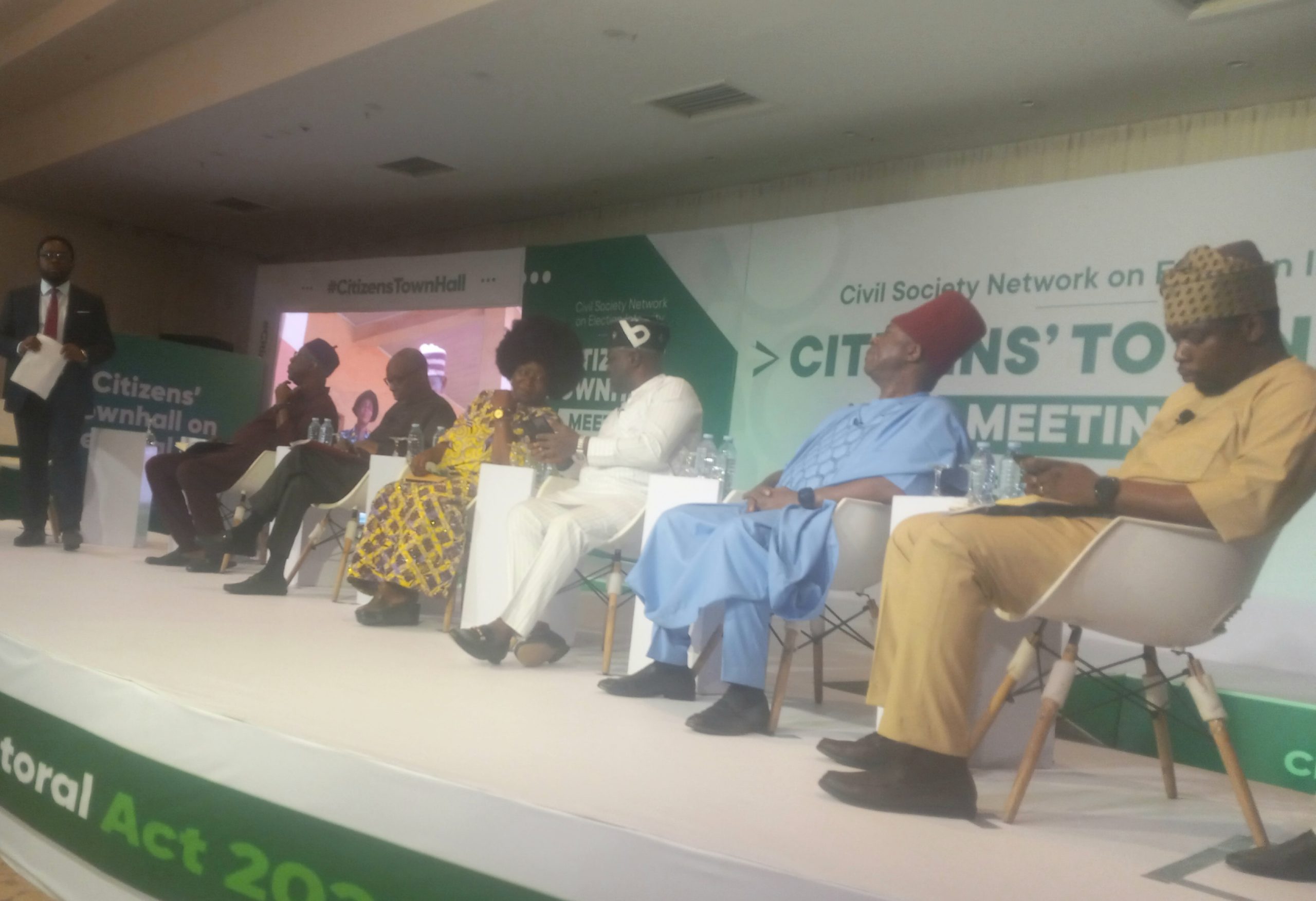
Sen. Umeh gave the warning on Sunday, March 1, in Abuja at the ongoing Citizens townhall meeting organised by civil society network on election integrity over electoral reforms and the role of technology in strengthening public confidence in Nigeria’s democratic process.
According to him, all polling unit data — including accredited voters, invalid votes, valid votes, and scores of candidates and political parties — are first captured and tabulated in the EC 8 form. “These figures are totaled and signed off by electoral officials and party agents at the polling unit level.”
He explained that the law mandates the immediate transmission of those results to the IREV portal operated by the Independent National Electoral Commission. The objective, he said, is to secure and preserve the authenticity of polling unit results at their source.
“The portal is not a collation centre,” Umeh clarified. “It is a monitoring mechanism. Once results are uploaded, what is recorded at the polling unit is secured.”
He warned that manipulation often begins during manual collation at ward and local government levels, where figures may be altered before final declaration. Uploaded results on the IREV portal, he noted, are meant to serve as a benchmark for detecting discrepancies if figures suddenly change during collation.
Drawing from over two decades of electoral participation, the senator described a common pattern of inflation during manual aggregation. For example, he said, a candidate who scored 172 votes at a polling unit could see the figure altered to 2,172 during collation — with incremental additions made as results move up the chain.
“When you complain, they tell you corrections cannot be made. That is how elections are rigged,” he stated.
Umeh argued that allowing discretion in transmitting results — particularly under claims of poor network connectivity — weakens the entire safeguard built into the system. Without strict enforcement, he said, officials could delay uploads indefinitely, making independent verification impossible.
He emphasized that every stage of collation — from ward to local government and constituency levels — must align with what was originally uploaded to the IREV portal. Any deviation, he maintained, should immediately raise red flags.
Senator Umeh insisted that public access to polling unit results is critical in curbing electoral fraud. By enabling citizens to independently verify results from specific polling units online, the system introduces transparency that limits opportunities for tampering.
“Transparency at the polling unit level is the strongest safeguard against manipulation,” he said.