Deprecated: Function WP_Dependencies->add_data() was called with an argument that is deprecated since version 6.9.0! IE conditional comments are ignored by all supported browsers. in /home/corerepo/public_html/wp-includes/functions.php on line 6260 Beyond Punishment: ICPC, Russia Push Preventive Approach to - Core Reporters
Beyond Punishment: ICPC, Russia Push Preventive Approach to Fighting Corruption
By Raphael Ekpang
Abuja (Core Reporters) — oThe fight against corruption may be entering a phase where punishment alone is no longer enough.
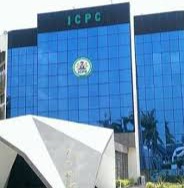
That was the central message emerging from the Fourth International Diplomatic Dialogue organised by the Anti-Corruption Academy of Nigeria (ACAN), the research and training arm of the Independent Corrupt Practices and Other Related Offences Commission (ICPC).
The Dialogue, held Tuesday at the ICPC Headquarters in Abuja, brought Nigeria and Russia together to examine how corruption can be confronted not only after offences have been committed, but by identifying and closing the loopholes that make corrupt practices possible in the first place.
With the theme, “Development of Anti-Corruption Strategies and Policies: The Russian National Experience,” the engagement provided an opportunity for Nigerian anti-corruption officials, researchers and other stakeholders to examine Russia’s combination of preventive safeguards, legislation, institutional controls and enforcement measures.
For ICPC Chairman, Dr. Musa Adamu Aliyu, (SAN), the message is straightforward: corruption prevention must become a stronger component of the anti-corruption architecture.
He argued that corruption remains a major threat to development and that institutions must continually examine practical ways of strengthening transparency, accountability and public confidence.
The ICPC chairman also urged participants to move beyond the exchange of ideas and convert the lessons from the Dialogue into practical institutional reforms.
“The knowledge and experience shared today should not end within the walls of this auditorium.”
Rather, he said, the lessons should inspire actions capable of strengthening institutions, enhancing public trust and improving anti-corruption outcomes.
The prevention question
The Russian experience presented at the Dialogue placed particular emphasis on a question that has become increasingly important in the global fight against corruption: What can institutions do before corruption occurs?
Minister Counsellor/Charge d’Affaires of the Embassy of the Russian Federation in Nigeria, Mr. Igor Ivannikov, explained that an effective anti-corruption system must combine punishment for offences already committed with measures designed to address the conditions that allow corruption to thrive.
In other words, prosecution begins only after the damage may have been done.
Prevention seeks to identify the risk before it becomes an offence.
Among the preventive instruments highlighted by Ivannikov were income and asset declarations by designated public officials, expenditure monitoring and conflict-of-interest controls.
Such declarations, he explained, provide authorities with a basis for comparing an official’s legitimate income with financial and property holdings that may otherwise raise questions.
The approach shifts part of the anti-corruption burden from investigating unexplained wealth after it has accumulated to monitoring financial circumstances capable of signalling risks at an earlier stage.
Closing loopholes in laws
Another element of the Russian experience highlighted at the Dialogue was the anti-corruption review of legislation.
According to Ivannikov, laws and regulations themselves can sometimes create opportunities for corrupt practices when they confer excessively broad powers, allow unjustified discretion or establish unclear administrative procedures.
The implication is significant.
An anti-corruption strategy does not necessarily begin with the police, prosecutors or courts. It can begin with the drafting and review of a law, regulation or administrative procedure.
Where rules are clear, discretion is properly controlled and responsibilities are defined, opportunities for manipulation can potentially be reduced.
Procurement moves into the digital space
Public procurement was another area where the Russian presentation demonstrated the changing nature of corruption prevention.
Ivannikov said Russia had increasingly deployed digital platforms and risk-based monitoring in procurement and contract administration to improve transparency.
But he cautioned against treating technology as a complete solution.
Digital systems, he noted, cannot eliminate corruption by themselves without effective oversight, access to information and accountability where violations occur.
The point is particularly relevant to public procurement, where large volumes of government resources pass through complex contracting processes.
Technology may make transactions more traceable, but institutions still need people and systems capable of detecting irregularities and acting on them.
The institution must also police itself
Beyond laws and digital platforms, the Russian experience also places emphasis on internal institutional safeguards.
Codes of ethics, conflict-of-interest procedures, designated anti-corruption compliance officers and regular corruption-risk assessments were identified as important components of prevention.
This approach recognises that anti-corruption agencies and other public institutions are not immune from the risks they are established to address.
The credibility of an anti-corruption system therefore depends partly on the strength of its internal controls.
From prevention to enforcement
Prevention, however, does not replace enforcement.
Ivannikov outlined the enforcement side of Russia’s system as involving investigation of corruption-related crimes, tracing and freezing illicit assets, prosecution and eventual determination of cases by the courts.
The broader model presented at the Dialogue was therefore not one of prevention versus punishment.
Rather, it was a combination of prevention, detection and enforcement.
The idea is to reduce opportunities for corruption, identify emerging risks, investigate violations when they occur and ensure that proven offences attract appropriate legal consequences.
Russia’s legal and institutional architecture
Providing the background to the Dialogue, ACAN Provost, Professor Sheriff Ghali Ibrahim, traced elements of Russia’s anti-corruption legal and institutional development.
He identified the Criminal Code of the Russian Federation, Code of Administrative Offences, Federal Law on Civil Service and Federal Law on Combating Corruption among the major components of the country’s contemporary legal framework.
He also highlighted the network of institutions involved in Russia’s anti-corruption system, including the Presidential Council for Countering Corruption, the Presidential Civil Service, Personnel and Anti-Corruption Directorate, Prosecutor General’s Office, Investigative Committee, Ministry of Justice, Federal Security Service, Ministry of Internal Affairs and Accounts Chamber.
According to Ibrahim, the Prosecutor General’s Office occupies an important position in the architecture, with specialised units established to supervise the implementation of anti-corruption legislation.
He said specialised anti-corruption supervision units were established within the Prosecutor General’s Office and prosecutors’ offices at constituent-entity level in 2007, in line with Article 36 of the United Nations Convention against Corruption.
What the Dialogue means for Nigeria
Perhaps the most important outcome of the engagement was not any single Russian mechanism but the broader lesson that corruption prevention requires institutions to constantly examine where vulnerabilities exist.
For Nigeria, the discussion places renewed attention on areas such as conflict-of-interest management, public procurement, asset declaration, legislative review, institutional compliance and corruption-risk assessment.
The challenge, however, lies in adapting lessons from another jurisdiction to Nigeria’s own legal, political, economic and institutional realities.
That was why Aliyu urged participants to look beyond simply importing foreign models.
Nigeria, he said, could benefit from comparative experiences by identifying innovative approaches that can be adapted to local realities.
The Fourth International Diplomatic Dialogue therefore offered more than an examination of Russia’s anti-corruption system.
It reinforced a broader principle: the most effective anti-corruption strategy may not always begin with catching the corrupt official. It can begin much earlier—by designing institutions, laws and procedures in ways that make corruption harder to commit, easier to detect and more difficult to conceal.
For ACAN, the real test of the Dialogue will consequently be what happens after the presentations, when the lessons leave the conference room and enter the policies, procedures and institutions responsible for protecting public resources.