

Breaking: INEC Chairman Amupitan Assures Nigerians: 2027 Will Be Nation’s Most Credible Election
By Raphael Ekpang
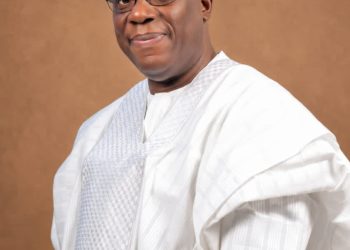
The Chairman of the Independent National Electoral Commission (INEC) Professor Joash Amupitan has assured Nigerians that the 2027 general election will be the most credible in the nation’s history, reaffirming the Commission’s commitment to transparency, institutional reform, and technological improvement.
Speaking during a citizens’ townhall meeting on eletoral act 2026 organised by Civil Society Network on Election integrity, on Nigeria’s democratic trajectory and preparations ahead of 2027, the INEC Chairman expressed confidence that ongoing reforms under the 2026 Electoral Act would significantly strengthen the integrity of the electoral process.

“By the grace of God, the 2027 general election will be the best Nigeria has conducted,” he stated.
Commitment to Credible Elections
Reflecting on Nigeria’s global Amupitan recalled a conference at Washington University in St. Louis where Nigeria was largely discussed in the context of electoral fraud and cybercrime. He noted that such narratives underscore the importance of institutional performance in reshaping perceptions about the country.
According to him, democracy—and particularly credible elections—remains the lifeblood of national development.
Citing former U.S. President Abraham Lincoln, he reiterated that “the ballot is stronger than the bullet,” emphasizing that free, fair and transparent elections are foundational to legitimacy, stability, and sustainable growth.
2026 Electoral Act: Enhancing Clarity and Accessibility
The INEC Chairman disclosed that the Commission played an active role in the multi-stakeholder process that produced the 2026 Electoral Act, which spanned nearly three years of collaboration with the National Assembly and civil society stakeholders.
He stressed that electoral laws in a diverse country like Nigeria must be clear, precise, and accessible, noting that reform must not only strengthen systems but also deepen public understanding and trust.
Electronic Transmission: Addressing Misconceptions
Addressing concerns surrounding electronic transmission of results, Prof. Amupitan clarified that challenges experienced in previous elections were largely due to infrastructure limitations rather than institutional reluctance.
He cited the recent FCT Area Council election, where results were successfully declared in five of the six Area Councils. In Kuje Area Council, particularly Karchi Ward, difficult terrain and network limitations delayed real-time uploads.
“The issue was not transmission failure but timing,” he explained, adding that the Electoral Act provides clear safeguards to ensure results are transmitted and properly collated even when real-time uploads are temporarily delayed.
He emphasized that integrity of the process was never compromised.
Strengthening Logistics and Technology for 2027
The INEC Chairman identified logistics as the backbone of electoral integrity, noting that successful elections are measured by: Timely commencement of voting, Peaceful conduct of polls, Effective result management and Transparent declaration of outcomes.
While acknowledging past logistical challenges, Amupitan said INEC has embraced institutional learning and accountability to ensure improvements.
He also revealed that lessons from the 2023 general elections—particularly regarding nationwide technology deployment—have informed new reforms. Although technological systems performed effectively in certain sub-national elections such as the Osun State governorship poll, scaling to the presidential level exposed areas requiring further stress-testing.
Amupitan diaclosed INEC focus areas ahead of 2027, which include; Comprehensive nationwide stress-testing of electoral technology, Strengthening backend systems to handle peak demand, Infrastructure reinforcement across all states and Scenario-based simulations before deployment
“Our goal is clear: no surprises on election day,” he said.
Linking Credible Elections to Development
The INEC Chairman stressed that credible elections are directly tied to investor confidence, governance legitimacy, and national stability.
“No nation advances sustainably without legitimacy. And legitimacy flows from credible elections,” he noted.
He concluded by reaffirming INEC’s commitment to delivering elections that inspire public trust, strengthen democracy, and enhance Nigeria’s standing in the global community.
“Nigeria deserves elections that command confidence and respect. That is our commitment for 2027.” he said.
The townhall meeting is currently going at the Abuja Continental Hostel at the federal capital territory (FCT) Abuja.