

Fire Outbreak and Oil Spillage in Niger Delta: Senator Benson Task FG on Comprehensive, Strategic Approach to Addressing Challenges
By Raphael Ekpang
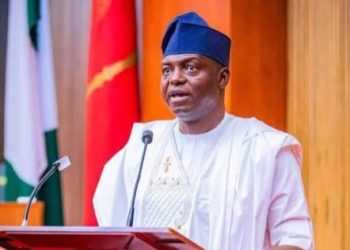
A senator representing Bayelsa Central Senatorial District at the National Assembly, Konbowei Benson Friday has tasked the Federal Government of Nigeria on the need for a comprehensive and strategic approach to addressing the challenges in the Niger Delta region.
He made this known on Thursday in Abuja while having a media chat with Journalists at the National Assembly.
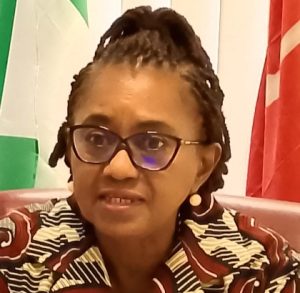
According to him, “We cannot continue addressing these issues in a piecemeal manner. There must be a holistic study to ensure long-term solutions. My greatest fear—and the fear of our people is that while Nigeria talks about economic diversification, the Niger Delta remains abandoned.”
The senator drew historical comparisons, recalling how, in the 1950s and 1960s, cocoa and groundnut revenue ensured regional development. “During that era, oil revenue wasn’t yet in the picture, yet these regions thrived. When oil was discovered in the Niger Delta, the people of the region were not given the same opportunities to benefit. The federal government took control, but the people were left behind.”
He apointed out how the region has been neglected from the world go, stating that the region and Bayelsa State in particular has been suffering in terms of employment and federal representation
He said, “When Nigeria gained independence, only one person from Rivers State, Amakri, held a position in the federal service. While other regions sent people abroad for training, the Niger Delta was left out. Today, we are still fighting for employment opportunities for our people. And when recruitment happens, federal character principles are ignored in favor of population size, which works against us.”
However, Benson spoke against the government’s neglect of oil-producing states, describing their plight to that of a wife abandoned by her husband.
In his contribution to a motion on the recent fire outbreak and oil spillage from Manifold Well 8/Bug 008 in OML 18 Bujumbura (Agum), Rivers West Senatorial District, on the floor of the Senate on Thursday sponsored by Sen. Banigo Ipalibo Harry (Rivers West), Senator Benson Friday lamented the continued environmental degradation and economic hardship in the Niger Delta region.
Core Reporters report that the Senate in its resolutions urged the Nigerian National Petroleum Company Limited (NNPCL) to take immediate action in line with its corporate social responsibility and environmental safety commitments. It directed the company to deploy emergency response teams to assess the disaster’s impact and implement remediation measures for affected communities.
The Senate also mandated the National Oil Spillage Detection and Response Agency (NOSDRA) to investigate the cause of the spill and fire, with a report due in four weeks.
Earlier, while presenting the motion, Sen. Banigo expressed deep concern over the environmental destruction, displacement of residents, and health risks posed by the spill. She noted that recurring oil spills and fire outbreaks in the Niger Delta were often linked to weak safety protocols, sabotage, or lax enforcement of environmental laws.
“The pollutants pose significant health risks, including respiratory diseases, waterborne infections, and long-term effects such as cancer and organ damage, worsening the region’s public health crisis,” she warned.
She also highlighted the contamination of rivers, farmlands, and aquatic life—critical sources of livelihood for communities in Buguma Asalga, Ifoko Asalga, and Bukuma (Agum) in Degema.
Lawmakers voiced concerns over delayed responses from oil companies and regulatory agencies, which they said exacerbated the suffering of affected communities and eroded public trust in environmental law enforcement.
To address the humanitarian crisis, the Senate called on the Ecological Project Management Committee (EPMC) to deploy intervention funds to affected victims. It also urged the National Emergency Management Agency (NEMA) to provide relief and tackle the ecological, health, and social consequences of the disaster.