


World Gluacoma Week: Minister Charges Experts to Develop Life-Changing Glaucoma Solutions
By Raphael Ekpang
Abuja (Core Reporters) As Nigeria joined the global world in commemorating the World Gluacoma Week (WGW) the Minister of State for Health and Social Welfare, Iziaq Adekunle Salako has charged experts; academia, researchers and innovators technology and artificial intelligence to develop earlier methods of detection and effective treatment modalities.
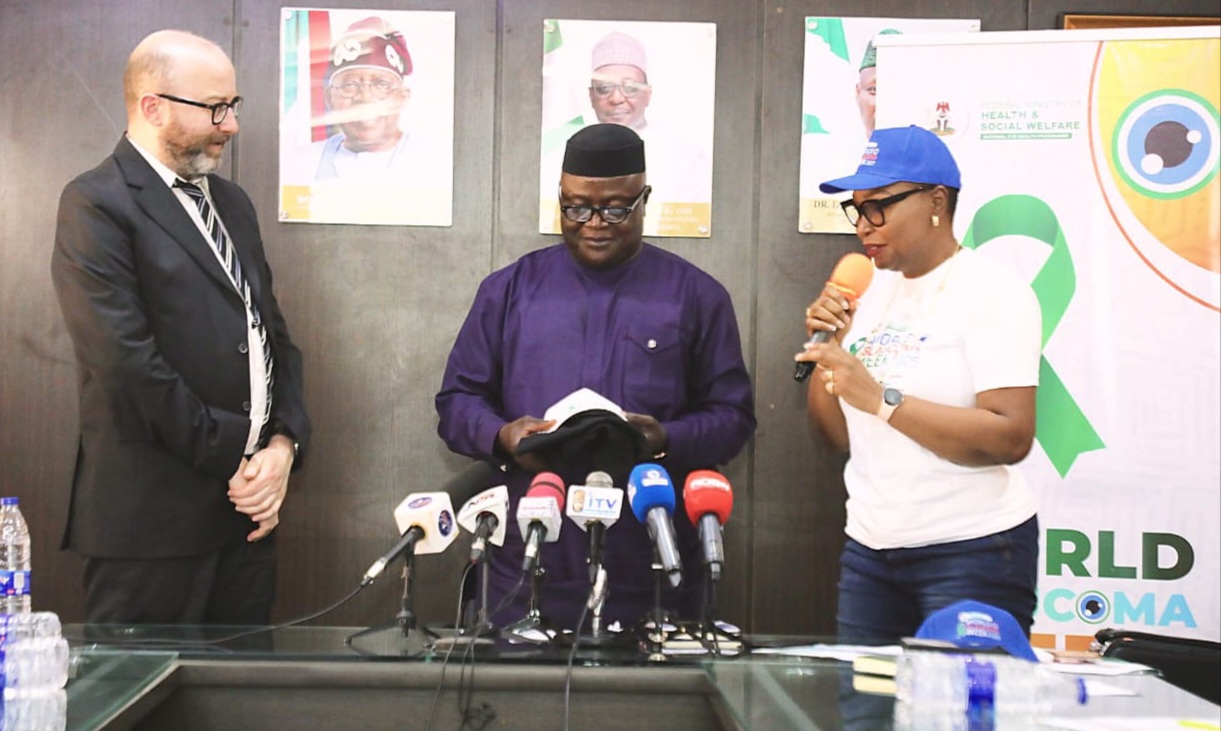
Salako gave the charge on Monday, March 10, 2025, in Abuja during the ministerial briefing to commemorate the World Glaucoma Week.
The Minister who was represented by Dr. Micheal Akpan, Director of Port Health Division, Federal Ministry of Health and Social Services at the briefing said, WGW is a global initiative of the World Glaucoma Association, and the World Glaucoma Patient Association designed to raise awareness on glaucoma directed at patients, policymakers, eye-care service providers and the public. Hw noted that WGW is an annual event held every second week of March. Saying that the theme for this year is “Uniting for a Glaucoma Free World; See the Future Clearly.”
He said the goal of the week-long activities is to emphasize the importance of regular eye checks and early diagnosis of this largely asymptomatic and devastating disease, thus preserving the vision of those affected.
According to him, “Glaucoma is an eye condition in which the optic nerve is progressively and irreversibly damaged resulting in loss of peripheral vision in the beginning, and blindness at advanced stages. It is also described as “the silent thief of sight” as it develops slowly, and vision can be greatly impaired before any signs or symptoms are apparent. It is the second commonest cause of blindness and leading cause of irreversible blindness worldwide and in Nigeria. However, it is manageable with early detection.
Je explained that, Glaucoma is reported to affect an estimated 60.5 million people worldwide, about 87% of which are living in developing countries. The Nigerian blindness and visual impairment survey 2005-2007 reported that over 4.2% of the Nigerian population were blind; 16.7% was due to glaucoma.