
Works Minister Umahi Declares End to Deadly Traps on Enugu–Onitsha Expressway, Sets March 31 Deadline For Reopening
The Honourable Minister of Works, David Umahi, has declared that the long-troubled Enugu–Onitsha Expressway is shedding its dangerous past, as the Federal Government intensifies infrastructure upgrades across the South-East under President Bola Ahmed Tinubu.
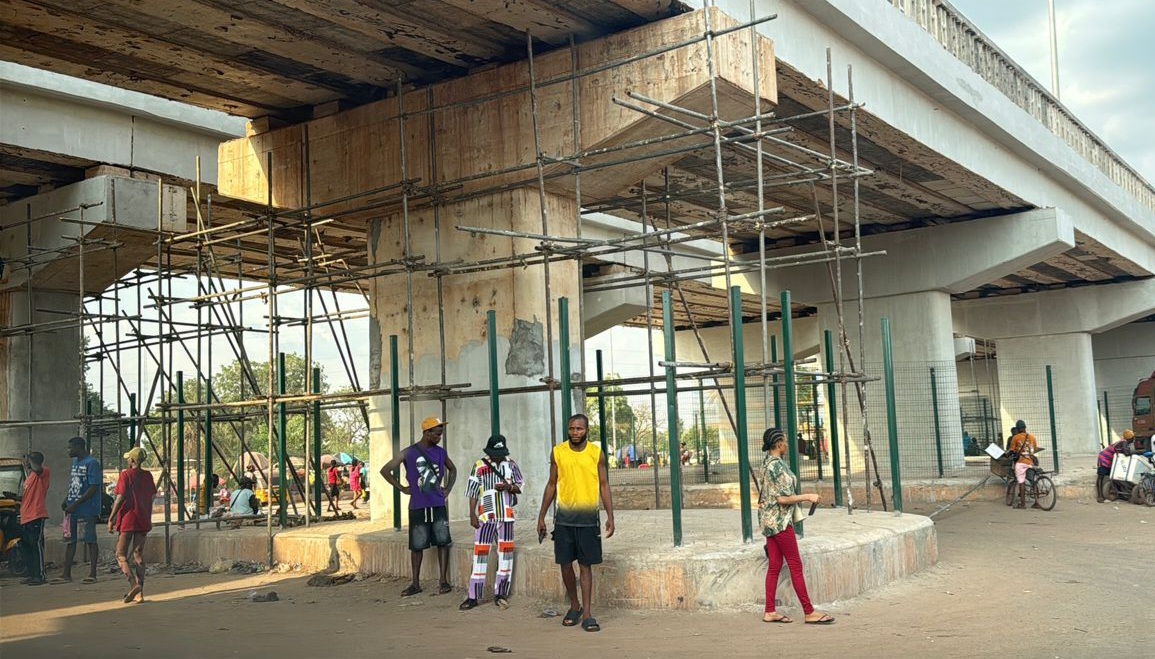
Umahi made the declaration on Monday, March 23, 2026, during an inspection of ongoing projects in Enugu, including the Enugu–Onitsha Expressway and the Eke-Obinagu Flyover. He expressed confidence that the era of fatal accidents, gridlock, and prolonged public frustration along the corridor is coming to an end.
“I’m going round the six geopolitical zones assessing projects to be commissioned before May 29 by Mr President. There are mega projects the President will personally inaugurate, and we mean it,” the Minister said.
Once regarded as one of the most dangerous highways in the region, the Enugu–Onitsha Expressway had for years been plagued by tanker explosions, loss of lives, and severe economic disruptions. Umahi, however, said decisive intervention by the current administration has altered the trajectory.
“When we came on board, people talked about this road every day—tanker accidents, loss of lives and so forth. But today, that is becoming a thing of the past because the President has swung into action,” he stated.
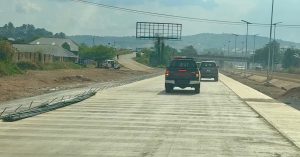
The Minister disclosed that the dual carriageway—spanning approximately 107 kilometres on each side—is undergoing a structural upgrade, with significant portions being converted from asphalt to concrete to ensure durability.
“It is not just about repairing the road; about half of it is being reconstructed in concrete. I have always expressed reservations about asphalt. If asphalt fails, at least 50 percent of the road will remain intact, and we will address any failures as they arise,” he explained.
He added that the same approach is being extended to sections in Anambra State, including the Head Bridge axis, where an initial asphalt design is being replaced with concrete pavement.
“At the Head Bridge, we are converting about 39 kilometres to concrete to achieve a more durable pavement standard similar to major national highway projects,” he said.
Beyond reconstruction, Umahi noted that the project includes solar-powered street lighting and environmental enhancements to improve safety and sustainability.
“We are installing solar lights on both existing and newly constructed sections. Within the first week, about one kilometre will be lit, and the work will continue. We are also planting trees, which is very important,” he added.
The Minister urged South-East residents to acknowledge the scale of federal intervention in the region, noting that such infrastructure attention was previously limited.
“The people of the South-East need to appreciate Mr President. We have not had it this way before. I served as governor for eight years and cannot recall a federal road project of this scale in Ebonyi,” he said.
He also cautioned against divisive narratives, warning that some individuals were misleading the public for personal interests.
“We must be careful of those who pretend to support us but are actually inciting us against the government. We need to distinguish genuine intentions,” he said.
Calling for continued support for President Tinubu, Umahi described the ongoing projects as part of a broader effort to correct historical neglect and fully integrate the South-East into national development.
“Let us support the man who has started correcting past wrongs against the South-East. With another four years, we will be fully integrated,” he said.
As a major milestone, the Minister directed that the Enugu–Onitsha Expressway be reopened for public use on or before March 31.
“I have authorised the Controller that by March 31 or earlier, the road should be officially reopened. Let the people of the South-East know that this road is ready for travel—that will be our Easter celebration,” he said.
Addressing concerns over project costs, Umahi clarified that pricing is subject to multiple regulatory approvals, including the Bureau of Public Procurement and the Federal Executive Council.
“I am not the final authority on project costs. There are established approval layers, including the Bureau of Public Procurement,” he explained.
He added that the standards applied to the Enugu–Onitsha project are consistent with major infrastructure projects nationwide, including the Lagos–Calabar Coastal Highway and the Sokoto–Badagry Super Highway.
“There is no discrimination. The same road architecture is being applied across the country,” Umahi said.