

West African Leaders Resolve to Strengthen Regional Cooperation, Security Challenges
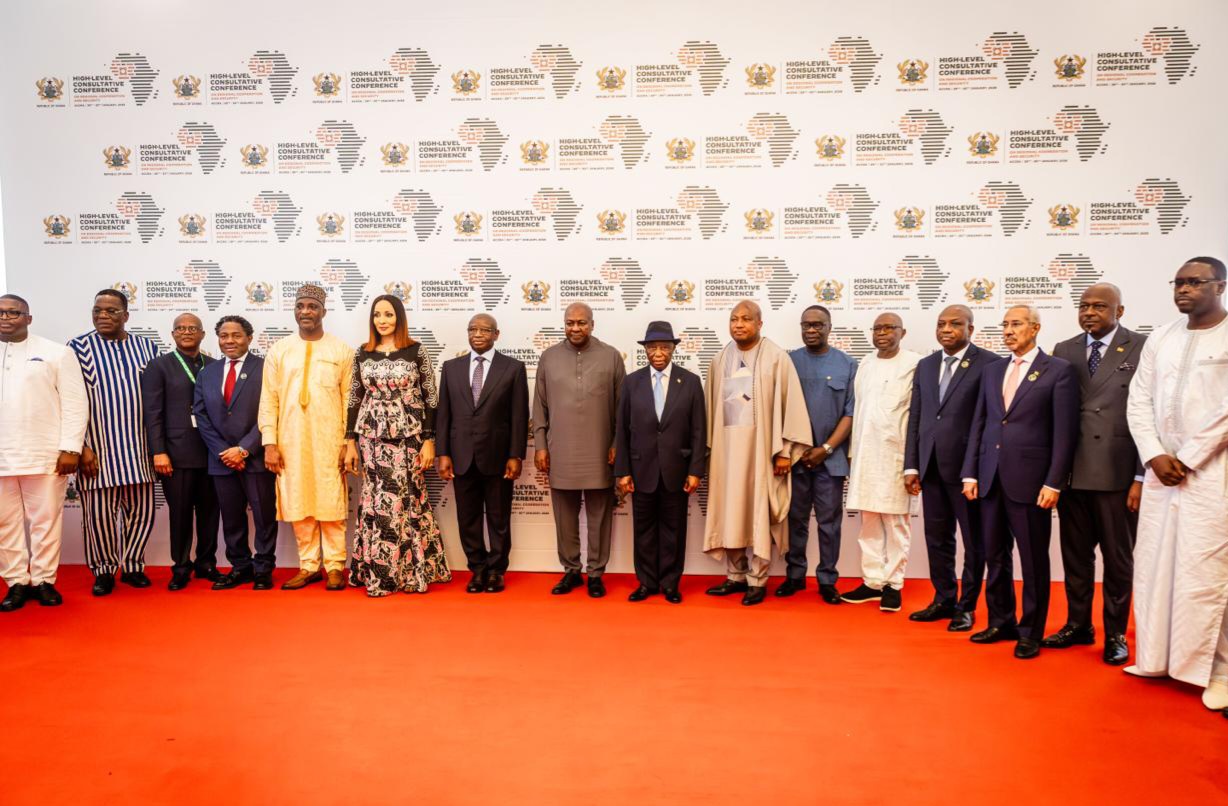
Accra (Core Reporters) Heads of State and Government and senior representatives from West African countries have reaffirmed their collective resolve to strengthen regional cooperation in addressing insecurity, terrorism, and governance challenges, at the conclusion of a High-Level Consultative Conference on Regional Cooperation and Security held in Accra, Ghana, from 29–30 January 2026.
The Conference was convened under the chairmanship of H.E. John Dramani Mahama, President of the Republic of Ghana. Delegations were led by H.E. Julius Maada Bio, President of the Republic of Sierra Leone, and H.E. Joseph Boakai, President of the Republic of Liberia, alongside representatives of Burkina Faso, Mali, Mauritania, Nigeria, Senegal, and Togo.
Participants expressed grave concern over the escalating threat of terrorism and violent extremism in West Africa, now accounting for more than half of global terrorism-related deaths. They emphasised that the region’s interconnected geography, economies, and communities make collective action imperative, stressing that inaction is no longer an option.
The Conference was preceded by consultations involving Ministers of Foreign Affairs, Defence, Security, and Intelligence Chiefs, with participation from the African Union Commission, the United Nations Development Programme (UNDP), and relevant civil society organisations.
Discussions focused on rebuilding trust, deepening sub-regional collaboration, and addressing the structural drivers of insecurity. Leaders agreed on the need to move beyond episodic cooperation toward a structured and permanent framework that supports shared programmes, harmonised standards, and coordinated responses to common threats.
Participants reaffirmed their commitment to a human security approach, recognising that sustainable peace must be people-centred, gender-responsive, and grounded in good governance, economic opportunity, and social resilience.
On security and counterterrorism, the Conference agreed to strengthen intelligence and information sharing, harmonise legal frameworks for cross-border prosecution of terrorism-related offences, and scale up deradicalisation efforts. To address cross-border threats, leaders committed to exploring “hot-pursuit” arrangements, strengthening border security mechanisms, and combating all forms of trafficking, including arms, narcotics, and human trafficking.
The Conference further agreed to develop a foundational Memorandum of Understanding (MoU) on Cooperation and Security within six months, to serve as the legal basis for bilateral, minilateral, and multilateral security arrangements. A draft MoU is expected within three months under the coordination of the Minister for Foreign Affairs of the Republic of Ghana.
Recognising climate change as a threat multiplier, participants also committed to integrating climate and food security into regional peace and security planning, and to developing a collective disaster preparedness and humanitarian response framework.
The leaders agreed to institutionalise the Consultative Conference as a bi-annual platform and to establish a dedicated mechanism to track the implementation of agreed outcomes.
The Conference concluded with a renewed sense of regional solidarity and a firm commitment to translate political resolve into measurable actions that safeguard lives, livelihoods, and stability across West Africa.