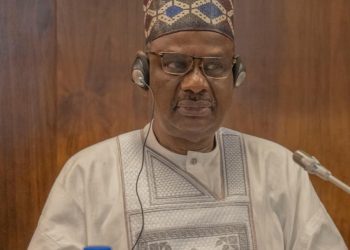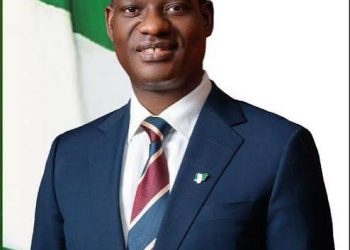

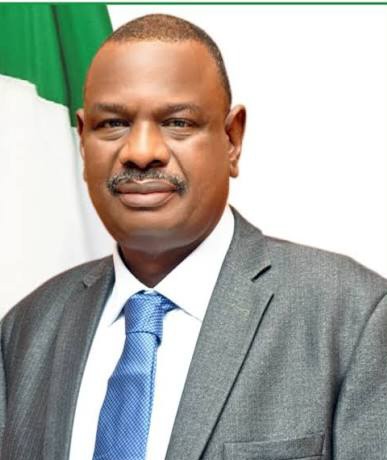
Managing Director/CEO Transmission Company of Nigeria, Engr. (Dr.) Sule Ahmed Abdulaziz
Powering Nigeria’s Future: How the Transmission Company of Nigeria Is Transforming the National Grid Under Engr. Abdulaziz
As part of Nigeria’s broader power sector reforms in early 2005, the Federal Government under President Olusegun Obasanjo sought to address rising electricity demand and the inefficiencies of the defunct National Electric Power Authority (NEPA).
By Raphael Ekpang
As part of Nigeria’s broader power sector reforms in early 2005, the Federal Government under President Olusegun Obasanjo sought to address rising electricity demand and the inefficiencies of the defunct National Electric Power Authority (NEPA). This led to the Electric Power Sector Reform (EPSR) Act of 2005.
The Act unbundled NEPA into 18 successor companies: six Generation Companies (GENCOs), eleven Distribution Companies (DISCOs), and one Transmission Company of Nigeria (TCN). They operated under the transitional Power Holding Company of Nigeria (PHCN), later dissolved as reforms progressed. TCN was incorporated in November 2005 as a public liability company under the Companies and Allied Matters Act (CAMA).
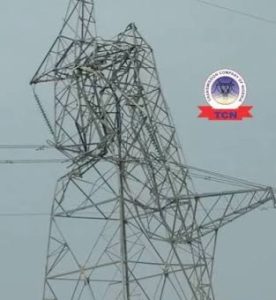
In 2006, TCN was issued a transmission licence by the Nigerian Electricity Regulatory Commission (NERC). The licence split in 2013 into Transmission Service Provider (TSP) and Independent System Operator (ISO), giving TCN responsibility for grid development, maintenance, and system and market operations.
With the Electricity Act 2023 and NERC Order No. NERC/2024/45, the market was further restructured. System and Market Operations were separated from TCN into a new entity, the Nigerian Independent System Operator (NISO), incorporated as a private company limited by shares. NISO now handles system and market operations, enforcement, and compliance audits, with assets, liabilities, contracts, and personnel formally transferred from TCN.
TCN, as Transmission Service Provider, now focuses on strengthening transmission infrastructure, expanding capacity, and reducing losses. It is also active in regional integration as a member of the West African Power Pool (WAPP), facilitating cross-border trade with Benin, Niger, and Togo. The Managing Director/CEO of TCN currently serves as WAPP Chairman.
TCN is a government-owned regulated monopoly under the Federal Ministry of Power, with exclusive rights to transmit electricity interstate and across borders, operating under NERC oversight with approved tariffs, service obligations, and investment plans.
Governance and Leadership
TCN operates through a centralised executive structure led by the Managing Director/CEO and three Executive Directors. Since inception, its CEOs have been: Engr. Godwin O. Osakue (2005); Engr. Hussein S. Labo (2008); Engr. Isa Musa (2009); Engr. Akinwunmi Bada (2010); Engr. Olusola O. Akinniranye (2012); Engr. Don Priestman (2012); Mr. Mack Kast (2013–2015); Mr. Paul Stefinsin (2015); Dipank Sarma (Acting, 2015); Mr. Mack Kast (2015–2016); Engr. (Dr.) Abubakar Atiku (2016–2017); Mr. Usman Gur Mohammed (2017–2020); and Engr. (Dr.) Sule Ahmed Abdulaziz (2020–date).
Core Mandate
Under the Electricity Act 2023, TCN’s mandate as TSP covers building, operating, maintaining, and expanding the national transmission network, including cross-border interconnections, and providing non-discriminatory open access to all market participants.
Structure and Operations
TCN operates nationwide through ten regions—Abuja, Lagos, Osogbo, Kaduna, Bauchi, Shiroro, Enugu, Port Harcourt, Benin, and Kano—with headquarters in Abuja.
Its main activities include: expanding and upgrading transmission facilities; maintaining a 99.9% reliability standard; reducing losses to below 5%; enforcing safety and environmental compliance; strengthening financial sustainability; and supporting regional electricity trade via WAPP.
Funding
Revenue comes from services to GENCOs, DISCOs, international customers, and eligible clients, supplemented by federal budget appropriations and grants or loans from the World Bank, AfDB, JICA, AFD, EU, and others.
Performance
Since May 2020, TCN has recorded steady gains. It has transmitted daily energy above 100,000 MWh seven times between January 2020 and November 2025, and achieved an all-time peak of 5,801.84 MW with daily energy of 128,370.75 MWh on 4 March 2025. Grid stability lasted 421 consecutive days (July 2022–September 2023), and disturbances fell by 76.47%, with two disturbances and no collapses from January to August 2025.
Through its Project Management Unit, TCN is implementing $1.16bn in donor-funded projects, including new substations and lines. From January 2024 to November 2025, it commissioned 82 transformers adding 8,500.5 MVA. Recent completions include the Kaduna–Jos 330 kV line and reconductoring works that doubled capacity on several routes. For the first time, fifteen 300 MVA transformers were installed in 2025.
TCN’s strategy aligns with the Transmission Expansion Plan, the Master Plan Study, and the Presidential Power Initiative, all designed to deliver a resilient, efficient grid that can support Nigeria’s Vision 30:30:30—30 GW generation by 2030 with 30% renewable energy.