Deprecated: Function WP_Dependencies->add_data() was called with an argument that is deprecated since version 6.9.0! IE conditional comments are ignored by all supported browsers. in /home/corerepo/public_html/wp-includes/functions.php on line 6260 NISO Calls for Stronger Hydro Generation Planning to Boost Grid Reliability - Core Reporters
NISO Calls for Stronger Hydro Generation Planning to Boost Grid Reliability
By Goodness Ekpang
Jebba (Core Reporters) The Nigerian Independent System Operator (NISO) has called for stronger coordination among hydropower generating companies, water-resource authorities, the Transmission Company of Nigeria (TCN), distribution companies and other stakeholders to improve hydro generation availability and strengthen the reliability of Nigeria’s electricity grid.
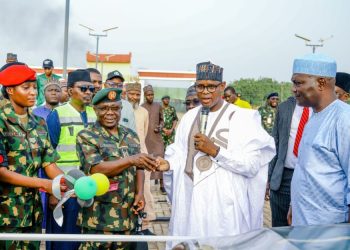
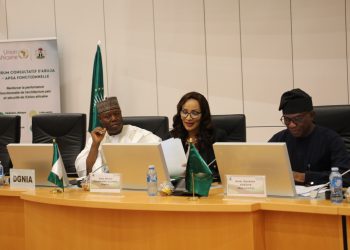
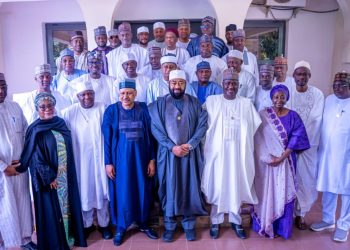
The Managing Director/Chief Executive Officer of NISO Engr Abdu Bello Mohammed made the call at the opening ceremony of the 2026 Hydro Generation Planning Meeting, held at the Jebba Hydro Power Station, Niger State, recently.
He said the meeting was designed to collectively assess the performance, availability, operational constraints, maintenance requirements, water-resource outlook and generation projections of Nigeria’s hydropower fleet, with a view to developing an integrated generation plan for the secure, reliable and economic operation of the national grid.
The NISO chief executive described hydropower as a strategic component of Nigeria’s electricity supply industry, noting that its value extends beyond energy production to critical grid-support functions such as frequency regulation, reserve provision, voltage support and system restoration.
He particularly stressed the importance of governor response, saying NISO had intensified compliance enforcement on Free Governor Control across the generation fleet through field inspections, conditional derogations with fixed expiry dates and a penalty framework tied to Monthly Penalizable Capacity, in line with regulatory directives of the Nigerian Electricity Regulatory Commission (NERC).
According to him, the objective is to ensure that the flexibility declared by generating stations translates into demonstrated and contractually reliable operational capability.
“Every hydro unit in your various plants has a governor-response profile that NISO can see. That visibility should inform how we plan together, not just how we enforce afterward,” he said.
He explained that hydro generation planning could not be reduced to determining the number of megawatts available at a particular period, but must take into account reservoir levels and inflows, water releases, seasonal hydrological conditions, dam-management requirements, unit availability, planned and forced outages, transmission capacity, demand patterns and reserve requirements.
The NISO boss also emphasised the need to bridge the gap between planning and actual implementation, stressing that accurate information, equipment availability, effective communication and operational discipline were essential to the success of any generation plan.
He identified timely hydrological forecasts, water-availability information, generation availability declarations, maintenance and outage schedules, unit operating limits, reservoir information, transmission outage data, generation forecasts and real-time communication between generating stations and the System Operator as critical inputs.
He further noted that Nigeria’s evolving energy mix, including increasing renewable and distributed energy resources, would require greater operational flexibility from the System Operator.
According to him, hydropower, particularly stations with demonstrable governor-performance compliance, would become increasingly valuable as variable renewable generation expands.
“This underscores the need to preserve, rehabilitate, modernize and optimize our existing hydropower assets while also pursuing the development of new viable hydro resources,” he said.
On the reliability of existing assets, the NISO Engr. Abdu Mohammed said the energy a station could deliver was determined not merely by installed capacity but by available capacity and operational readiness.
He therefore urged generating companies to strengthen preventive and predictive maintenance practices, properly coordinate planned maintenance with system requirements and minimize forced outages.
He added that where compliance gaps occurred, NISO preferred a structured and time-bound pathway back to full compliance rather than punitive action in isolation.
The NISO boss also disclosed that the organisation was advancing its modern control centre and operational intelligence systems programme to enhance operational visibility and improve the use of Energy Management Systems (EMS), SCADA, Internet of Things (IoT), state estimation and contingency analysis across the generation fleet.
He said the initiative would support more data-driven, predictive, scenario-based and risk-informed generation planning by integrating hydrological data, reservoir levels, inflow forecasts, unit availability, generation capability, demand forecasts, transmission constraints and real-time system conditions.
He called for stronger collaboration among industry stakeholders, urging participants to critically examine historical performance, identify the actual constraints limiting hydro generation and agree on measurable actions.
At the end of the meeting, he said stakeholders were expected to produce an implementable framework covering projected hydro generation profiles, water-resource availability, maintenance and outage schedules, generating-unit availability, governor-response compliance, coordination with thermal and renewable generation, reserve requirements and transmission constraints.
He also called for the outcomes of the meeting to be captured in a tracked action register, with clearly assigned responsibilities and timelines for implementation.
“The success of this meeting should be measured not by the quality of the presentations delivered here, but by the quality of the decisions taken and the extent to which those decisions translate into improved generation availability, enhanced grid security and greater electricity supply to Nigerians,” he said.
He reaffirmed NISO’s commitment to working with all stakeholders to ensure that Nigeria’s hydropower resources were effectively integrated into the national generation mix and optimally utilised for national development.