
Nigeria Reaffirms Commitment to Correctional Reforms, Digital Border Control, Financial Integrity
By Admin
The Federal Government has reaffirmed its commitment to strengthening Nigeria’s correctional system, enhancing border control through technology, and promoting financial accountability across public institutions.
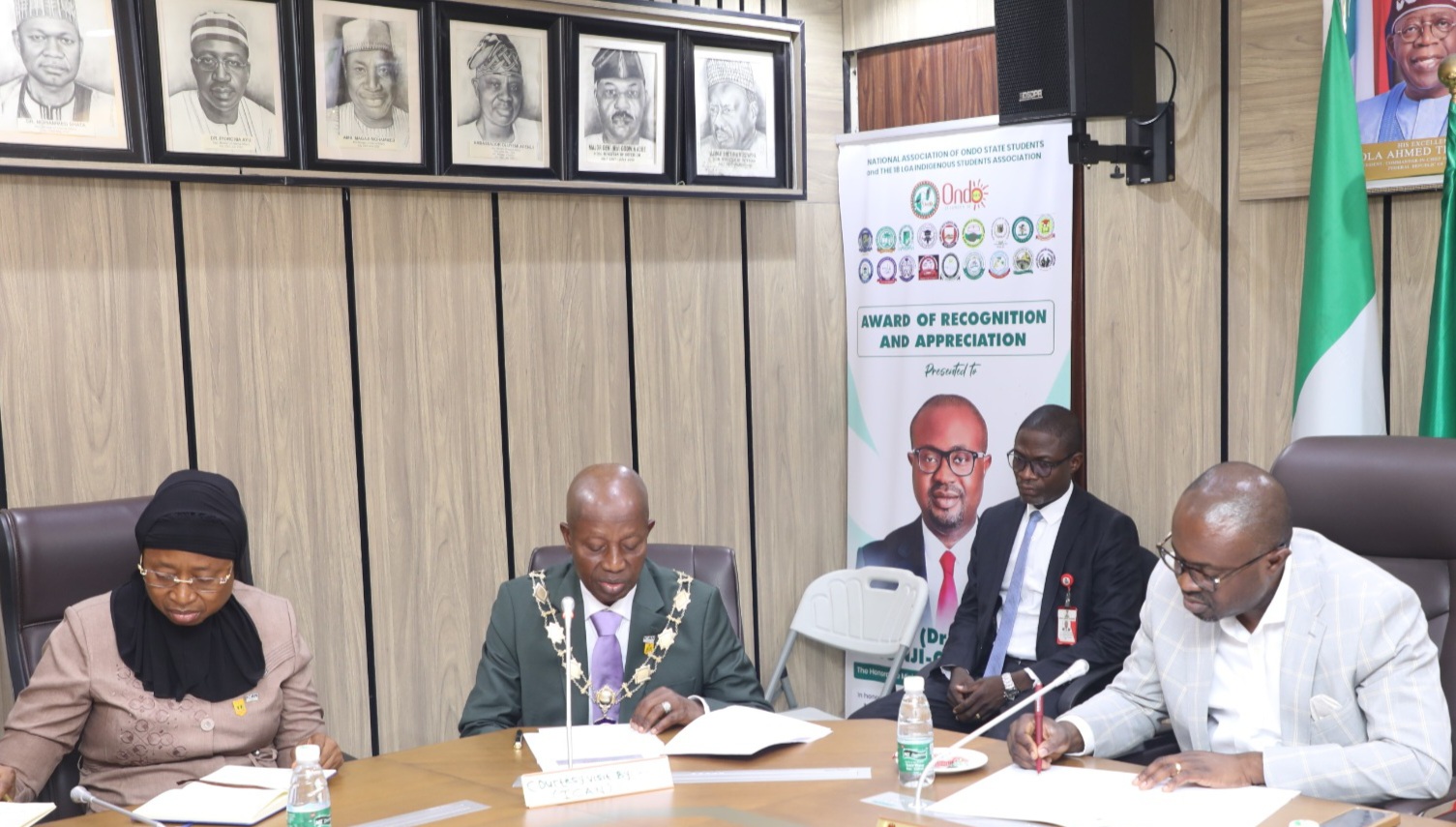
The Honourable Minister of Interior, Dr. Olubunmi Tunji-Ojo, made this known on Wednesday while receiving the President and Chairman of Council of the Institute of Chartered Accountants of Nigeria (ICAN), Mallam Haruna Yahaya, who led a delegation on a courtesy visit to his office in Abuja.
Speaking during the meeting, the Minister emphasized that the correctional system remains a critical responsibility of government, stressing that its focus must extend beyond custody to the rehabilitation and reintegration of inmates into society.
“Government has a duty of care to its citizens,” he said. “Even where freedom is restricted by law, we must ensure that those in our custody are treated with dignity and given the opportunity to return to society better than they came.”
He noted that the transition from the Prisons Act to the Nigerian Correctional Service Act reflects a deliberate shift from a detention-based system to one centered on reform, rehabilitation, and reintegration.
On border management and internal security, the Minister disclosed that the Correctional Information Management System (CIMS) currently holds over 50 million records collected over the years, covering operations at the nation’s seaports and airports, with ongoing efforts to integrate land border operations.
According to him, the system plays a critical role in detecting irregularities and preventing unauthorized entry, adding that modern security strategies are increasingly focused on prevention rather than reaction.
“We are building systems that can stop problems before they happen, not just respond after the damage is done,” he said.
The Minister also highlighted the need to strengthen internal systems across government institutions, particularly in financial management. While acknowledging the importance of audits, he stressed the need to prioritize preventive controls.
“It is not enough to detect issues after they occur. The real goal is to establish systems that make such issues difficult to occur in the first place,” he added.
He called on professional bodies such as ICAN to continue supporting national development, particularly in areas of revenue assurance, internal control, and transparency. He also advocated stronger collaboration between government and the private sector to improve efficiency and boost investor confidence.
On infrastructure, the Minister underscored the importance of an effective fire and rescue service, noting that expanding coverage nationwide would require innovative funding models, including public-private partnerships.
He congratulated ICAN on its leadership and its forthcoming West Africa Accountants Conference scheduled for December 2026, assuring the Institute of government support. He also commended the growing representation of women in professional leadership, describing it as a positive development for the future.
Earlier, the ICAN President, Mallam Haruna Yahaya, commended the Ministry for ongoing reforms and proposed the establishment of a Joint ICAN–Ministry Financial Integrity and Revenue Assurance Task Force.
He explained that the proposed task force would focus on key areas such as revenue assessment within the Nigeria Immigration Service, payroll analysis across uniformed services, and procurement risk review, with the aim of reducing leakages and strengthening accountability.