
Nigeria Moves to Expand Clean Energy Access with Landmark Solar Project
By Core Reporters
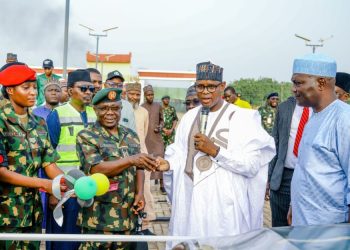
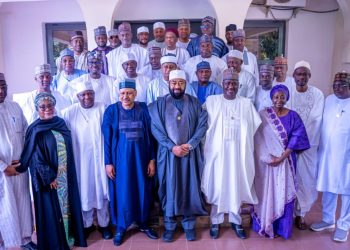
Nigeria took a significant step toward industrial transformation last weekend as the Ministers of Power, Joseph Tegbe; Steel Development, Prince Abubakar Audu; Industry, Trade and Investment, Senator John Owan Enoh; Niger State Governor Mohammed Umaru Bago; and the leadership of Abuja Steel Mills Limited broke ground on what is expected to become Sub-Saharan Africa’s largest solar-powered industrial project.
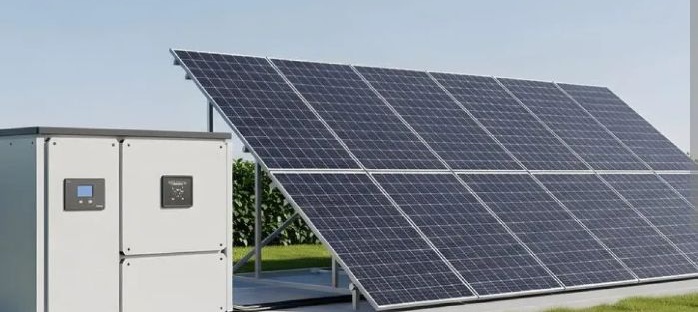
The ceremony, which featured the formal handover of 500 hectares of land by the Niger State Government to Abuja Steel Mills, a subsidiary of the African Industries Group, marked the commencement of a project with implications far beyond the steel sector. In many respects, it is a practical demonstration of President Bola Ahmed Tinubu’s Renewed Hope Agenda in action. At the centre of the development is a 200-megawatt solar mini-grid, the largest embedded renewable power installation of its kind in the region. Yet what distinguishes the project is not merely its size, but its intent.
The decision to operate off-grid was not a concession to existing limitations in the national electricity network. Rather, it was a deliberate and strategic choice to develop Nigeria’s most ambitious solar project outside the central grid.
That distinction is significant. In Nigeria’s energy discourse, off-grid solutions have often been perceived as alternatives necessitated by grid deficiencies.
The Abuja Steel Mills project challenges that narrative. Here, off-grid power is the strategy itself: a 200MW solar installation purpose-built to supply one of the most energy-intensive industrial operations on the continent with reliable, clean and scalable electricity. Instead of waiting for the grid to expand, the project is creating the energy future it requires.
This approach aligns closely with President Tinubu’s Renewed Hope Agenda for the power sector, which seeks to promote clean energy, distributed generation and private sector investment as drivers of industrial growth.
The Abuja Steel Mills solar project is not an exception within that framework; it is an early demonstration of its viability. It shows, at commercial scale, that renewable energy can serve not merely as a supplement to Nigeria’s industrial aspirations but as a dependable and bankable foundation for them.
The opportunities presented by this model are substantial.
Industrial-scale embedded generation enables manufacturers to produce electricity tailored to their operational needs, creating more predictable energy costs, reducing exposure to supply disruptions and potentially facilitating energy trading and surplus distribution to surrounding communities.
For a country blessed with abundant solar resources and an expanding industrial base, the prospects for replication are considerable. In principle, every major industrial cluster in Nigeria could adopt a similar model, thereby contributing to the country’s emerging distributed clean-energy architecture.
The mini-grid approach also has the advantage of accelerating Nigeria’s energy transition through commercially sustainable mechanisms. Unlike large-scale grid expansion projects, embedded renewable energy installations can be financed, developed and delivered largely through private investment, supported by targeted public interventions such as land allocation, streamlined licensing and policy certainty.
Governor Bago’s allocation of 500 hectares for the project exemplifies this kind of support. It sends a strong signal that Niger State—and, by extension, sub-national governments across Nigeria—recognises its role in enabling industrial-scale renewable energy investments.
The presence of the Minister of Power at the groundbreaking ceremony, coupled with his commitment to prioritising the project’s power infrastructure needs, reflects a Federal Government that increasingly views off-grid and mini-grid solutions not as temporary stopgaps but as strategic tools for economic growth.
Under President Tinubu’s Renewed Hope Agenda, the Ministry of Power is seeking to create an environment in which diverse, clean and distributed energy models can flourish and scale. The Abuja Steel Mills project stands as both a beneficiary of this policy direction and a compelling illustration of its potential.
The groundbreaking ceremony in Niger State is therefore more than a milestone for a single company or industry. It sends a broader message—to domestic investors, international financiers and host communities alike—that Nigeria’s industrial ambitions and clean energy future are being pursued together, deliberately and at scale.
Off-grid, but very much on purpose.