

Nigeria Govt. Flags Off Nationwide Crackdown on Sachet Alcohol in Abuja
By Raphael Ekpang
The National Orientation Agency (NOA), in collaboration with the National Agency for Food and Drug Administration and Control (NAFDAC) and the Federal Competition and Consumer Protection Commission (FCCPC), has officially flagged off a Joint Nationwide Campaign on the ban of sachet alcoholic drinks and alcohol packaged in PET or glass bottles below 200 millilitres.
The campaign was launched on Tuesday, March 3, 2026, at the NOA Headquarters in Abuja.
Recall that the Federal Government of Nigeria, through NAFDAC, had earlier announced the ban on the production and sale of alcohol in sachets and in PET or glass bottles below 200ml, effective January 1, 2026. The decision is described as a deliberate public health intervention aimed at reducing underage access to cheap, high-concentration alcohol and curbing harmful consumption patterns across communities.
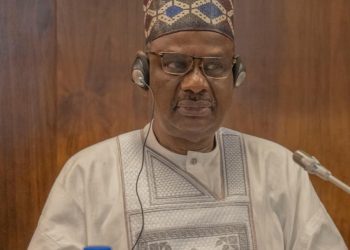
Speaking at the joint press briefing, the Director General of NOA, Mallam Lanre Issa-Onilu. described the initiative as a united stand for the health, safety and protection of Nigerian consumers. He emphasised that the collaboration aligns public health regulation, consumer protection and behavioural change strategies to ensure effective implementation of the policy.
According to him, “sachet alcohol has remained dangerously accessible due to its low cost, portability and ease of concealment, particularly in rural and semi-urban communities” He said, “when affordability intersects with vulnerability, the consequences include addiction, declining educational outcomes, domestic instability, road traffic incidents and reduced productivity.”
DG NOA said the nationwide campaign will focus on sustained public sensitisation and community mobilisation. “With 818 offices nationwide and operational structures across all 774 Local Government Areas, NOA will deploy its State Directorates, Zonal and Local Government Offices, and Community Orientation and Mobilisation Officers to engage rural communities, youth groups, market associations, transport unions, schools and faith-based institutions.
He stated further that the agency will also intensify media engagement across television, radio and digital platforms, while leveraging its CLHEEAN App to enable citizens to report violations and support enforcement efforts.
In her remarks, the Director General of NAFDAC, Prof. Mojisola Christianah Adeyeye, highlighted the growing public health concern posed by underage drinking in Nigeria. She cited findings from a 2021 national survey conducted in collaboration with the Distillers and Blenders Association of Nigeria (DIBAN), which revealed alarming levels of access to alcohol among minors and underaged persons.
Accotding to her, the survey, which sampled 1,788 respondents across six states representing the six geo-political zones, found that 54.3 percent of minors and underaged persons obtain alcohol by themselves. Nearly half (49.9 percent) patronised retailers selling drinks in sachet packs and PET bottles. Other sources included friends and relatives (49.9 percent) and social gatherings (45.9 percent).
Among those who procured alcohol themselves, 47.2 percent of minors and 48.8 percent of underaged persons purchased sachet alcohol, while 41.2 percent of minors and 47.2 percent purchased alcohol in PET bottles. The prevalence of sachet and PET bottle purchases was particularly high in Rivers, Lagos and Kaduna States. The study further showed higher patronage among males (51.4 percent) compared to females (41.5 percent), and in rural areas (50.1 percent) compared to urban locations (45.3 percent).
DG NAFDAC reiterated that the ban is not merely a restriction but a protective measure designed to safeguard children and vulnerable populations, reinforce responsible consumption standards and strengthen community wellbeing.
She called on parents, guardians, community leaders, retailers and distributors to support full compliance with the policy, while urging citizens to refuse patronage of banned products and report violations.
The joint campaign underscores the commitment of NOA, NAFDAC and FCCPC to promote responsible citizenship, ensure market accountability and protect public health across