
NHRC Celebrates 30 Years, International Human Rights Day with a Powerful Walk in Abuja
By Raphael Ekpang
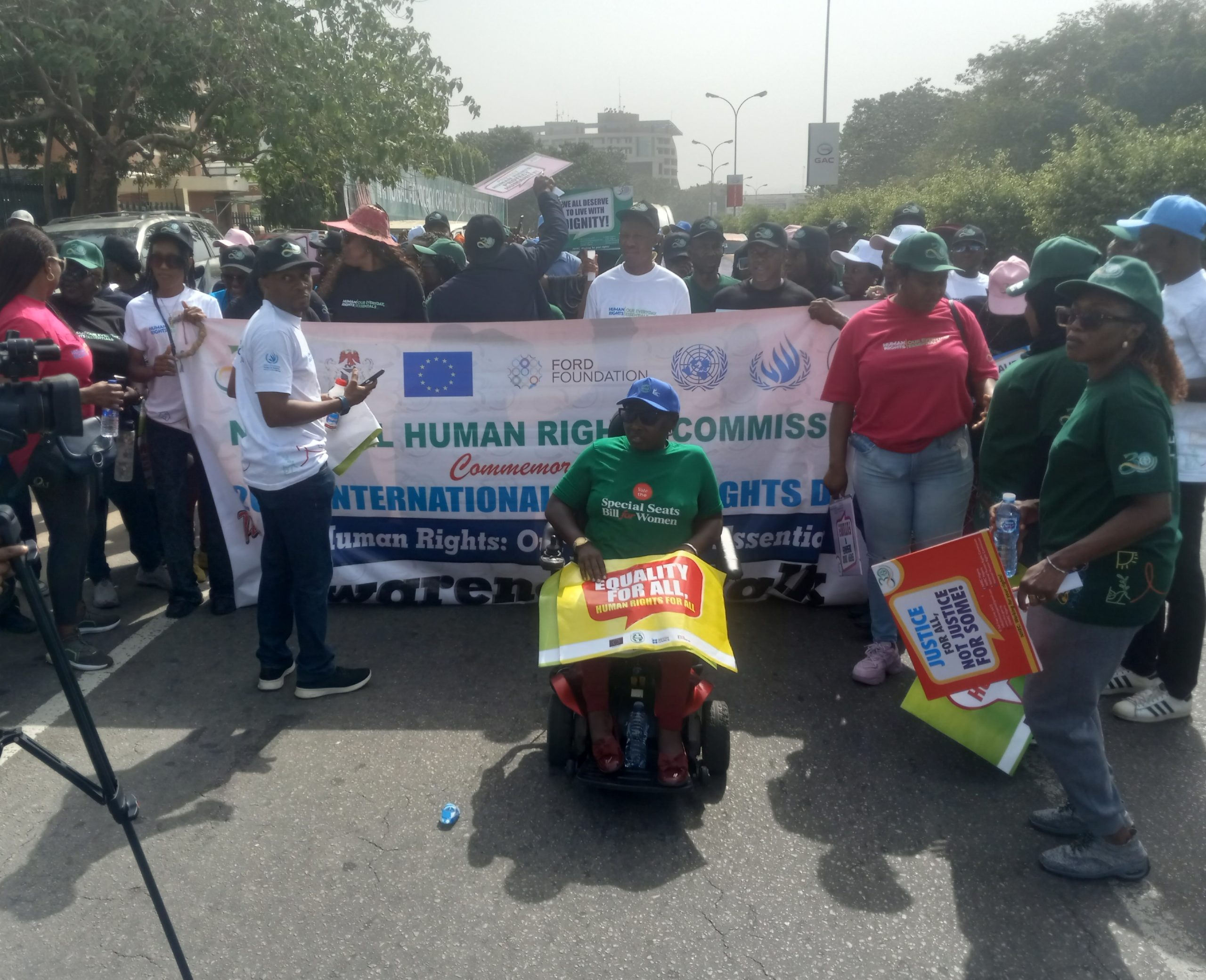
Abuja (Core Reporters) The National Human Rights Commission (NHRC) on Wednesday, December 10, commemorated its 30th Anniversary alongside the 2025 International Human Rights Day, with a symbolic Walk for Human Rights in Abuja, reinforcing national commitment to Freedom, Equality, and Justice for all Nigerians.
In his welcome address, the Executive Secretary of the Commission, Chief (Dr.) Tony Ojukwu, (SAN) expressed profound gratitude to partners, stakeholders, and the Nigerian public for their support throughout the Commission’s three decades of service.

“Today is both a celebration and a reaffirmation. A celebration of 30 years of promoting, protecting, and enforcing the rights of all persons in Nigeria—and a reaffirmation of our unwavering commitment despite the challenges of insecurity, social pressures, economic difficulties, and political complexities,” Dr. Ojukwu stated.
Celebrating 30 Years of Service to Humanity
Established in 1995, the NHRC has grown into Nigeria’s foremost institution for human rights advocacy and enforcement. This year’s commemoration highlights the Commission’s enduring mandate and its continued relevance in strengthening democratic values, rule of law, and the protection of vulnerable groups.
Dr. Ojukwu noted that the anniversary offers an opportunity to honour outstanding partners and institutions whose support has strengthened the Commission’s work and expanded its impact nationwide.
“The awards we present today are a tribute to those who, with courage and consistency, have supported the cause of human rights through their partnership with the Commission,” he added.
The senior advocate of Nigeria emphasised that the Walk for Human Rights, which preceded the ceremony, symbolized solidarity and national commitment to shared values.
“Our walk today is not rooted in protest, but in unity. Not in anger, but in resolve. We walk as active participants in building a Nigeria where every right is protected, every voice matters, and no one is left behind,” Dr. Ojukwu emphasized.
He highlighted that human rights flourish where societies embrace harmony, mutual respect, and peaceful coexistence.
Dr. Ojukwu reaffirmed that the advancement of human rights cannot be achieved by the Commission alone. He called for the active collaboration of all stakeholders—government institutions, the private sector, civil society, communities, and individuals.
“Together, let us build a nation where human rights are not aspirational ideals, but daily realities. Our collective effort remains the engine that drives progress,” he said.
Ojukwu noted that as Nigeria marks three decades of institutional human rights protection, the Commission expressed hope for a future where all Nigerians enjoy the full benefits of freedom, equality, and justice.
“We celebrate with gratitude for the past, responsibility for the present, and hope for a future where the dignity and rights of every person in Nigeria are respected,” the Executive Secretary concluded.
Recall that the National Human Rights Commission, established in 1995, serves as Nigeria’s independent institution mandated to promote, protect, and enforce human rights. The Commission plays a vital role in strengthening democratic governance, assisting vulnerable populations, and fostering a culture of respect for human rights across the country.
Also, the secretary-General of the United Nations, António Guterres in his goodwill message said, nearly eighty years ago, the Universal Declaration of Human Rights defined what every person needs to survive and thrive. It was a philosophical and political breakthrough — and it has been the bedrock of our global community ever since.
He noted that human rights — civil, political, economic, social and cultural — are inalienable, indivisible and interdependent. But recent years have brought a shrinking of civic space. “We have grave violations that signal a flagrant disregard for rights, and a callous indifference to human suffering.
“Together, we have the power to confront these injustices: by protecting the institutions that make human rights a lived reality.”
Every day, the United Nations helps people around the world realize their most basic rights. Together with civil society and governments, we deliver food and provide shelter; support education and elections; clear mines; defend the environment; empower women; and strive for peace.
He called on Nigerians to rise up in protecting the most vulnerable, speak up for the institutions that speak up for us, that way “we keep human rights alive.”
“Our rights should never take second place to profit or power. Let us unite to protect them, for the dignity and freedom of all,” Guterres said.