
June 12 Memorial Lecture: Falana Expresses Doubt Over 2027 Election’s Credibility
…As Experts Warn Democracy at Risk
By Raphael Ekpang
Participants at the Prof. Humphrey N. Nwosu 2026 June 12 Commemoration Lecture have called for sweeping electoral reforms, greater independence for the Independent National Electoral Commission (INEC), and the implementation of the recommendations of the Justice Mohammed Uwais Electoral Reform Committee, warning that Nigeria’s democracy faces serious threats if electoral credibility is not restored.
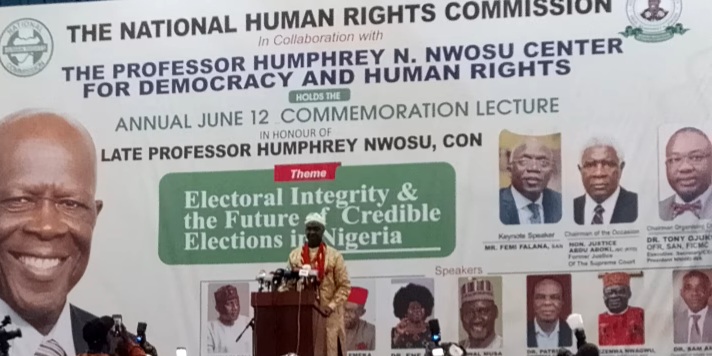
The resolutions emerged from the Annual June 12 Commemoration Lecture and the formal unveiling of the Prof. Humphrey N. Nwosu Center for Democracy and Human Rights, held on Tuesday, June 9, 2026, in Abuja.
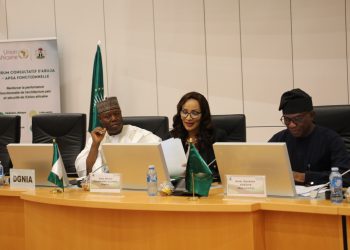
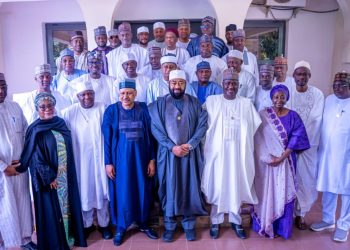
The event, organised by the National Human Rights Commission (NHRC) in collaboration with the Prof. Humphrey N. Nwosu Center for Democracy and Human Rights, brought together government officials, jurists, election administrators, civil society groups, political actors, academics, and development partners to reflect on the future of democratic governance in Nigeria.
Delivering the keynote lecture titled “Electoral Integrity and the Future of Credible Elections in Nigeria,” renowned human rights lawyer, Mr. Femi Falana (SAN), stressed that political parties that fail to conduct transparent primary elections cannot genuinely claim to be committed to credible elections in 2027.
Falana also raised concerns over the country’s worsening security situation, warning that terrorism, kidnapping, and other violent crimes could undermine peaceful, inclusive, and credible electoral processes.
He, alongside other speakers, paid glowing tribute to the late Prof. Humphrey Nwosu for his courage and professionalism in conducting the June 12, 1993 presidential election, widely regarded as Nigeria’s freest and fairest poll. They noted that Nwosu carried out the exercise despite resistance from elements within the military administration that opposed the election.
In his opening remarks, the Executive Secretary of the NHRC, Dr. Tony Ojukwu (SAN), described June 12, 1993, as a defining moment in Nigeria’s democratic journey, noting that credible elections remain critical to national stability, development, and democratic consolidation.
He said the theme of the lecture was particularly timely as the nation gradually approaches the 2027 general elections.
Ojukwu added that the newly inaugurated Prof. Humphrey N. Nwosu Center for Democracy and Human Rights would serve as a hub for research, civic engagement, policy advocacy, and democratic education aimed at strengthening Nigeria’s electoral and governance systems.
A major highlight of the deliberations was the panel’s concern over what participants described as the perceived lack of independence of INEC. They argued that electoral integrity can only be guaranteed when electoral management bodies operate free from political interference and faithfully reflect the will of the electorate.
The panel noted that declining public confidence in electoral institutions poses a significant threat to Nigeria’s democratic future and called for comprehensive reforms to strengthen transparency, accountability, and institutional autonomy within INEC.
Participants further recommended the establishment of an independent electoral accountability, regulatory, and oversight framework to monitor, track, and audit every stage of the electoral process.
Other recommendations included strengthening internal democracy within political parties, ensuring transparent and merit-based appointments into electoral institutions, expanding civic and voter education, enhancing oversight of political parties, and fully implementing the recommendations of the Justice Mohammed Uwais Electoral Reform Committee.
The forum also endorsed constitutional and electoral reforms aimed at promoting political stability and accountability, including consideration of a single-term tenure for elected executive office holders.
Participants observed that despite Nigeria’s democratic gains since 1999, challenges such as voter apathy, electoral violence, vote-buying, misinformation, political intolerance, and declining public trust continue to threaten the credibility of elections.
They maintained that the June 12, 1993 presidential election conducted under the leadership of the late Prof. Humphrey Nwosu remains Nigeria’s strongest symbol of electoral integrity and democratic aspiration.
The gathering concluded with a renewed commitment to promoting electoral integrity, constitutional democracy, human rights, transparency, accountability, and ethical leadership, while urging all stakeholders to work collectively towards building a more inclusive, just, and credible democratic system.
The event also marked the official unveiling of the Prof. Humphrey N. Nwosu Center for Democracy and Human Rights, established to preserve democratic memory, advance electoral reforms, promote human rights, and nurture future democratic leaders.