
Glaucoma Week: Health Ministry Dispensed 214,000 pairs of Free glasses, screened over 500,000 people-Says Dr. Oteri Eme
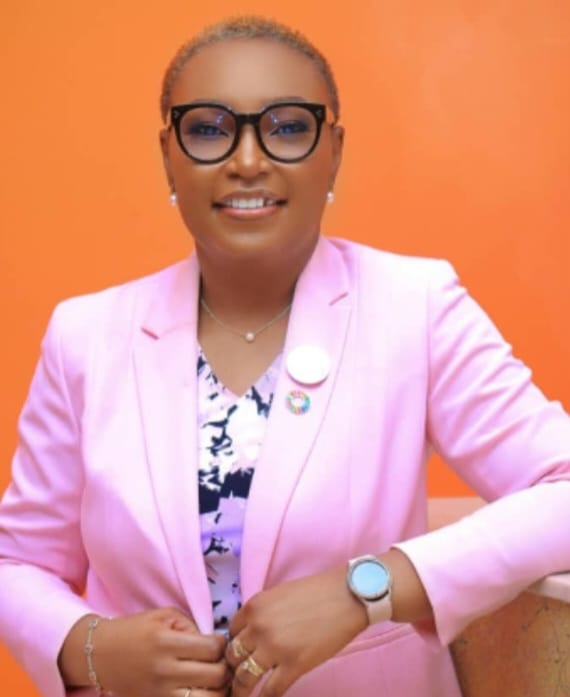
Dr. Okolo Oteri Eme, Director/National Coordinator, National Eye Health Programme, Federal Ministry of Health and Social Welfare in this exclusive interview with Core Reporters led by Editor Raphael Ekpang speaks extensively on the recent Glaucoma Week’s events that took place in Nigeria, and the Federal Capital Territory (FCT) in particular in the second week of March. She gave her assessment of the event, the step the ministry is taking to encourage citizens to come out for subsequent eye screening exercises and sundry.
Excerpts:
May we meet you ma.
Thank you so much. My name is Dr. Okolo Oteri Eme, the Director/National Coordinator, National Eye Health Programme, Federal Ministry of Health and Social Welfare.
What is your assessment of the just concluded 2025 Glaucoma Week’s activities in the country, FCT in particular.
In my assessments, I think the program was a very huge success because we met our objectives. Our objective, mainly in line with the global objectives of glaucoma, was to raise awareness using all platforms, and we’re able to do that effectively. You know, we had a road work where we announced, talked about glaucoma, talked about the risk factors, talked about the importance of having yearly eye check, frequent eye checks, talked about how people generally need to take care of their eyes and pay attention to the eyes. We also raise awareness about the fact that blindness from glaucoma is irreversible.
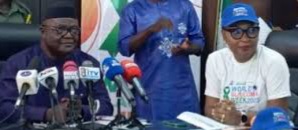
And we had a very fantastic press briefing, and the members of the press, your colleagues, carried out their role in such a wonderful way. So, we know that we’re able to reach a lot of Nigerians with this message of glaucoma for them to take care of their eyes. Like we emphasize that black people are at risk, and we want to reduce vision loss from glaucoma.
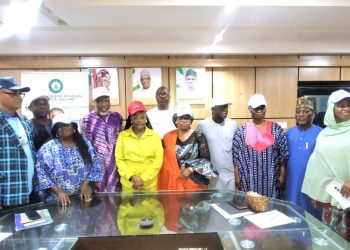
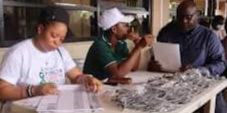
The press helped us to reach even so many more Nigerians who we could not physically reach. And then it also helped us to raise awareness about the screening program, which we had within the premises of the Federal Ministry of Health and several other locations in Abuja. And all over the country anyway because the professional groups with the National eye health program and the desk officers at the level of the state came together to organize screening programs across the country. Specifically the one which we held here in the Federal Ministry of Health was very successful. We reached out to members of the public, civil servants and of course, to our staff here, because we believe in keeping with the agenda and the theme of the week that we want to ensure people have a clear vision. And of course, for us as ministry workers, we know how busy people can be. So we decided to bring the screening to the staff here. A lot of the staff avail themselves of the opportunity to be screened for glaucoma, screen for risk factors of glaucoma. And then for those who needed a pair of glasses, we screen them and give them a pair of glasses for free.
Now, as to the numbers of people that were screened, we were able to screen over 1000 people. Specifically a thousand and twenty five just within the Federal Ministry of Health alone – within the premises here. So you can imagine members of staff of all the MDAs around us, the people, members of the populace and all of that, we were able to reach out to them.
Now, the number of people which we picked up having signs of glaucoma was 112. So people who either had elevated pressures or who had, like, what we call anatomic signs, because we actually examined patients eyes, those who already had signs of glaucoma, some already established, others developing, so we referred them to have further tests, and then, if diagnosed, we will commence medication.
Now there were some people who were already glaucoma patients, who were already on glaucoma medication, and we worked in partnership with the pharmaceutical companies who donated free medication. What did we do for these people? All we did was to refill their prescriptions for free. So we handed over to them free glaucoma medications to ensure that they continue to comply with their medication and improve their chances of conserving vision.
Now, beyond the activity around reaching out to glaucoma patients like you know, like you mentioned, we also gave out free spectacles here within the Federal Ministry of Health that day. We dispensed 916, spectacles, just within those days of screening. Of course, some people came up later to say, ‘Oh!, can you give us glasses and all of that? Between that day and now, we have given about 150 pairs of glasses in commemoration of glaucoma week.
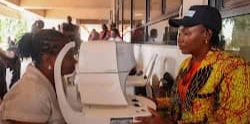
Now you remember that I also mentioned that we’re doing a presidential initiative – giving spectacles to Nigerians in all the states of the Federation including FCT. So far, from the report available to me, we have dispensed 214,000 pairs of glasses, we have screened over 500,000 people and we have trained over 3000 primary healthcare workers. So, these are all the things that we’re doing to ensure that Nigerians do not experience vision loss, and those that need spectacles have access to it, especially those who cannot afford it for free. And that’s why I said we will train the primary healthcare workers because our goal is to work through the primary healthcare system. That system has very close contact with the people in the communities. We don’t want to go and start focusing on secondary and tertiary facilities that are only in the city centres or in the state capitals. We want to reach out to the grassroots, the rural areas, and these are people who cannot afford the glasses.
Like we always say, ‘if you can see well, you will do well’. So our goal is to ensure that these people do not experience any vision loss. So, the tailor who needs to see very clearly can have a pair of glasses, thread her needle and increase her productivity, increase the money in her pocket, and by that increase the GDP of Nigeria as a whole. So that is our goal, and we’re working towards that to ensure that we achieve Mr. President’s goal of reaching 5 million Nigerians with a pair of glasses.
Was there any glaucoma surgery done during the week in view.
Well, it was like a screening program. So once you are screened and there are features suggesting that you have glaucoma, we refer to the specialist where further tests are done, diagnosis is established, and the type of treatment is determined. We don’t determine treatment. It was just a screening program. But we know that we have capacity at our secondary and tertiary levels to offer whatever treatment is necessary. The treatment for glaucoma ranges from medication, eye drops or tablets, then you have laser surgery, you have real surgery – surgery itself, apart from laser surgery. So, those are the three modalities of treatment for glaucoma, and we know that those treatment modalities are available in our secondary and especially tertiary facilities. That is why we are asking Nigerians to please avail yourself for this opportunity to ensure that you can preserve your vision.
There is an impression out there that glaucoma surgery is usually not successful, how true is this.
It’s a misconception! You know that in Nigeria, and even elsewhere people generally have a lot of misconceptions about health interventions, specifically eye health interventions. The difficulty with treating a patient with glaucoma is that you can’t cure it. And the goal of the physician is to preserve vision. But our people want the cure. So there is that disconnect between what is possible and what the patient wants, no matter how you explain it to them. So when somebody wants a cure and is coming to you for a cure, and all that you can provide is management, and preservation of vision, he might think that whatever you have done for him or her is not effective.
So, let us get it clear. That’s why we’ve said any treatment is so important because blindness from glaucoma is irreversible. So, be it laser, be it surgery, be it medication, the goal is not to reverse the vision you have already lost when the doctor catches the glaucoma. Humanly speaking, it cannot be done, whether in mass, in America, in Germany or anywhere. All over the world, the goal for treatment is to preserve the vision where they met you, because the visual loss is only irreversible. That is why we say this is the major cause, the most common cause of irreversible vision loss.
The goal is to preserve that vision that you have. So, that’s what surgery will do for you. That’s what the medication will do for you. That’s what a laser will do for you. So, when you go for surgery, the only risk factor that you can modify in glaucoma is the pressure. So, the goal of the treatment is to reduce that pressure because once you reduce pressure you can then preserve vision. Your surgery is not supposed to make you see better. It cannot make you see better. The medication that your ophthalmologist or eye health professional prescribes for you will not make you see better. Laser surgery will not make you see better. It will only reduce the pressure so that the risk of you losing vision and becoming blind is reduced. It’s that continuous increased pressure that destroys the optic nerve, and once that optic nerve is destroyed completely you go blind.
Glaucoma is still poorly understood. Sometimes, I don’t want to go into too much detail, but I must mention here that when the pressure is high, it’s a risk factor, because there are many people who have what we call statistically normal pressure whose optic nerve is still undergoing destruction, glaucomatous destruction, right? What we still do for those people is that the pressure at which we meet you, we still need to reduce it, because studies have shown that if you reduce that pressure, the risk of losing vision and going blind is much reduced. So, the only modifiable risk factor is the intraocular pressure, or eye pressure. The goal of treatment is to reduce that pressure, whether it is high or normal, where you find it, reduce it and in that way preserve the vision that the patient has. Whatever he lost before treatment cannot be reversed.
The other thing we can do for you, that is why we prescribe the glasses. Glaucoma happens most commonly in people above 40 years. Although in Nigeria, like we say in blacks, everybody is at risk, because younger people in Nigeria get glaucoma. But you also have what we call presbiopia in people above 40, and that is why for the World Glaucoma Week, we targeted these two things, the glaucoma and presbyopia. So that the patients who have glaucoma, who will also have presbyopia, we give them a pair of glasses so that they can see better because of the presbyopia and not because of the glaucoma. So they are two different things.
What is the ministry doing to convince those not willing to come out to change their minds set and come out in your subsequent screening exercises.
Well willingness, you know in healthcare you don’t force interventions on anybody. There’s what we also call the fundamental right of the patients. All you can do is try to convince, try to raise awareness, try to educate them, it’s better to prevent vision loss than when you are completely blind and start running all over the places. Like I said as the week was coming to an end, I said as the curtain falls on the glaucoma week, the actors – policy makers, the eye health professionals, the donors, the researchers and everyone in eye health, cannot quit the stage. We have to stay on the stage to continue to raise awareness, continue to encourage people to come for screening because it’s a lifelong disease. We would always alert them on the dangers of listening to those on social media who will tell them if you put this thing, if you drink this thing, if you do that you be cure, what that does for you is that they prevent you from doing the right thing, and by the time you realize what they are doing for you is no effect, you have lost even much more vision, and you are not coming to the doctor when you’re almost blind. So that’s what happens most of the time. Most of the patients in Nigeria are coming when they’re already blind or almost blind, and at that stage they will be expecting magic. There is no magic! Come early and when you are there early, comply with your medication, comply with your follow up so that you can help your doctor preserve your vision. We are managing your condition, we are not curing you. Nobody can cure you. No human being can cure you. We all believe in prayers, and in miracles. While you are believing for God to heal, you still come to the clinic let’s check and confirm, there’s nothing wrong with it. To not check is to be in denial, while destruction is going on and blindness is coming.
We say it’s a silent leaf of sight, many times there’s no pain. Though there’s a form that has pain but I won’t go into that because it’s not the common one with is here. The common one has no pain, it has no symptoms, by the time you are noticing that you are not seeing well, it has gone far. So, please help us as media, which you are already doing so well, to keep this message on – that we are not quitting the stage. Though, the curtain for act one scene one has dropped, another act and scene, we continue so that we can reach our goal of ensuring that no Nigerian loses vision from glaucoma again.
Thank you for having us.
The pleasure is mine.