

Inside the Month-Long Hunt That Freed Oyo’s Kidnapped Pupils and Teachers
By Raphael Ekpang
For nearly two months, anxiety gripped families in Oyo State after dozens of pupils and their teachers were abducted by armed terrorists in Oriire Local Government Area on May 15, 2026. Every passing day deepened fears over their fate, while security agencies quietly assembled intelligence, tracked suspects and mapped the criminal network believed to be operating from the vast Old Oyo National Park.
On July 10, the silence was broken with news many had almost given up hoping for: all 44 kidnapped pupils and teachers had regained their freedom.
Unlike many rescue missions that rely on direct assaults, the operation that secured their release was the product of weeks of painstaking intelligence gathering, inter-agency collaboration and strategic planning aimed at protecting the lives of the captives.
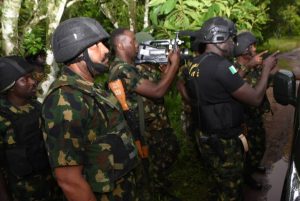
The rescue operation was spearheaded by troops of the Nigerian Army under the leadership of the General Officer Commanding 2 Division, Major General Christopher Romanus Nnebeife, working alongside the Office of the National Security Adviser through the National Counter Terrorism Centre, the Defence Headquarters, Special Forces from the Army, Navy and Air Force, the Nigeria Police Force, the Department of State Services, the National Intelligence Agency, the Nigeria Security and Civil Defence Corps, Amotekun operatives, local vigilantes and hunters.

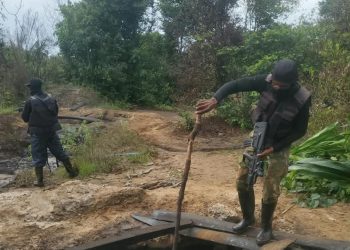
Security sources said the operation extended beyond locating the hostages. Investigators focused on identifying the masterminds behind the kidnapping, dismantling their logistics chain, exposing informants and destroying support networks that enabled the criminal gang to operate within the Old Oyo National Park and other locations.
The campaign lasted for more than a month and involved simultaneous operations in Oyo State and several other parts of the country. Multiple arrests disrupted the group’s command structure, cut off its supply routes and mounted sustained pressure on its leadership.
Unable to withstand the coordinated security crackdown, the kidnappers eventually released the victims unconditionally.
Military authorities described the mission as a carefully calibrated operation designed to avoid unnecessary confrontation that could endanger the lives of the children and their teachers. While the primary objective of rescuing the hostages alive was achieved, the military disclosed that some security personnel paid the ultimate price during the operation, underscoring the risks involved in combating terrorism and organised criminal groups.
The rescued pupils and teachers are currently receiving medical care at an undisclosed hospital before being reunited with their families through the Oyo State Government.
Beyond the successful rescue, the operation has once again highlighted the growing importance of intelligence-driven security operations in Nigeria’s fight against terrorism, kidnapping and organised crime. Rather than relying solely on military firepower, security agencies increasingly depend on intelligence fusion, surveillance, inter-agency coordination and local community support to dismantle criminal networks.
Military authorities have indicated that follow-up operations will continue to apprehend other members of the terrorist network and prevent similar attacks in the future.
Major General Nnebeife expressed appreciation to President Bola Ahmed Tinubu for providing the strategic direction and resources that supported the operation. He also commended Oyo State Governor Seyi Makinde, the National Security Adviser, the Minister of Defence, the Chief of Defence Staff, the Chief of Army Staff, other Service Chiefs, the Inspector-General of Police, the Directors-General of the DSS and NIA, as well as other participating security agencies for their cooperation.
He further acknowledged the contributions of local vigilantes, Amotekun operatives, hunters and members of the public whose support and intelligence were instrumental to the mission’s success.
As investigations continue, security agencies have appealed to Nigerians to remain vigilant and continue providing timely and credible information, stressing that public cooperation remains one of the strongest weapons in the country’s ongoing battle against terrorism, banditry and kidnapping.