
Insecurity: Tinubu Seeks Stronger Collaboration With Northern Traditional Rulers
By Sarah Kitka
President Bola Ahmed Tinubu has reaffirmed the Federal Government’s commitment to strengthening collaboration with traditional institutions to promote peace, security, national cohesion, and sustainable development across Nigeria.
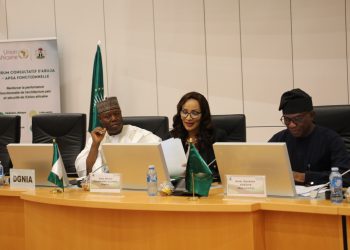
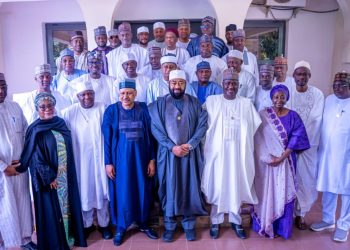
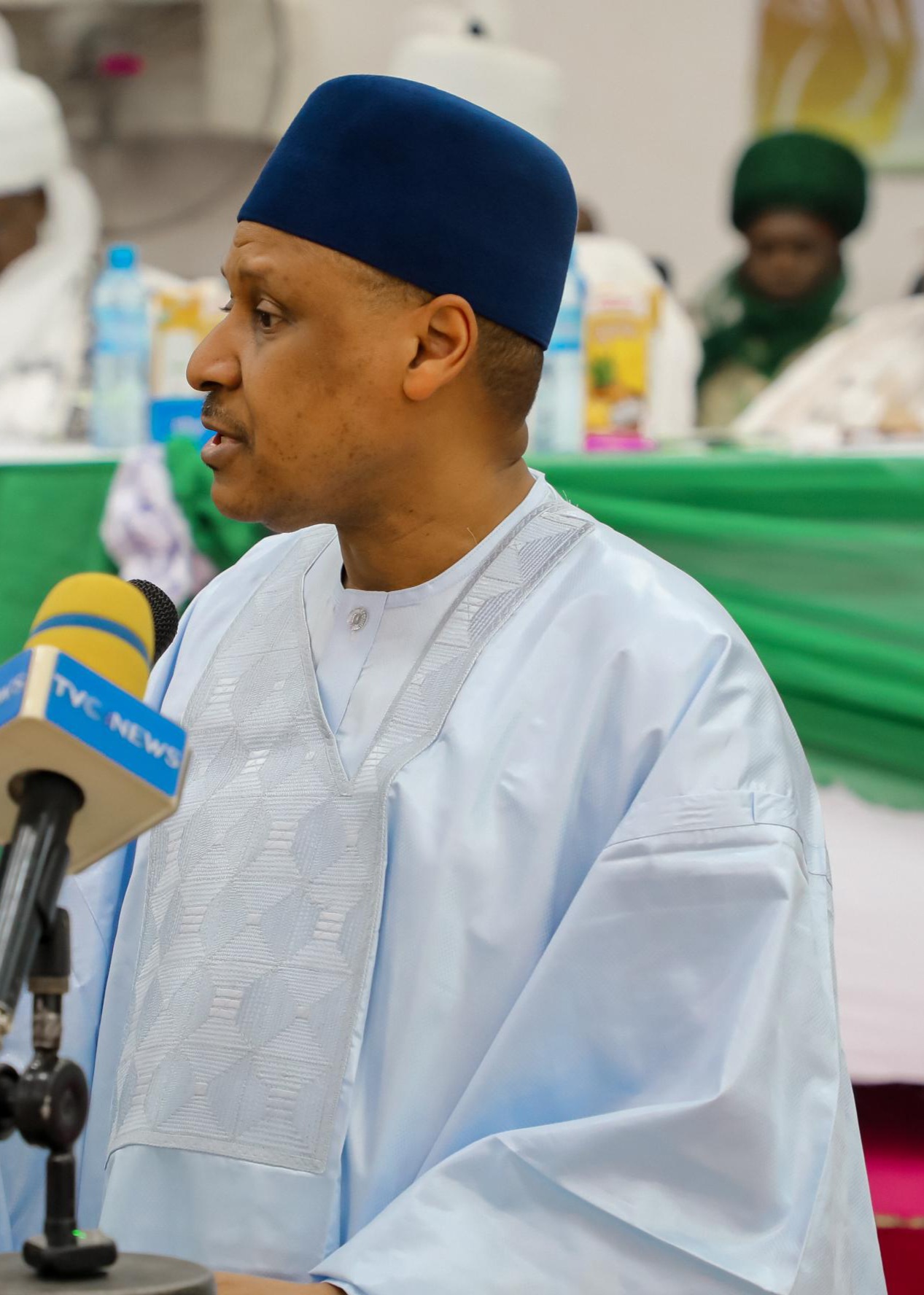
Representing the President at the 8th Executive Committee Meeting of the Northern Traditional Rulers’ Council (NTRC) held on Monday in Dutse, Jigawa State, the Honourable Minister of Information and National Orientation, Mohammed Idris, conveyed the President’s message to traditional rulers and stakeholders across Northern Nigeria.
He stated that the Tinubu administration fully recognises the strategic role of traditional institutions and remains committed to deepening engagement with them in advancing peace, stability, and development.
According to the Minister, peace and unity remain the foundation of national progress.
“Without peace, development becomes difficult; without unity, progress cannot be sustained,” he said, stressing that both must remain a collective responsibility.
He commended the Northern Traditional Rulers’ Council, led by the Sultan of Sokoto, His Eminence Alhaji Muhammad Sa’ad Abubakar, for its continued role in promoting peace, unity, and development in the region.
The Minister described traditional rulers as critical partners in governance due to their closeness to the grassroots and their moral authority in mobilising communities for national development.
On security, he noted that the Federal Government has strengthened coordination among security agencies, resulting in significant gains against criminal and terrorist groups, while acknowledging that more work remains.
He added that lasting peace also requires addressing root causes of insecurity such as poverty, unemployment, and social exclusion.
Idris highlighted key government economic initiatives in agriculture, livestock development, infrastructure, education financing, consumer credit, and support for small businesses aimed at job creation and improved livelihoods.
He described the establishment of the Federal Ministry of Livestock Development as a strategic intervention to modernise livestock production, boost food security, and reduce resource-based conflicts.
He also referenced major infrastructure projects, including the Lagos-Calabar Coastal Highway, Sokoto-Badagry Super Highway, Calabar-Abuja Super Highway, and the Akwanga-Jos-Bauchi-Gombe Corridor, describing them as investments in economic growth and national unity.
The Minister further emphasised that programmes under the Renewed Hope Agenda, such as NELFUND, CREDICORP, and MSME support schemes, are designed to expand opportunities for Nigerians.
He stressed the importance of traditional rulers in promoting public awareness, countering misinformation, and fostering national unity.
“In an age of misinformation, traditional rulers remain among the most trusted voices in society,” he said.
The Minister expressed optimism that the meeting would produce practical recommendations to strengthen peace, unity, and development across Northern Nigeria and the country at large.
He also extended condolences to the Government and people of Katsina State over the passing of retired Major General Rabe Abubakar, describing him as a patriotic and distinguished national figure.
The meeting was attended by governors, security chiefs, and prominent traditional rulers, including the Sultan of Sokoto, the Shehu of Borno, the Emir of Zazzau, and other eminent leaders from across the country.