
From Warning to Action: Pate Urges Nigeria to Prepare for Next Pandemic
The Coordinating Minister of Health and Social Welfare, Muhammad Ali Pate, has warned that future pandemics are inevitable, stressing the urgent need for sustained preparedness, stronger health systems, and coordinated national response mechanisms.
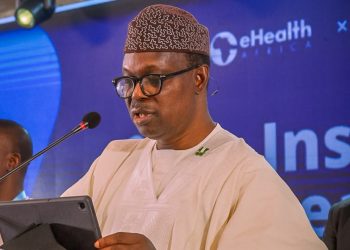
Speaking at a high-level public health symposium in Abuja on Monday, Pate noted that human civilisation has repeatedly been shaped by pandemics, from ancient outbreaks to modern global health crises.

The symposium, themed “Lessons on Pandemic Preparedness & Response: Insights from China and Nigeria,” featured Pate’s presentation titled “A Decade of Global Pandemic Experiences: Trends and Takeaways.” He referenced major outbreaks such as HIV/AIDS, SARS, Ebola, Zika, and COVID-19 as stark reminders that infectious diseases remain a persistent global threat.
“Pandemics are not a matter of if, but when,” he said, emphasising that their impact extends beyond health, disrupting economies, societies, and global systems.
Pate highlighted the far-reaching consequences of the COVID-19 pandemic, including a sharp contraction in global economic output and widespread disruption to supply chains, businesses, and livelihoods. He added that Nigeria has similarly experienced economic slowdowns during past outbreaks due to reduced activity, public fear, and pressure on national systems.
Describing pandemics as both health and security concerns, he underscored the link between public health, economic stability, and national security, noting that effective preparedness requires cross-sector collaboration, including the involvement of security agencies.
The minister called for sustained investment in the health sector, particularly in strengthening primary healthcare, expanding the workforce, and improving access to affordable services. He also advocated increased local production of medical supplies and the development of robust diagnostic and surveillance systems.
“As we look to the future, preparedness must be proactive and sustained. We must invest in systems that can detect, respond to, and prevent outbreaks before they escalate,” he said.
In his welcome remarks, the Minister of State for Health and Social Welfare, Iziaq Adekunle, echoed similar concerns, describing pandemics as defining forces in human history that shape economies, societies, and international cooperation. He warned that the lessons of COVID-19 must not be ignored, reiterating that the next global outbreak is inevitable.
Adekunle called for a whole-of-society approach to preparedness, involving communities, development partners, and the private sector. He also revealed that the Federal Government is undertaking a comprehensive review of Nigeria’s healthcare system aimed at improving service delivery, expanding access, and strengthening emergency response capacity.
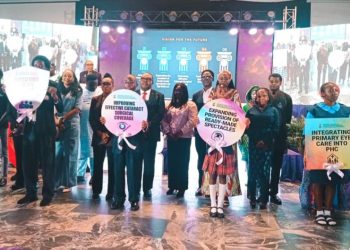
Stakeholders at the event emphasised the urgent need to enhance Nigeria’s pandemic preparedness and build a more resilient healthcare system.
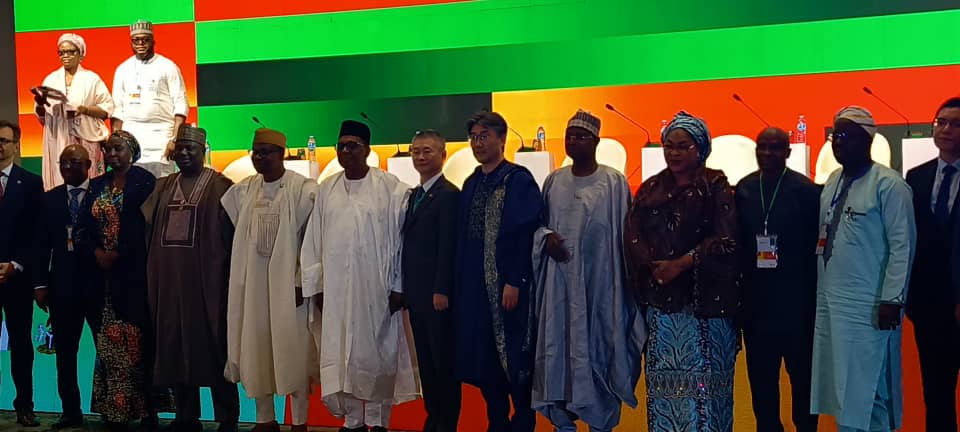
Goodwill messages were delivered by key partners, including Pavel Ursu of the World Health Organization; Yu Dunhai, Ambassador of the People’s Republic of China to Nigeria; Mahmoud Dalhat; and Nanlop Ogbureke.
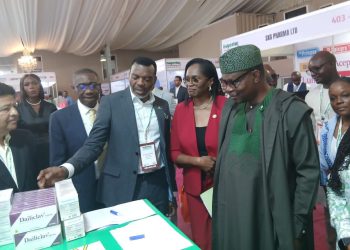
Among top government officials present were the Minister of State for Agriculture and Food Security, Aliyu Sabi Abdullahi; the Minister of Livestock Development, Idi Maiha; and the Minister of Environment, Balarabe Abbas Lawal (represented).
The keynote lecture, “Strengthening Pandemic Preparedness and Response: China Experience,” was delivered by George F. Gao, Director-General of the Institute of Microbiology, Chinese Academy of Sciences.
The highlight of the symposium was the presentation of an Award of Excellence to Prof. Gao in recognition of his contributions to global health and pandemic response.