

FG Unveils Data on Fertility, Child Mortality, Others
…Launches 2024 NDHS Report
The Federal Government of Nigeria has unveiled critical data that will guide national health policies, reveal disparities across regions, and strengthen evidence-based planning towards achieving the Sustainable Development Goals (SDGs). This is even as it launched the 2024 Nigeria National Demographic and Health Survey (NDHS) Report.
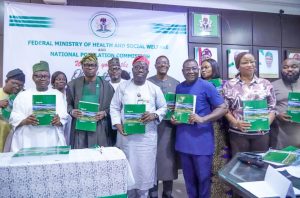
Speaking during the unveiling ceremony on Friday, October 17, 2025 in Abuja, the Honourable Minister of State for Health and Social Welfare, Dr. Iziaq Adekunle Salako, described the NDHS as “an indispensable tool for policy decisions, health equity, and efficient resource allocation.”
He said the 2024 NDHS, conducted by the National Population Commission (NPC) with the support of the Federal Ministry of Health and Social Welfare and development partners, provides fresh insights into Nigeria’s progress and challenges in reproductive, maternal, newborn, child, and adolescent health.
According to Dr. Salako, the survey findings revealed a decline in the country’s total fertility rate from 5.3 children per woman in 2018 to 4.8 in 2024, indicating gradual gains in access to family planning services. Modern contraceptive use among currently married women increased to 15 percent, up from 12 percent in 2018, while the proportion of women whose family planning needs are satisfied rose to 37 percent.
“These improvements are encouraging but remain below the levels needed to achieve rapid social and economic progress,” he noted.

On maternal and child health, the report shows that antenatal care coverage now stands at 63 percent, skilled birth attendance at 46 percent, and postnatal coverage within two days of delivery has improved from 38 percent in 2018 to 42 percent in 2024. These findings, Dr. Salako pointed out, means too many of our births are still occurring without skilled assistance.
Salako also highlighted progress in child survival, with the under-five mortality rate ( SDG 3.2.1) declining significantly to 110 deaths per 1,000 live births, compared to 132 in 2018. However, the neonatal mortality rate (SDG3.2.2) remains almost unchanged at 41 deaths per 1,000 live births, compared to 39 per 1000 – 5 years ago.
“Considering that 40-45% of under -5 mortality occurs during the neonatal period , these findings challenge us to do more in addressing the leading causes of neonatal mortality in our country”.
“As part of our response, the Ministry has launched the Maternal and Neonatal Mortality Reduction Initiative (MAMII) and the Nigeria Child Survival Action Plan 2025–2029, which contains multiple pillars of interventions that are context specific and coordinated ” he said.
The report also revealed that 39 percent of children aged 12–23 months are fully vaccinated against basic antigens, 20 % are fully vaccinated according to the national schedule: while 31 percent remain completely unvaccinated (“zero dose”), exposing deep inequities in immunization coverage across states. This, he stated, underscored the need for heavy lifting to realign efforts, towards addressing the high burden of zero dose immunization and disparity in immunization coverage in the country.
Ownership of insecticide-treated nets remains widespread, with nearly six in ten households owning at least one, and half of pregnant women reporting usage, an encouraging sign for malaria prevention in pregnancy and child survival.
However, the Minister lamented the low diagnosis rates of non-communicable diseases, including diabetes and hypertension, noting that less than 10 percent of adults aged 15–49 have ever been informed of their blood pressure or blood sugar status by a health worker: despite higher prevalence rates shown in national studies.
Dr. Salako emphasized that the Tinubu administration is committed to using the NDHS findings to drive policy reforms, enhance coordination, and target investments more efficiently across all tiers of the health system.
“President Bola Ahmed Tinubu has identified health as a critical pillar of national development,” the Minister stated. “Through improved funding, landmark policy reforms, and executive orders, the administration is steadily improving Nigeria’s health indices. But achieving meaningful impact requires all stakeholders, federal, state, private, and community, to act together.”
Dr. Salako further pointed out emphatically, that the Federal Ministry of Health and Social Welfare is already translating some of the findings into policy reforms and program actions in order to strengthen the health system across all levels of healthcare.
He urged subnational governments and partners to “own the data” and align efforts toward achieving universal health coverage and better health outcomes.
In his remarks, Chairman of the National Population Commission, Hon. Nasir Isa Kwarra, hailed the NDHS as a “national mural that reflects how we can improve the health and well-being of Nigerians.” He said the survey covered over 40,000 households across the 36 states and the FCT, providing credible data for national and subnational planning.
Kwarra commended partners such as USAID, UNICEF, UNFPA, WHO, the World Bank, The Global Fund, and the Bill & Melinda Gates Foundation for their technical and financial support in completing the survey.
Dr. Salako officially launched the 2024 NDHS report, describing it as “a tool to build a modern, people-centric, and equitable Nigerian health system.”
“The NDHS is both a mirror and a map, showing us where we stand and how to move forward,” he concluded. “With peace and plenty, Nigeria shall succeed.”