
Africa Backs Unified Digital Future as Nigeria Unveils N-ATLAS Umoja at ATU Conference
By Raphael Ekpang
Abuja (Core Reporters) – African leaders on Thursday rallied behind a unified digital future as Nigeria unveiled N-ATLAS Umoja, a continental artificial intelligence initiative aimed at giving Africa a stronger voice in global AI and telecommunications governance.
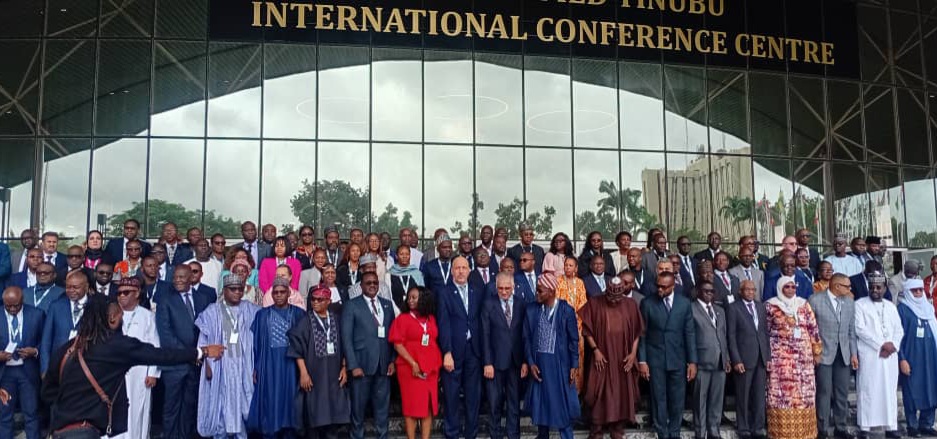
The initiative took centre stage at the 7th Ordinary Session of the African Telecommunications Union (ATU) Conference of Plenipotentiaries (CPL-26) in Abuja, where ministers, regulators and technology leaders agreed that Africa must speak with one voice on the future of digital technologies.
Unveiling the initiative, the Minister of Communications, Innovation and Digital Economy, Dr. Bosun Tijani, said the expansion of Nigeria’s National Artificial Intelligence Strategy into N-ATLAS Umoja marks a bold step towards ensuring Africa becomes a creator—not merely a consumer—of emerging technologies.
He explained that the initiative will bring together governments, researchers, innovators and development partners to build large language models that reflect Africa’s linguistic diversity and cultural realities. Despite accounting for nearly one-third of the world’s languages, he noted that fewer than two per cent are currently represented in modern AI systems.
“Today, I am pleased to announce that we are expanding this initiative into a continental framework—N-ATLAS Umoja—which will bring together governments, researchers, innovators and partners to ensure that Africa’s languages and knowledge systems are reflected in AI technologies,” Tijani said.
He urged African countries to embrace the initiative, describing it as a major milestone in developing globally competitive AI solutions rooted in African realities.
Beyond artificial intelligence, the minister called on member states to deepen collaboration and adopt a common continental position on global telecommunications and digital governance, particularly ahead of key international engagements later this year.
“At a time when digital technologies are shaping economies and societies at an unprecedented pace, our responsibility to work together has never been greater,” he said.
Representing President Bola Tinubu, Vice President Kashim Shettima, through the Deputy Chief of Staff, Senator Ibrahim Hassan Hadejia, said initiatives such as N-ATLAS Umoja, alongside sustained investments in digital infrastructure, are essential to securing Africa’s place in the global digital economy.
He described broadband, artificial intelligence, cloud computing and secure digital networks as strategic infrastructure that now carries the same importance as roads, railways and electricity.
“The competitiveness of nations and the opportunities available to our young people are increasingly determined by the strength of our digital ecosystems,” he said.
Shettima stressed that no African country can achieve meaningful digital transformation alone, calling for greater cooperation in connectivity, cybersecurity, AI governance, spectrum management and standards harmonisation.
He added that the African Telecommunications Union remains central to coordinating Africa’s digital priorities and ensuring the continent speaks with one voice on global technology issues.
“When Africa speaks with one voice, our influence is amplified and our collective interests are better protected,” he said, urging member states to build consensus ahead of the 2026 International Telecommunication Union (ITU) Plenipotentiary Conference.
Also speaking, International Telecommunication Union (ITU) Secretary-General Doreen Bogdan-Martin commended African countries for maintaining a unified position in global ICT and digital development discussions, while urging stronger financial and institutional support for the ATU.
She acknowledged the union’s achievements but warned that sustaining progress would depend on increased contributions from member states.
“We cannot have a union without resources,” she said, describing member-state funding as the foundation of the organisation’s work.
Bogdan-Martin also highlighted partnerships supporting Africa’s digital transformation, including initiatives on digital public infrastructure, artificial intelligence and capacity building across the continent.
She noted that delegates would take critical decisions on the ATU’s future leadership, financing and strategic priorities, while shaping Africa’s preparations for the 2026 ITU Plenipotentiary Conference.
“Our duty is to take decisions that will ensure that every African benefits from the opportunities of digital transformation,” she said.
She further praised Nigeria for successfully hosting the conference and for supporting initiatives aimed at strengthening Africa’s digital ecosystem.
The ATU Secretary-General also commended Nigeria and Algeria for sustaining the union’s activities and appealed for stronger commitment from member states to enable the organisation deliver effectively during its next strategic cycle.
The conference, which precedes elections into key ATU leadership positions, is expected to adopt resolutions that will strengthen regional cooperation and define Africa’s common position on global telecommunications and AI governance.