
A Healthy Generation: FG’s Call to Action on Adolescent Health
The Federal Government of Nigeria has emphasized the importance of investing in adolescent health to secure the nation’s socio-economic progress. The Coordinating Minister of Health and Social Welfare, Professor Muhammad Ali Pate, noted that adolescents account for 23% of Nigeria’s population, making them a vital demographic for national development.
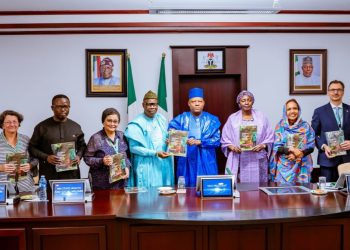
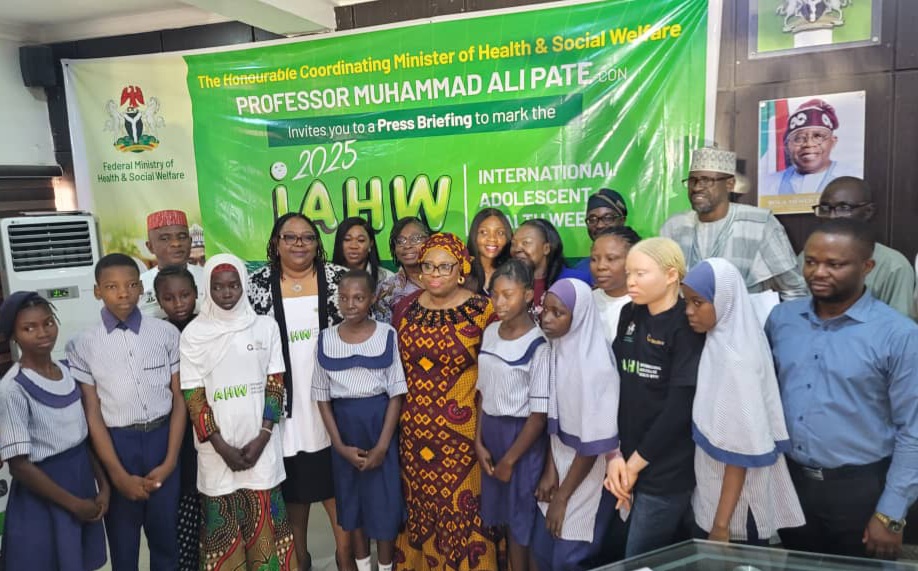
Prof. Pate made this known on Monday, October 13, 2025 at a press briefing to commemorate the 2025 International Adolescent Health Week in Abuja.
Highlighting key milestones, the Coordinating Minister, represented by the Director Human Resource Department in the Ministry, Tetshoma Dafeta; disclosed that the Ministry has established an Adolescent and School Health Branch, a funded budget line for adolescent health, and several policy documents including the National Adolescent Health Policy, Clinical Protocol on Adolescent Health and Development, and Training Manuals to guide service delivery.
However, Prof. Pate admitted that despite these achievements, “a lot more needs to be done” to address the broad spectrum of adolescent needs, especially in integrating physical and mental health.
This year’s IAHW theme, “Thriving Inside-Out: Strengthening Physical and Mental Health of Adolescents,” he said, underscores the need for a holistic approach that nurtures both the physical and mental aspects of young people’s well-being.
“Thriving inside-out means recognizing that physical and mental well-being are deeply interconnected, one cannot flourish without the other,” the Minister emphasized.
In a special appeal to policymakers, the Coordinating Minister urged legislators at all levels to include specific budgetary allocations within key ministries, such as Education, Women Affairs, Youth Development, Sports, Transport, and Justice, to fund adolescent-focused initiatives.
“By investing in adolescent health today, we invest in a healthier, more resilient society tomorrow,” he said.
Earlier in her welcome address, the Permanent Secretary of the Ministry, Daju Kachallom mni, described adolescence as a “critical stage of growth” that demands targeted interventions. She reaffirmed the Ministry’s commitment to supporting programs that strengthen the physical and mental well-being of adolescents across Nigeria.
The Permanent Secretary, represented by the Director Family Health Department in the Ministry, Dr. Binyerem Ukaire; cited the establishment of the Reproductive, Maternal, Newborn, Child, Adolescent, and Elderly Health plus Nutrition (RMNCAEH+N) platform as a major government effort to coordinate multi-stakeholder partnerships involving civil society, the private sector, and development partners.
“By investing in adolescent health, we are investing in the very foundation of our nation’s future,” she further stated.
The atmosphere was filled with optimism, hope, and a strong sense of collective responsibility toward building a healthier and more supportive environment for young people across Nigeria.
A young pupil, Peculiar Bassey, representing adolescents from Karmajiji Junior Secondary School Abuja, stood before dignitaries and guests with confidence and warmth. Her voice carried both gratitude and an earnest plea. “Thank you for inviting us to this press briefing,” she began. “We feel your love and know that you care about us. It’s such a joy to be here as we celebrate International Adolescent Health Week, thriving inside – out.”
With sincerity that touched the room, she expressed appreciation to the government, parents, and teachers for their constant support. But her message also reflected the silent struggles many young people face. “Many young people today deal with things we don’t always talk about,” she said. “Stress, low self-esteem, peer pressure, even loneliness, these challenges affect not just our bodies but our minds too.”
Her appeal was direct and heartfelt: she called on the government to make physical and mental health services more accessible and youth-friendly, urged teachers to look out for students who might be struggling silently, and encouraged parents and communities to listen without judgment. “Sometimes,” she said softly, “we just need someone to listen.” She ended her remarks with a call for unity, asking everyone to help create a Nigeria where every young person feels safe, supported, and able to thrive.
Also, Mrs. Mary Bantoruo, speaking on behalf of the World Health Organization (WHO) representative to Nigeria, Dr. Pavel Ussu. underscored the global and national significance of the week. Dr. Ussu congratulated the Federal Government of Nigeria, the Federal Ministry of Health, youth-led organizations, and partners for their collective effort in advancing adolescent health in Nigeria.
WHO, he stated, remains steadfast in supporting Nigeria’s Health Sector Renewal Initiative and will continue working with the government to strengthen systems, build resilience, and ensure that physical and mental health services are within reach for every adolescent.