
FG Urges Resident Doctors’ to Return to Work, Reaffirms Commitment to their Welfare
Abuja (Core Reporters) The federal government of Nigeria has appealed to striking resident doctors to return to work in good faith, emphasizing that the government recognizes their invaluable service and is committed to their welfare.
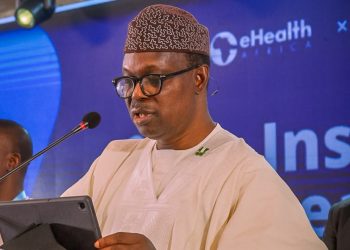
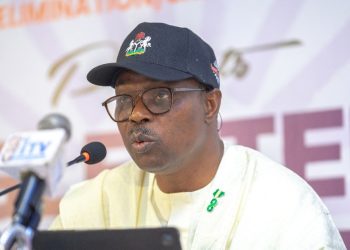
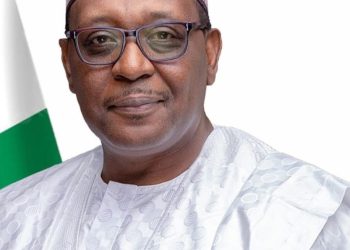
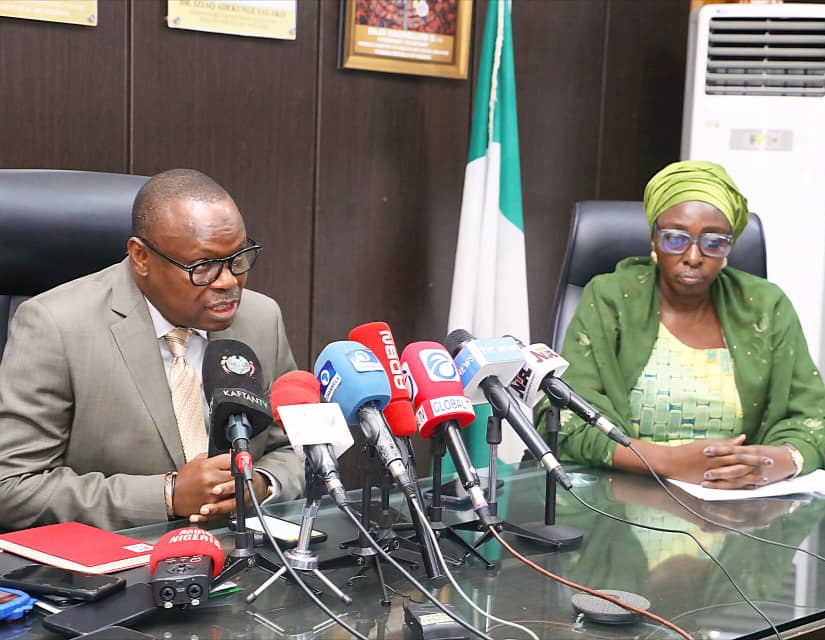
Making the appeal in a ministerial press briefing on Monday in Abuja, the Federal Government through the Ministry of Health and Social Welfare, assured Nigerians that concrete steps are being taken to end the ongoing strike by the National Association of Resident Doctors (NARD). According to the Minister of State for Health and Social Welfare, Dr. Iziaq Adekunle Salako, President Bola Ahmed Tinubu has directed the ministry to take all legitimate measures to ensure resident doctors return to their duty posts without delay.
Core Reporters report that Dr Iziaq Adekunle Salako lamented the disruption the strike has caused the medical services across public hospitals, revealing that it has been a major concern for the government. However, he tendered the federal government’s unreserved apology to Nigerians affected by the disruption of medical services, emphasizing that the government remains committed to protecting citizens’ access to healthcare.
He noted that The government has been engaging NARD and other health unions through the Collective Bargaining Agreement (CBA) mechanism, inaugurated in August 2025, to address outstanding issues around wages, allowances, and working conditions. Two major areas of disagreement, salary relativity and consultant cadre appointments, are being reviewed by an independent industrial relations expert, with an interim report already submitted.
Addressing the staff shortages and welfare measures, responding to complaints about manpower shortages and work overload; Dr. Salako revealed that the ministry had recruited 14,444 health workers in 2024 and had already approved the employment of 23,059 more in 2025, across 78 federal tertiary health institutions.
He also announced the establishment of a ministerial taskforce to monitor hospital operations during the strike and ensure continuity of essential services.
“Consultants have been directed to maintain emergency and outpatient services,” Salako said. “We appeal to the public to be patient as we work towards resolving this crisis.”
Meanwhile, Dr. Salako assured Nigerians that the government is working tirelessly to resolve the strike and restore normal services across public hospitals. With concrete steps being taken to address the concerns of resident doctors, there is hope that the strike will soon come to an end.
Speaking on the financial commitments and allowance, the Minister disclosed that the government had released ₦21.3 billion to settle outstanding arrears and allowances, with about 60% of resident doctors already receiving payment alerts. An additional ₦11.9 billion has been processed for payment this week.
He further noted that ₦10 billion was earlier disbursed exclusively for the Medical Residency Training Fund, which supports doctors’ professional examinations.
Appealing for calm and cooperation, Dr. Salako appealed to striking resident doctors to return to work in good faith, emphasizing that the government recognizes their invaluable service and is committed to their welfare.
“If it were possible, we would pay our doctors ₦50 million monthly, because no one can truly compensate for a health worker’s service,” he noted. “But we must operate within the economic realities of the country.”
He reaffirmed that the Federal Ministry of Health and Social Welfare would continue to engage all parties constructively to reach a lasting and fair resolution.
“The health sector is a team,” the minister concluded. “What affects one group affects all. Our goal is a unified, functional system that delivers quality care to Nigerians.”
Also speaking, clarifying the Medical & Dental Council of Nigeria issue, Dr. Abdu Enejo, Deputy Registrar of the Medical and Dental Council of Nigeria (MDCN), clarified that there had been no “downgrading” of membership certificates from the West African College of Physicians and Surgeons, but rather a categorization of qualifications in line with regulatory standards.
“There has been no downgrade. What we have is categorization based on specialty and institution. Any wrongly classified qualification can be resubmitted for correction,” Enejo explained.