
World Gluacoma Week: Minister Charges Experts to Develop Life-Changing Glaucoma Solutions
By Raphael Ekpang
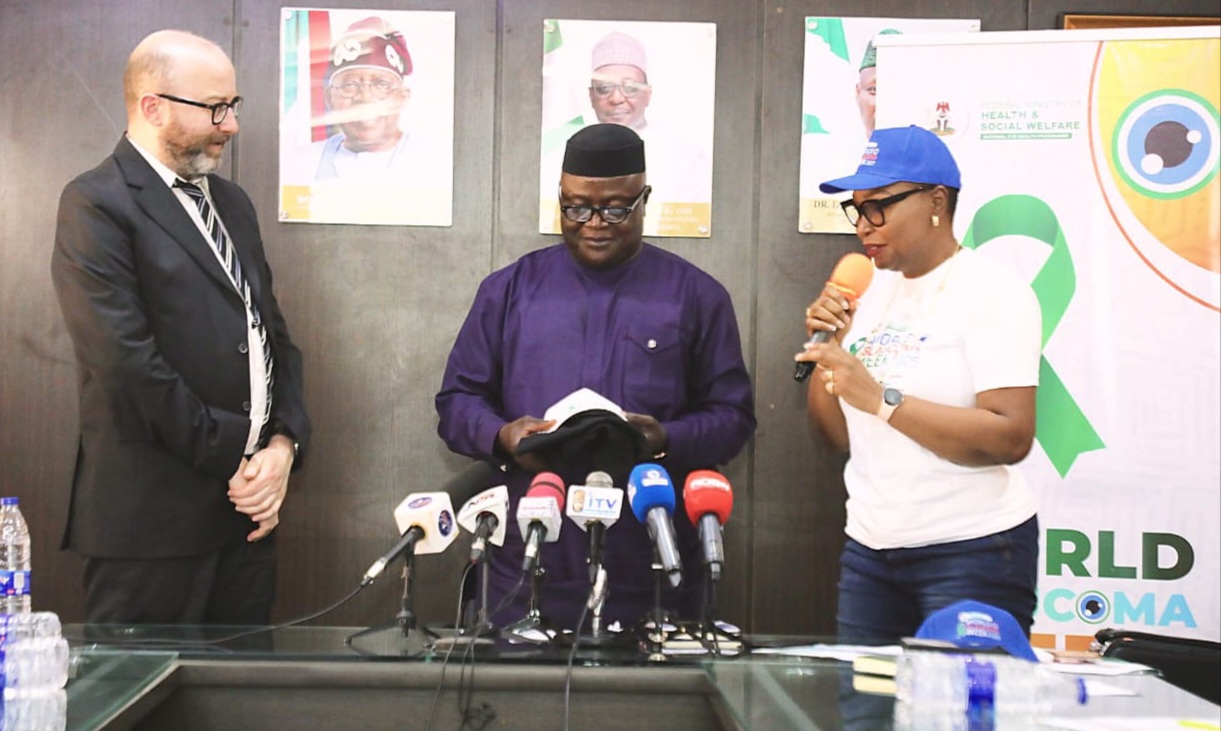
Abuja (Core Reporters) As Nigeria joined the global world in commemorating the World Gluacoma Week (WGW) the Minister of State for Health and Social Welfare, Iziaq Adekunle Salako has charged experts; academia, researchers and innovators technology and artificial intelligence to develop earlier methods of detection and effective treatment modalities.
Salako gave the charge on Monday, March 10, 2025, in Abuja during the ministerial briefing to commemorate the World Glaucoma Week.
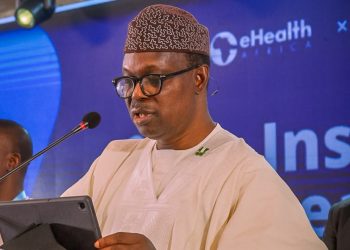
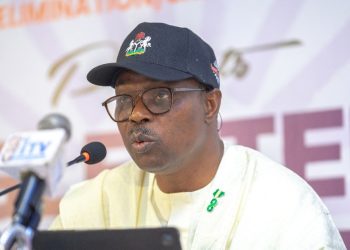
The Minister who was represented by Dr. Micheal Akpan, Director of Port Health Division, Federal Ministry of Health and Social Services at the briefing said, WGW is a global initiative of the World Glaucoma Association, and the World Glaucoma Patient Association designed to raise awareness on glaucoma directed at patients, policymakers, eye-care service providers and the public. Hw noted that WGW is an annual event held every second week of March. Saying that the theme for this year is “Uniting for a Glaucoma Free World; See the Future Clearly.”
He said the goal of the week-long activities is to emphasize the importance of regular eye checks and early diagnosis of this largely asymptomatic and devastating disease, thus preserving the vision of those affected.
According to him, “Glaucoma is an eye condition in which the optic nerve is progressively and irreversibly damaged resulting in loss of peripheral vision in the beginning, and blindness at advanced stages. It is also described as “the silent thief of sight” as it develops slowly, and vision can be greatly impaired before any signs or symptoms are apparent. It is the second commonest cause of blindness and leading cause of irreversible blindness worldwide and in Nigeria. However, it is manageable with early detection.
Je explained that, Glaucoma is reported to affect an estimated 60.5 million people worldwide, about 87% of which are living in developing countries. The Nigerian blindness and visual impairment survey 2005-2007 reported that over 4.2% of the Nigerian population were blind; 16.7% was due to glaucoma.
“The risk factors associated with glaucoma include African ancestry which means virtually all Nigerians are at risk and increasing age (over 40years). Recent studies are reporting an earlier onset of the disease and a more severe course in persons of African descent. Additional risk factors include family history of glaucoma, elevated eye pressure, medical conditions that predisposes a person to glaucoma such as Diabetes and hypertension, refractive errors, eye injuries, thin corneas and prolonged use of corticosteroid eye drops.
“The FMOH & SW, keenly aware of this data, the specific factors that put Nigerians at risk of vision loss amongst others, has worked assiduously over the years by supporting and implementing targeted screening, public awareness programs, advocacy, improving patient journey through the health system, leverage technology and setting research priorities to improve patient outcomes. This week, we aim to educate the public about glaucoma, the importance of regular eye check-ups, offer screening and spectacles where required.

He further explained that more recently, the Ministry, following a rigorous and collaborative process developed and launched the National Glaucoma Screening and Treatment Guidelines. Adding that these guidelines have been distributed to all states of the federation and the FCT. The document provides clinical and programmatic guidance for screening and management of glaucoma. Guidance on the setting up of patient support groups that put the patient at the centre of their care, improves access, increase adherence to lifelong management and improve their empowerment and social connections for improved outcomes is an important feature.

He recalled that last year, ophthalmologists from all the States of the federation were trained in the use of the guidelines to step down the training in their respective States and health facilities.
“To tackle this the FMOH&SW through the National Eye Health Programme (NEHP) is implementing on behalf of Mr President, the Effective Spectacle Coverage Initiative Nigeria (ESCIN) also known as JigiBola 2.0. The initiative aims to provide free vision screening and distribute 5 million pairs of reading glasses free to Nigerians in the next 3 years.
“Following the launch of JigiBola 2.0 in 2023, the NEHP has been working in partnership with local and international partners including the Livelihood Impact Fund, Restoring Vision USA, and The Clinton Health Access Initiative (CHAI) to scale up access to reading glasses in Nigeria for improving livelihoods particularly for persons 40years and above through the primary health care system. So far, over a 100, 000 Nigerians have been screened and over 80,000 spectacles dispensed. The sustainability approach involved the setting up of vision centres where spectacles are provided at a subsidized rate. So far 3 States have been covered.
“The system strengthening arm of the presidential initiative (Jigibola 2.0) has facilitated the integration of Primary Eye Care (PEC) into the Primary Health Care (PHC) System by empowering PHC workers in 15 states with the knowledge and skill to manage simple eye care conditions including dispensing of simple reading glasses, offer first aid and eye health education using the National Primary Eye Care Trainer and Trainee manuals. This PEC integration further aims to improve the referral system between the 4 levels of health care—community, primary, secondary and tertiary levels.
He said, “so far, as part of this initiative and efforts of the FMOH&SW and partners, over 3000 PHC workers from 682 primary health care facilities in 182 LGAs of the 15 States have been trained on PEC and equipped with the PEC trainee manuals as well as clinical guides, diagnostic kits, pairs of eyeglasses to be dispensed free including data collection and reporting tools. The Ministry believes that the integration of PEC into PHC will potentially change the pattern of eye care services in Nigeria.
“These initiatives will no doubt accelerate our journey towards achieving Universal Health Coverage and ultimately the Sustainable Development Goals by improving the opportunities for Nigerians to attend their educational needs, improve productivity at workplaces and increase the overall quality of life through improved vision.
“Ladies and gentlemen, with this in mind, you will agree with me that the theme for commemoration of this year’s WGW “Uniting for a Glaucoma Free World; See the Future Clearly” affords us, both in the public and private sector, the opportunity to save over 400 million eyes of Nigerians improving quality of life which will sustain much needed economic growth and development according to the renewed hope agenda of this administration,” he concluded.
He appreciated President Bola Tinubu for supporting eye health through his very impactful initiative, all the eye care professionals who have been at the forefront of advocacy and patient management over the years, “all our Partners especially Clinton Health Access Initiative (CHAI), Sightsavers, OneSight EssilorLuxottica Foundation (OSELF) and Chritoffel Blinden Mission (CBM), who have provided support to the FMOH to reduce the burden of vision loss in Nigeria.
“I also thank the pharmaceutical companies who have ensured the availability of medicines. I appeal that you continue to make these drugs available and affordable to Nigerians.
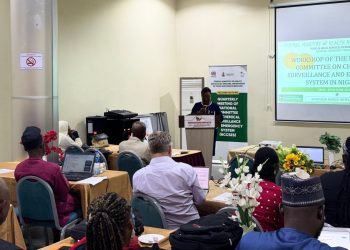
However, the Permanent Secretary of the ministry Daju Kachollom mni who was represented by the National Coordinator of National Eye Health Programme, Dr. Okolo Oter in a welcome address counted it a privileged to have eye health professionals and partners, whose dedication and hard work are instrumental in the fight against glaucoma.
“ As we commemorate World Glaucoma Week, I urge each one of you to take action. Schedule a routine comprehensive eye exam, encourage your loved ones to do the same, and spread the word about the importance of early detection. Together, we can make a difference and help prevent vision loss caused by glaucoma.
“ Many of us have close family or friends who were diagnosed with glaucoma at a late stage. The impact on their vision and life is often significant, and a stark reminder of how crucial early detection is. This experience should fuel our passion for raising awareness about this condition and advocating for regular eye check-ups.” she said.
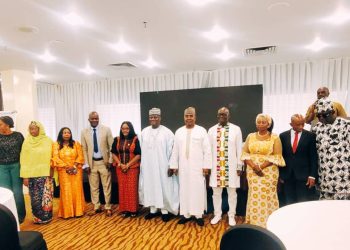
Core Reporters report that many partners who presented their goodwill messages, were thrilled with the organisation of the week-long activities and pledged further partnership with the Federal Government’ of Nigeria towards having a society free of glaucoma.