
2027 General Election: INEC, NOA Forge Stronger Partnership to Deepen Voter Education
By Core Reporters
Abuja (Core Reporters) The Chairman of the Independent National Electoral Commission (INEC), Professor Joash Ojo Amupitan (SAN) has called for a stronger partnership between the Commission and the National Orientation Agency (NOA) to intensify voter education and civic engagement ahead of the 2027 General Election.
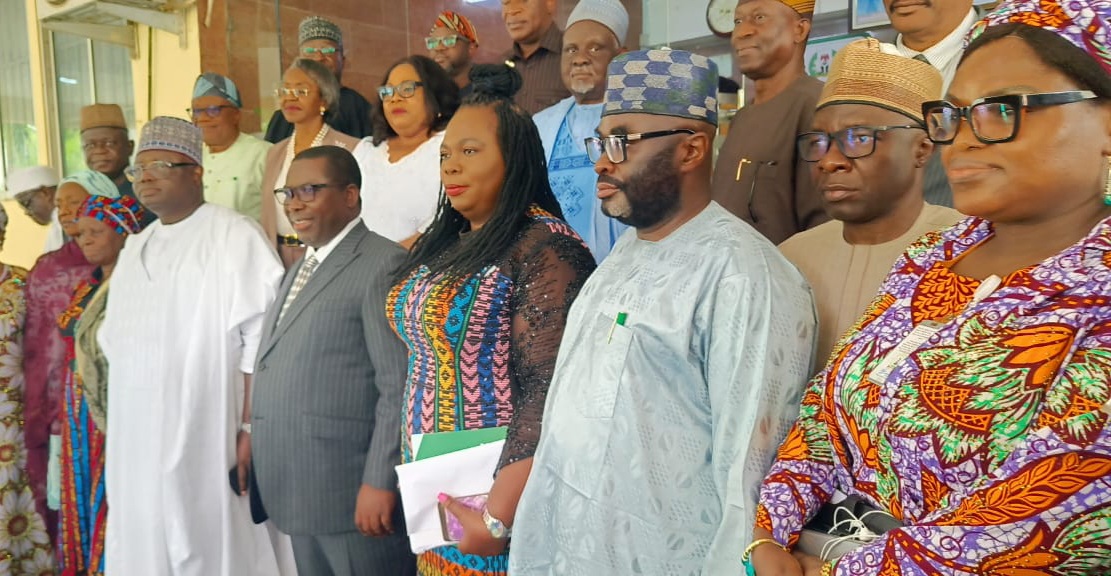
Professor Amupitan made the call on Wednesday, July 1, while receiving the Director-General of the National Orientation Agency, Mallam Lanre Issa-Onilu, and his management team during a courtesy visit to the INEC Headquarters in Abuja.
The INEC Chairman described the visit as more than a routine courtesy call, saying it represented “a vital meeting of minds” between two institutions with complementary constitutional responsibilities for promoting democratic culture and civic participation.
He stressed that while INEC has continued to improve electoral administration through innovations such as the Bimodal Voter Accreditation System (BVAS) and the INEC Result Viewing (IReV) portal, technology alone cannot strengthen democracy without an informed and engaged citizenry.
According to him, the NOA remains Nigeria’s foremost institution for civic orientation, making collaboration between both agencies essential to educating Nigerians on the importance of participating in the electoral process.
Professor Amupitan noted that the partnership aligns with the statutory responsibilities of the NOA under the National Orientation Agency Act, particularly in promoting democratic values, citizens’ rights and responsibilities, patriotism, and discouraging electoral malpractice and other social vices.
He identified voter apathy, public cynicism, misinformation, and disinformation as major threats to Nigeria’s electoral system, calling for coordinated efforts to address the challenges through sustained grassroots voter education.
“We need to co-create a decentralized, grassroots voter education campaign that goes beyond simply telling people when to vote. We must teach them why their votes matter and explain, in languages they understand, how recent legal and technological reforms have strengthened the credibility of elections,” he said.
The INEC Chairman said recent elections, including the February 21, 2026 Federal Capital Territory Area Council elections and the June 20, 2026 Ekiti State governorship election, demonstrated the Commission’s growing operational efficiency, citing early opening of polling units, effective biometric accreditation through BVAS, and timely upload of results to the IReV portal.
Despite these successes, he observed that the elections also exposed persistent voter apathy and widespread confusion among some voters over polling unit delineation and voter registration transfers, underscoring the need for sustained voter education well ahead of the 2027 general election.
Professor Amupitan commended the leadership of Mallam Issa-Onilu, expressing confidence in his modern approach to strategic communication and youth engagement.
Looking ahead to the 2027 elections, the INEC Chairman proposed closer collaboration between the Commission’s Voter Education Department and the NOA’s communication teams to jointly combat vote-buying, misinformation, and other threats to electoral integrity.
He also pledged the Commission’s full support for the partnership, assuring the NOA of access to relevant data, technical information, and institutional cooperation to ensure the success of joint voter education initiatives.
Professor Amupitan expressed optimism that the collaboration would strengthen civic consciousness, improve voter participation, and further consolidate Nigeria’s democratic process.
Earlier, the Director-General of the NOA, Mallam Lanre Issa-Onilu had reaffirmed the Agency’s commitment to promoting democratic values and civic responsibility, describing democracy as the foundation of Nigeria’s stability.
He noted that the 2023 general elections exposed significant gaps in civic knowledge, particularly among young first-time voters, making continuous voter education imperative
Issa-Onilu said NOA’s nationwide structure—including offices in all 774 local government areas, 36 state offices and six zonal directorates—positions the Agency to effectively drive grassroots voter education and public enlightenment.
He requested for a formal collaboration between both agencies that would extend beyond election periods, insisting that civic education should be a continuous national exercise rather than a seasonal campaign.
Issa-Onilu also stressed the need to educate Nigerians not only on voting procedures but also on post-election processes, including election petitions and judicial outcomes, to reduce misinformation and strengthen public confidence in democratic institutions.