Deprecated: Function WP_Dependencies->add_data() was called with an argument that is deprecated since version 6.9.0! IE conditional comments are ignored by all supported browsers. in /home/corerepo/public_html/wp-includes/functions.php on line 6260 2027: CSOs Demand Proof of INEC Readiness, Fresh Tests of BVAS, IReV - Core Reporters
2027: CSOs Demand Proof of INEC Readiness, Fresh Tests of BVAS, IReV
By Raphael Ekpang
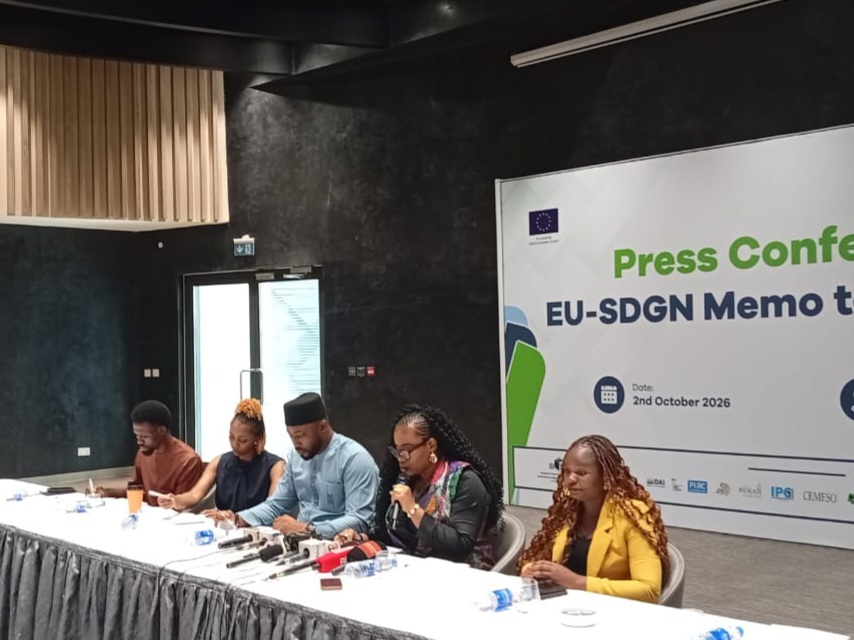
Abuja (Core Reporters) Six civil society organisations have challenged the Independent National Electoral Commission (INEC) to provide verifiable evidence of its preparedness for the 2027 general election, particularly the readiness and reliability of its election technology and result management systems.
This was made known in a press conference held in Abuja on Friday, October 2, 2026.
The groups said INEC must demonstrate that the result-upload challenges recorded during the 2023 general election have been fully addressed and subject its key technologies to independently verifiable stress tests ahead of the polls.
The demand was contained in an open memorandum endorsed by the Centre for Media and Society, International Press Centre, Nigerian Women Trust Fund, TAF Africa, The Kukah Centre and Yiaga Africa.
With the Presidential and National Assembly elections scheduled for January 16, 2027, the organisations said INEC should replace broad assurances with measurable evidence that Nigerians, political parties and election observe5rs can independently assess.
“INEC must move beyond general assurances and provide regular, verifiable evidence of operational readiness,” the groups said.
They called on the Commission to publish a dated readiness dashboard covering election funding, procurement milestones, delivery and storage of sensitive and non-sensitive materials, secure distribution and contingency arrangements for areas affected by insecurity or infrastructure challenges.
The CSOs also demanded details of recruitment requirements and numbers for election personnel, training schedules, deployment plans and welfare arrangements for ad hoc staff.
They urged INEC to fill vacancies in critical leadership and technical positions early enough to safeguard institutional capacity and operational continuity.
CSOs Demand BVAS, IReV Stress Tests
The groups identified election technology as a major area requiring greater public scrutiny before the 2027 polls.
They asked INEC to explain how the Electoral Act 2026 and its regulations and guidelines would govern voter accreditation, polling-unit result management, collation and publication of results, including the use of electronic Form EC8A.
They specifically called for stress tests of the Bimodal Voter Accreditation System (BVAS) and the INEC Result Viewing Portal (IReV), with the results made publicly available.
The organisations also demanded clearly defined fallback procedures for technology failures and transparent audit trails for corrections or delayed uploads of election results.
Referring to the result-upload difficulties experienced during the 2023 general election, the groups asked INEC to “publish verifiable evidence” that the problem had been rectified.
They further urged the Commission to allow observers to independently verify the improvements during its planned mock accreditation exercise.
The organisations also asked INEC to publish clear guidelines for the collection of Permanent Voter Cards (PVCs), including logistical arrangements and personnel deployment, to prevent delays and possible disenfranchisement.
They equally sought clarification on the proposed use of downloadable voter cards and clear guidance on their applicability during the general election.
Parties Warned Against Vote Buying, Intimidation
The memorandum also outlined responsibilities for political parties and candidates, security agencies, the media, judiciary, community leaders and civil society organisations.
Political parties and candidates were urged to reject hate speech, ethnic and religious incitement, threats, coercion, vote buying and obstruction of lawful political activities.
The CSOs also warned against the use of incumbency advantages to restrict opposition parties’ access to campaign venues, outdoor advertising and other shared resources.
According to them, access to such resources should be governed by transparent and non-discriminatory rules applicable to all parties and candidates.
CSOs Demand Public Election-Security Framework
The organisations called on the Nigeria Police Force and other security agencies to publish a coordinated election-security framework outlining threat assessments, risk mitigation measures, command responsibilities, rules of engagement, protection for vulnerable communities and rapid-response and complaints procedures.
They stressed that security personnel must operate impartially and should not be used as instruments of partisan coercion.
The media was urged to provide equitable and issue-based coverage, distinguish journalism from sponsored content, verify viral claims before amplification and prominently correct errors.
Religious and community leaders were also urged to reject violence, exclusion and collective blame, while the judiciary was encouraged to resolve election disputes within stipulated timelines and publish reasoned decisions promptly.
The organisations also acknowledged responsibilities within the civil society sector, calling for stronger coordination of election observation and civic education, verification of claims before advocacy and consistency and independence in reporting.
“We must demand from ourselves the same transparency, fairness and accountability we demand from public institutions,” the memorandum said.
The groups maintained that the credibility of the 2027 general election would depend substantially on decisions taken and preparations made well before polling day.
They therefore urged all institutions involved in the electoral process to clearly state what they will do, when they will do it and how Nigerians can independently assess their progress.