Deprecated: Function WP_Dependencies->add_data() was called with an argument that is deprecated since version 6.9.0! IE conditional comments are ignored by all supported browsers. in /home/corerepo/public_html/wp-includes/functions.php on line 6260 WAPP Assembly: Guinea PM Urges West African States to Prioritise Regional Power Integration - Core Reporters
WAPP Assembly: Guinea PM Urges West African States to Prioritise Regional Power Integration
By Admin
Conakry (Core Reporters) Guinea’s Prime Minister and Head of Government, Amadou Oury Bah, has called on West African countries to prioritise regional electricity cooperation and complementarity over national isolation, saying stronger interconnection is critical to achieving energy security and economic development across the sub-region.
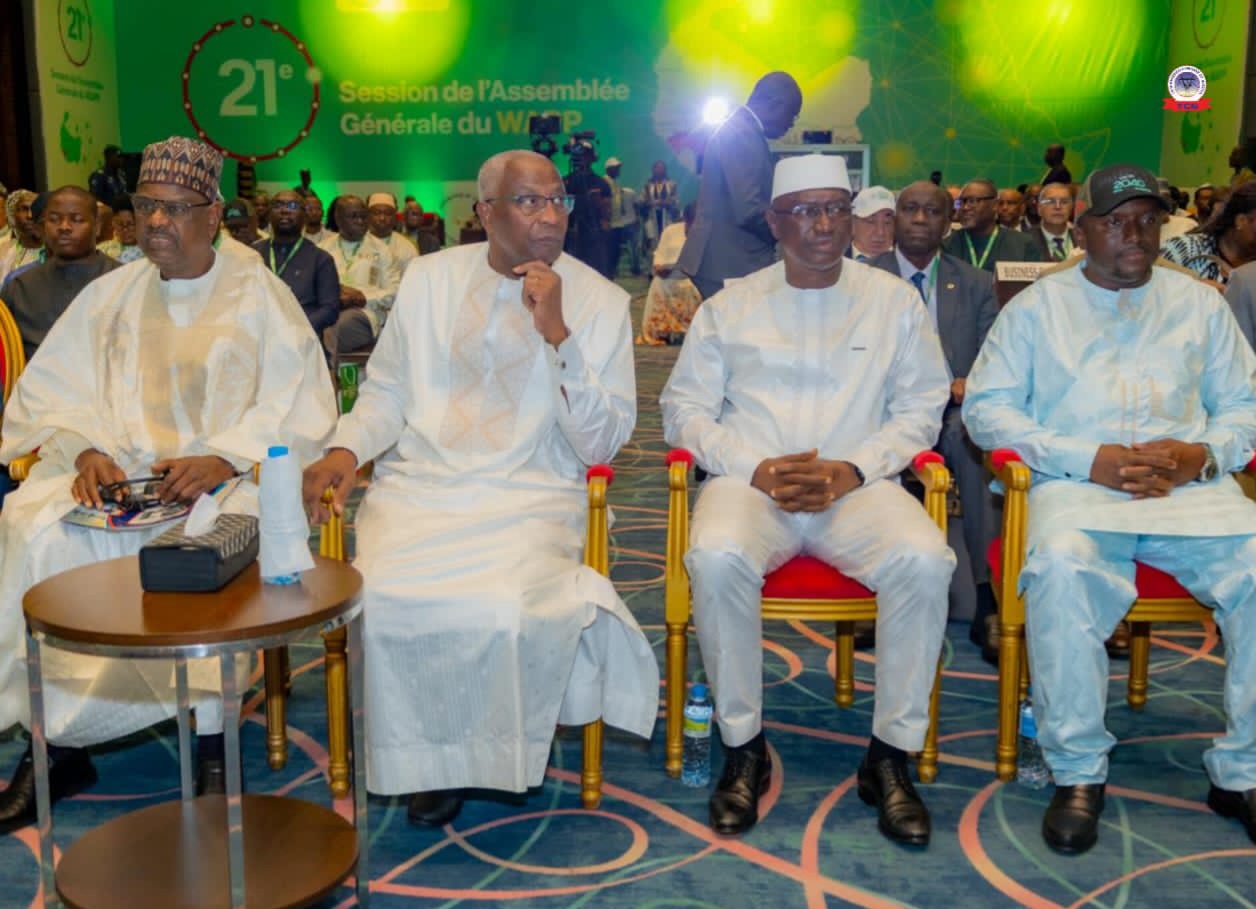
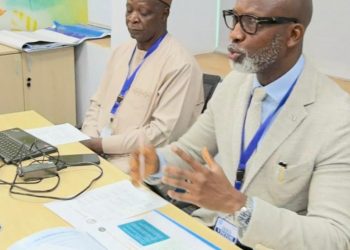
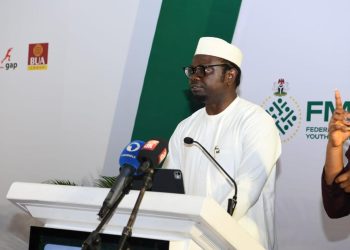
Bah made the call while declaring open the 21st General Assembly of the West African Power Pool (WAPP) in Conakry, Guinea, where Energy Ministers, heads of electricity utilities, independent power producers and international development partners from across the region gathered to discuss the future of West Africa’s electricity market.
Representing President Mamadi Doumbouya at the opening ceremony, the Prime Minister conveyed the President’s greetings to delegates and urged member states to build a genuine West African energy community anchored on shared standards, effective governance and measurable performance.
He described energy as the foundation of national sovereignty, competitiveness, social progress and stability, noting that the historic interconnection of the 15 West African countries demonstrated the possibilities of regional cooperation.
Bah reaffirmed Guinea’s commitment to regional electricity integration, highlighting the country’s strategic hydropower investments, particularly the Kaleta and Souapiti dams, as well as planned projects at Koukoutamba, Sambangou and Amaria.
According to him, these projects position Guinea to become a major regional electricity supplier and contribute significantly to strengthening energy solidarity across West Africa.
“The Republic of Guinea, under the leadership of His Excellency the President of the Republic, reaffirms its readiness to support this collective ambition and to contribute actively to the development of a more integrated, efficient, and united West African energy space,” he said.
Also speaking, Guinea’s Minister of Energy, Laye Sékou Camara, said the 21st General Assembly should translate regional commitments into concrete results through stronger governance, institutional discipline and compliance with financial obligations.
He stressed that the expansion of national electricity access and regional power exchanges were complementary objectives, warning that installed generation capacity should not be mistaken for actual electricity delivery.
The minister explained that interconnection provides mutual security among participating countries, recalling that Guinea benefited from electricity support from Senegal following the fire at the Coronthie fuel depot in December 2023.
He also linked the country’s regional energy ambitions to the Simandou 2040 development programme and the objective of achieving universal electricity access.
Camara called for credible liquidity support mechanisms, compliance with common regional rules, stronger institutional capacity and increased participation of women in the electricity sector.
In his remarks, Chairman of the WAPP Executive Board, Engr. Sule Ahmed Abdulaziz, disclosed that the second phase of the regional electricity market would commence in early 2027, introducing competition through a day-ahead electricity market.
He explained that the system would allow electricity prices traded between participating countries to be determined by demand and supply within an organised, transparent and non-discriminatory framework.
Abdulaziz described the development as a major milestone in the region’s electricity integration efforts, noting that investments in transmission infrastructure, common operating standards and regional institutions over the past two decades must now translate into a functional electricity market.
He said successful implementation would depend on strict market discipline, reliable real-time data exchange, accurate metering, credible settlement arrangements and effective management of transmission congestion and operational risks.
The WAPP chairman further disclosed that ongoing institutional reforms would establish an independent system and market operator, separating system operations from market management to promote fairness and protect decision-making from undue external influence.
He, however, emphasised that the transition must be carefully managed to avoid disruption and preserve the operational continuity currently provided by the Information and Coordination Centre.
On financial sustainability, Abdulaziz said the proposed Liquidity Enhancement Revolving Fund was being studied and structured to strengthen confidence in electricity transactions across the regional market.
He urged member states to treat the payment of statutory contributions as a priority, stressing that financial discipline was fundamental to WAPP’s institutional independence and effectiveness.
“Statutory contributions are not an administrative formality; they are the foundation of our autonomy and our capacity to act,” he said.
Earlier, WAPP Secretary-General, Abdoulaye Dia, highlighted the successful synchronisation of the electricity networks of the 15 West African countries for four hours and five minutes on November 8, 2025, describing it as a major achievement in regional power integration.
He said the next synchronisation test, scheduled for November 2026, would target 48 hours of continuous operation as part of efforts to consolidate the achievement and prepare the region for permanent synchronisation.
Dia noted that electricity companies and member states were under increasing pressure to improve service quality, guarantee security of supply, enhance competitiveness and expand access to electricity.
He said WAPP had a responsibility to transform regional interconnection into practical, sustainable and structured cooperation capable of supporting economic and social development.
The Secretary-General also highlighted progress in establishing a regional electricity tariff framework, supported by decisions adopted in 2026 by the ECOWAS Regional Electricity Regulatory Authority.
According to him, the General Assembly was convened under the theme, “Consolidating the Regional Electricity Market as a Lever of Transformation and Resilience for West Africa.”
He expressed appreciation to Guinea for its central role in promoting regional energy cooperation.
Also speaking, the Director-General of Electricité de Guinée (EDG), El Hadji Gando Barry, said WAPP member countries shared the responsibility of ensuring reliable, affordable and sustainable electricity for their populations.
He noted that regional integration would enable countries to maximise their different energy resources while strengthening solidarity and cooperation among national electricity systems.
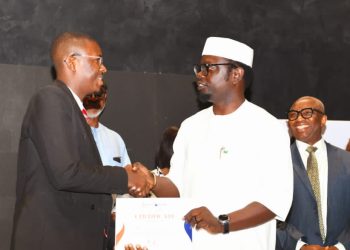
A major outcome of the General Assembly was the signing of an Inter-grid Operators Agreement by 17 Transmission System Operators across the regional power pool to facilitate coordinated operations and strengthen electricity exchanges through interconnected national grids.
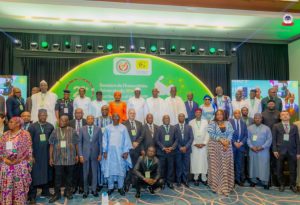
The 21st WAPP General Assembly brought together energy ministers, chief executives of electricity utilities and international partners from the 15 ECOWAS member states.
Discussions focused on the progress towards synchronisation of regional electricity networks, the planned introduction of day-ahead and bilateral spot markets in early 2027, and the institutional arrangements required to ensure the effective operation of the regional electricity market.
The meeting reaffirmed the importance of regional electricity integration in addressing power supply challenges, improving energy security and accelerating economic development across West Africa.